
Economics
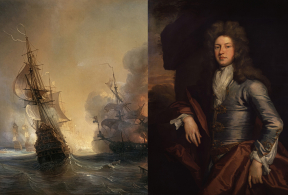
In Episode 5, Professor Anne Murphy (University of Portsmouth) examines the development of finance in Britain and Ireland, from the emergence of the Bank of England during the Nine Years’ War into a system that would facilitate the growth of the British Empire and Britain’s Industrial Revolution. During this period...

The speed at which both sides in Germany recovered economically is re-examined in this film. Professor Matthew Stibbe describes how the West Germany economy recovered and became a magnet for migrants as well as East Germans. However, he also examines how East Germany’s economy compared more successfully to some of...

In the light of present-day concerns about the place, in a modern world, of statues commemorating figures whose roles in history are of debatable merit, Dr Gregory Gifford puts the British Empire on trial, presenting a balanced case both for and against. In June 2020 when the statue of slave-trader...
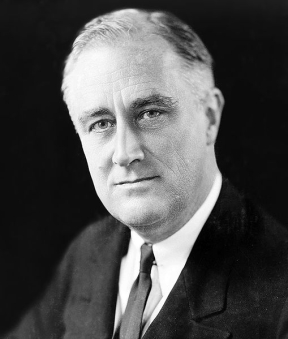
Over 50 years ago I read my first serious book on American history. I can still remember the excitement of reading William E. Leuchtenburg’s Franklin D. Roosevelt and the New Deal, 1932–1940. His description of FDR and American politics in the 1930s seemed so much more colourful and dramatic than...
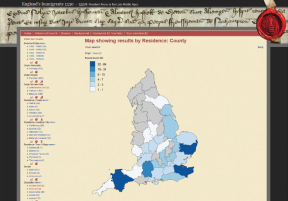
Ever wondered if there is a streak of masochism in those designing A-level history syllabi? The absence of the Spanish Armada from the current Edexcel breadth study in favour of (among other delights) ‘the new draperies’ prompts this question. But the challenge of enthusing modern teenagers with woollen cloth can...
International Journal of Historical Learning, Teaching and Research [IJHLTR], Volume 15, Number 1 – Autumn/Winter 2017ISSN: 14472-9474 Abstract This is an analysis of 97 written questionnaires given to university students’, prospective teachers’. Students were asked first to narrate the Greek state’s history, second to make predictions about the future. It...
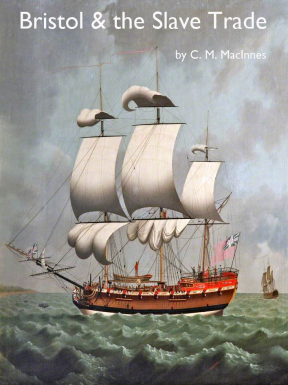
Captain Thomas Wyndham of Marshfield Park in Somerset was on voyage to Barbary where he sailed from Kingroad, near Bristol, with three ships full of goods and slaves thus beginning the association of African Trade and Bristol. In the late sixteenth and seventeenth centuries, Bristol was not a place of...
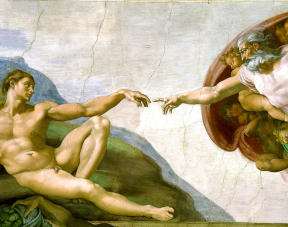
In this podcast Dr Gabriele Neher of the University of Nottingham provides an introduction to the Renaissance.
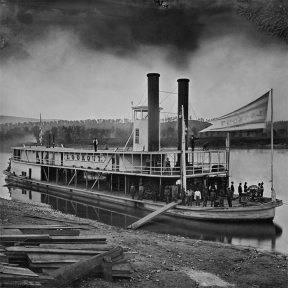
From the time when primitive man first went adrift on a bundle of reeds or learnt to balance himself on a floating log, to the days where his descendants, no more than a few generations ago, raced scrambling aloft to trim the towering sails of a full-rigged ship, the skill...
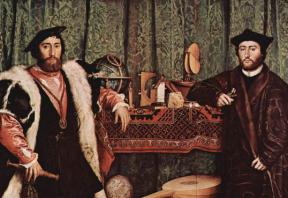
Before the development of paper money, which in England did not really occur until later in the seventeenth century, the circulating medium consisted of coins and tokens. The unit of account in which they were valued was the pound sterling; in which there were twenty shillings each of twelve pence,...

In this podcast Dr Anne Murphy of the University of Hertfordshire looks at the early origins of the European financial markets from the Italian Renaissance to the present day. Dr Murphy also provides a useful introduction to finance, the stock market and the bond market.
Revolutions of the magnitude of the industrial revolution in England provoke historical controversy: such a revolution is a major discontinuity which a profession more skilled in explaining small changes finds difficult to understand. A revolution that touches a whole society is so diffuse that its significant events are difficult to...
The pattern of overseas trade is always in movement: new commodities are constantly appearing, old ones fading into unimportance, different trading partners coming to the fore-front. But between the latter end of the sixteenth and the second half of the eighteenth century, change took specially far reaching forms. In 1570...
The Lords of Renaissance Italy: the signori, 1250-1500 Among the many city states into which Italy was divided in the late medieval and early modern period, the republics of Florence and Venice are comparatively well known. Republicanism was not, however, the most common form of government. This pamphlet deals with...
Numismatics may be defined as the science of money in its physical aspects. It is only indirectly connected with the theory of money, which belongs to the sphere of economics. Its subject-matter consists of the material objects which in most societies are used to measure the worth of goods and...