
International Relations
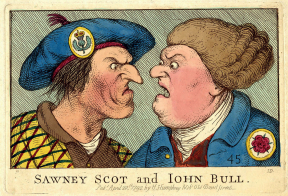
The simple answer is that historians are arguing about what it is that they are arguing about. Linda Colley’s profoundly influential Britons, 1707-1832: forging a nation, published in 1992, illustrates the point. Beginning with the parliamentary union of England and Scotland in 1707, the book links the emergence of British...
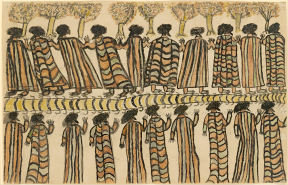
Migration and Empire 1830–1939 is the most popular topic studied for the Scottish Higher qualification. The course specification directs that students should be taught about the impact of Scots emigrants on the British Empire. Marking instructions and classroom practice, however, had historically emphasised the ‘contribution’ of Scots to the empire,...
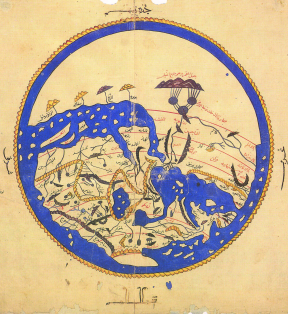
In interviews with GCSE students across a range of school contexts, Abigail Branford found that many young people regarded Africa as an economic ‘dead zone’ prior to colonial intervention. This conception, as Branford briefly illustrates, is at profound odds with current historical scholarship; yet it persists. In seeking to support...
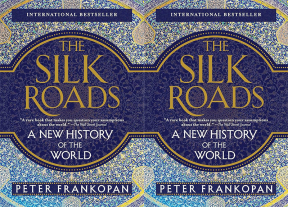
It has been the same for history teachers all over the country: the dramatic shift in perspective after reading Peter Frankopan’s The Silk Roads. Frankopan’s groundbreaking scholarship transported me to distant lands. His book introduced me to cultures and civilisations previously unknown. I wanted my pupils to venture along the...
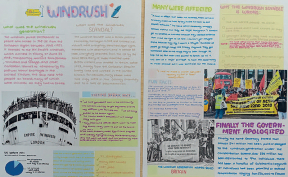
Mark Fowle began work on an enquiry to contextualise the Windrush scandal for his pupils in south London, in response to the first national Stephen Lawrence Day, in 2018. He went on to work with his colleagues in a new school to broaden pupils’ historical perspective through stories of migration...
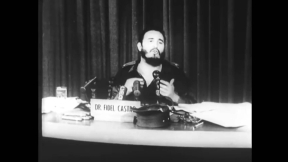
In this film, Dr Alexander Titov (Queen's University of Belfast), looks at the early thaw in relations between the Soviet Union and the West after the death of Stalin, the resolution of outstanding issues such as the Korean War, the division of Austria, and Khruschev's resetting of relations with China...
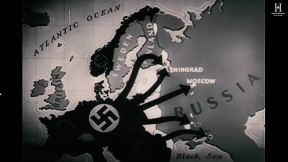
In this film, Professor James Harris (University of Leeds) examines Stalin and the Soviet preparations for global war. The reasons why Stalin agreed the Nazi-Soviet pact are explored as are Stalin’s response to invasion in 1941. Professor Harris addresses the impact the war had on the USSR and how that...
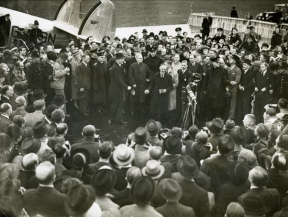
This project has been created on the initiative of Professor Julie. V. Gottlieb, Dept. of History, University of Sheffield. British political history, political conflict, appeasement and the Munich Crisis (1938) itself is the focus of her research and publications. Rather than approach these topics from ‘traditional’, elite and history from...
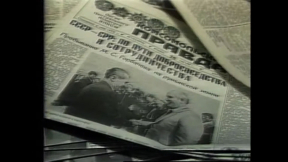
Emeritus Professor Archie Brown explains how Mikhail Gorbachev became the leader of the Soviet Union in 1985 and describes the domestic and international situation the USSR found itself in at this point of the Cold War. He discusses Gorbachev's political and economic agenda and priorities, looks at the support and...
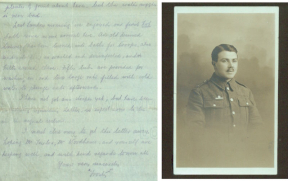
Deep into my PGCE year, I found myself discussing with my mentor how to pre-empt the barriers to understanding the past that students may face. One barrier we discussed was presentism: the tendency of students to interpret the past in light of their own modern knowledge, values and experiences. In...
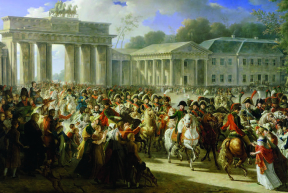
Geraint Brown and Matt Stanford share the daunting challenge and intriguing opportunities that are presented by leading a school history trip to a site as complex as Berlin. That the city is a palimpsest, layered with stories and tissued with conflicting identities, experiences and meanings, makes planning a trip extremely...
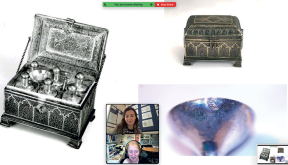
Having specialised in the history of material culture during her degree, Gabriella West was struck by the dismissive attitude of her pupils towards the study of material objects from the past. She therefore set out to find the perfect object through which to induct her Year 8 pupils into the...
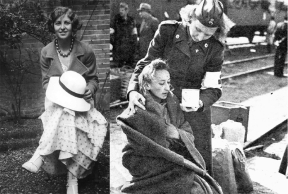
Responding to concerns about Dutch students’ citizenship education, Tim Huijgen, Paul Holthuis, Roel Nijmeijer and Iris van den Brand set out to design online materials to help students understand the decisions and dilemmas faced by past actors. They focused on the life and actions of Rosie Glaser (1914–2000), a Dutch...
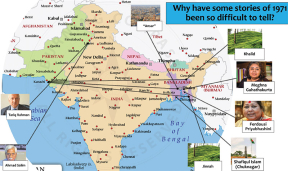
Nathanael Davies recognised that previous efforts to diversify the history taught at his school by weaving new stories into the curriculum had made little impression on his students’ assumptions about what really counted as history. Planning a new enquiry on the creation of Bangladesh was intended both to bridge a...
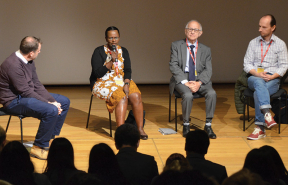
In this article, Andy Lawrence returns to arguments made in Teaching History 153 about the importance of teaching young people about other modern genocides in addition to the Holocaust. Building on those arguments with his own rationale, Lawrence also acknowledges the constraints on curriculum time that compel all departments to...
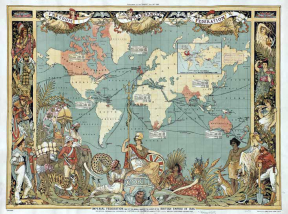
Concerned by the growing tendency of politicians and press to revive the moral balance-sheet approach to British imperial history and by some evidence of its resurgence in schools, Alex Benger set about devising a framework which would keep pupils’ analysis rigorously historical, rather than moral and politicised. In this article,...
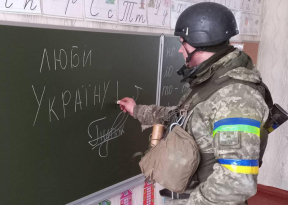
The events of the last few days appear to have come out of nowhere to many people, especially children. While tensions have existed in the region for some time Russia’s decision to attack Ukraine was without provocation. To have war return in such a way to the edges of Europe...
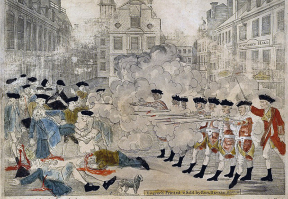
The Founding Fathers of the United States of America are never far from current political and cultural discussions. Whether prompted by the phenomenal success of Hamilton: the musical (2015), or the shocking scenes of riotous attack on the US Capitol in January 2021, the revolutionary intentions and legacy of such...
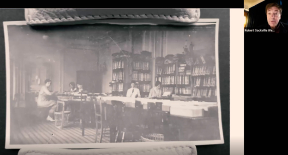
Historian Robert Sackville-West joined the HA Virtual Branch in November 2021 to talk about the topic of his book The Searchers: The Quest for the Lost of the First World War. By the end of the First World War, the whereabouts of more than half a million British soldiers were...
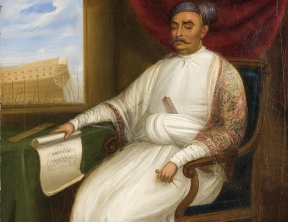
The historiography of the British Empire has taken a long course since the era of decolonisation. Political histories of the late twentieth century considered the mechanisms connecting crises at the ‘periphery’ with metropolitan decision-making. One rather overused stereotype was the so-called ‘man on the spot’ pushing empire forward, be they...