
Evidence
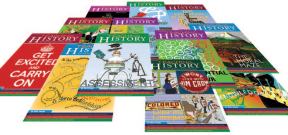
How often do you refer to objects in the classroom? When did you last explore with your pupils the materiality of past lives? The ‘material turn’ in historical research and scholarship opens up different lines of enquiry and different kinds of history from those revealed by documentary evidence. It can...
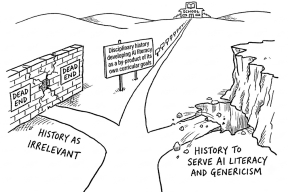
Many young people, aware of the rapid development and widespread use of generative forms of artificial intelligence, assume that the knowledge and skills they will need to navigate their future bear little relationship to those offered by the study of history. In response to these assumptions, Kieran Lavis and Katharine...
My students struggle with... Every student has an entitlement to learn history and to high quality history teaching. In this section you will find support for helping students who struggle with specific aspects of learning history. For each aspect of learning history that students struggle with you will find: A...
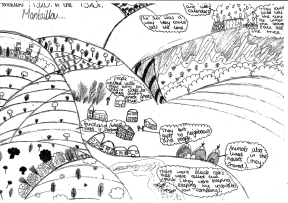
Hiscox wanted to broaden her students’ understanding of the complexity of the British past, and developed an enquiry into the Norman Conquest of Wales to help achieve that aim. Hiscox reports her enquiry design and its outcomes, sharing how she broadened both content and the types of sources that students...

Move Me On is designed to build critical, informed debate about the character of teacher training, teacher education and professional development. It is also designed to offer practical help to all involved in training new history teachers. Each issue presents a situation in initial teacher education/training with an emphasis upon...

Clare Bartington noticed that her students’ focus on the specific kinds of question used in examinations appeared to have undermined their understanding of how historians actually use sources. Instead of approaching the traces or ‘leftovers’ of the past as potential sources of evidence in relation to a particular question, her...
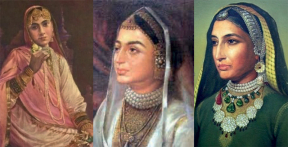
Danielle Donaldson’s history department was already working within a professional culture that sought opportunities for making the history curriculum diverse and representative. Responding to wider debates within and beyond the history education community, however, the department began to ask fresh questions about what it meant to decolonise a curriculum. Donaldson...
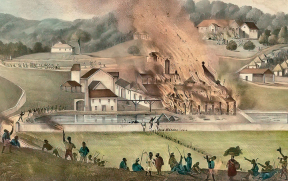
Can the ‘subaltern’ speak, Year 8s? When the Indian scholar and literary theorist Gayatri Chakravorty Spivak asked this question in 1988, she wasn’t asking Year 8s on a Monday morning. What she wanted to explore was whether those marginalised people written out of the archive – ‘the subaltern’ – could...
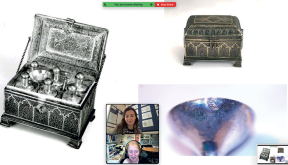
Having specialised in the history of material culture during her degree, Gabriella West was struck by the dismissive attitude of her pupils towards the study of material objects from the past. She therefore set out to find the perfect object through which to induct her Year 8 pupils into the...

In this article, Ian Luff returns to the theme of ‘practical demonstration’ which he developed in three articles twenty years ago. Luff restates his original rationale for the enduring power of the approach, advances some new reasons why history teachers should give serious attention to it and shares several practical...
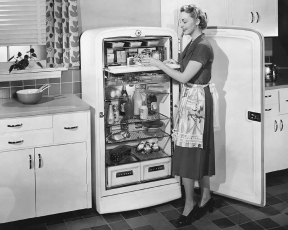
Maya Stiasny was faced with difficulties familiar to many of us. Her new Year 12 students were struggling to get to grips with a new period of history. They were not interrogating primary sources with sufficient vigour. Her solution, detailed here, was novel. Working on the rich social history of...
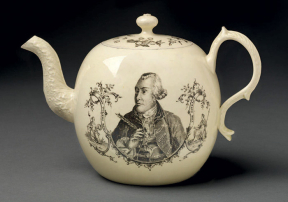
It seems that teapots really can talk. Eleanor Dimond took her undergraduate experience of studying material culture into the classroom, with startling results. Historians of material culture have developed distinctive evidential methods which, in stark contrast to typical GCSE and A-Level approaches, see a strong interplay between analysis of the...
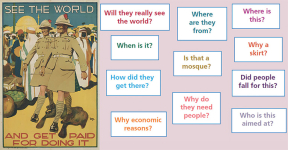
A highly distinctive and structured approach to teacher development, Lesson Study emerged in Japan but has since been adopted much more widely and now sees growing interest in the UK. Tony McConnell, Davinia Daley, Rebecca Levy, Lisa Waddell and Richard Waddington describe the process by which their school first investigated...
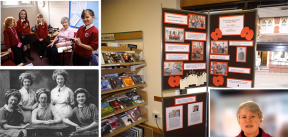
The Oral History Society has kindly agreed to produce two new films aimed at history teachers who are new to carrying out or using oral histories either in their teaching or with students. These two films will equip teachers with the essential tools and knowledge for using and devising effective...
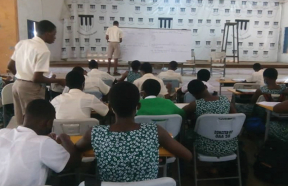
In order to contextualise and make sense of the Covid-19 pandemic, Verity Morgan worked with her school’s long-standing partner school in Ghana to devise an innovative project combining history and science, past and present. In this article, Morgan sets out the rationale for the project, her detailed adaptation of a...
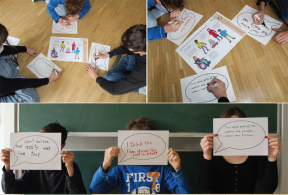
Although perhaps unfamiliar to the majority of our readers, concept cartoons are not a new educational tool. Christoph Kühberger here lays out his rationale for using this technique, borrowed from science education, in history teaching. Concept cartoons provide a means for pupils to express such difficult historical concepts as the...
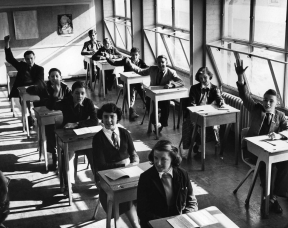
It is not emphasised enough that the progress of historiography often proceeds, not by historians arguing and then coming to some resolution, but simply by moving on. Historiography follows fashion, and subjects often exhaust themselves (for the time being)... A related issue is that of siloes. Historiography – academic writing...
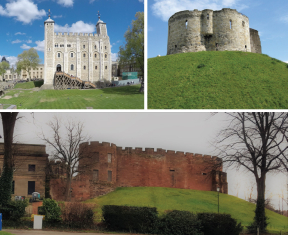
Michael Bird has a long-standing interest in the power of classroom dialogue, not only as a means of elicting students’ prior knowledge or checking their understanding of new ideas and information, but also as a powerful tool for generating new knowledge through a collective process of meaning-making. In this article,...
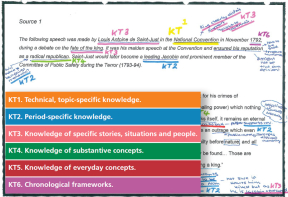
Frustrated by the generic statements that her Year 12 students were making about sources, Jacqueline Vyrnwy-Pierce resolved to undertake a research project into how her students were approaching sources about the French Revolution. Fascinated by the research of American educational psychologist Sam Wineburg, Vyrnwy-Pierce decided to use Wineburg’s methods to...
Jacob Olivey set out to design enquiries which would enable his pupils to reconstruct, using evidence, the perspectives of people in the past. In this article he shares in detail the planning and outcomes of two enquiries: one for Year 7 and one for Year 8. Olivey offers a example...