
Politics
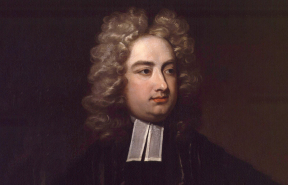
In Episode 12, Professor Michael Brown of the University of Aberdeen discusses who held power in Ireland in 1714 and how the protestant ascendancy developed following the fall of James II and the rise of the Hanoverian dynasty. This is a period increasingly defined by the exclusion of Ireland’s Catholic...
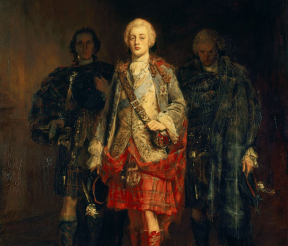
In Episode 9, Professor Alison Cathcart (University of Stirling) discusses who held power in Scotland in 1714 and how the Union with England, together with the arrival of the Hanoverian dynasty, transformed the nation. She examines the central role of the Church of Scotland, the influence of the Royal Burghs,...
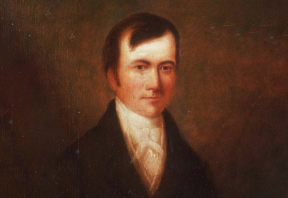
In Episode 9, Dr Eryn White (Aberystwyth University) discusses who had power in Wales in 1714, the changing relationship between Wales and the wider United Kingdom and the key developments that took place in Wales between 1714-1785. Dr White reflects upon the rapid expansion of print and literacy in Wales...
Ym Mhennod 9, mae Dr Eryn White (Prifysgol Aberystwyth) yn trafod pwy oedd mewn grym yng Nghymru ym 1714, y berthynas newidiol rhwng Cymru a'r Deyrnas Unedig ehangach a'r datblygiadau allweddol a ddigwyddodd yng Nghymru rhwng 1714-1785. Mae Dr White yn myfyrio ar ehangu cyflym print a llythrennedd yng Nghymru...
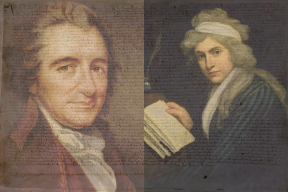
From royal courts to radical protests, from industrial revolutions to global empires – this compelling new film series traces the dramatic evolution of power, rights, and freedom across three centuries of British and Irish history. We will trace Britain and Ireland’s transformation from 1714 to 2010, unpacking power struggles, social...
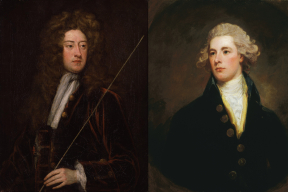
In Episode 2, Dr Robin Eagles (History of Parliament), examines the birth of Britain’s two party system in the form of the Whigs and the Tories; two parties, whose rivalry would define politics in Britain from the Restoration and Glorious Revolution to the middle of the Victorian Age. During this...
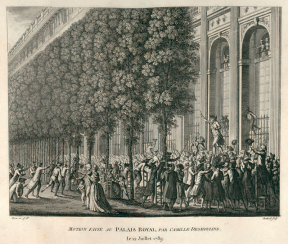
Recognising a significant return to stories in the history classroom, Holliss and Carroll wanted to think carefully about what this meant for A-level history. While stories had always been present in their classrooms, they wanted to experiment with the methods of the ‘new storytellers’, building lessons, then sequences of lessons,...
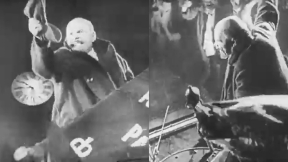
(Student and corporate secondary members can view these films in our Student Zone) Two men – Trotsky and Lenin – symbolise the Russian Revolution for most people. While Trotsky came to an icy end in Mexico, Lenin remains an enduring figure in the history of Russia and the history of...

Historical anniversaries can be a great way to get children and young people interested in a subject or to raise awareness about a particular issue. This resource is free to everyone. For access to hundreds of other high-quality history and education resources along with free or discounted CPD and membership...
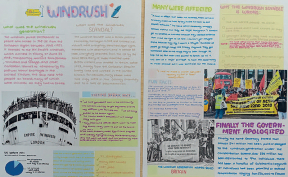
Mark Fowle began work on an enquiry to contextualise the Windrush scandal for his pupils in south London, in response to the first national Stephen Lawrence Day, in 2018. He went on to work with his colleagues in a new school to broaden pupils’ historical perspective through stories of migration...
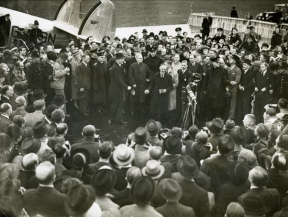
This project has been created on the initiative of Professor Julie. V. Gottlieb, Dept. of History, University of Sheffield. British political history, political conflict, appeasement and the Munich Crisis (1938) itself is the focus of her research and publications. Rather than approach these topics from ‘traditional’, elite and history from...
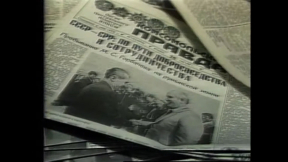
Emeritus Professor Archie Brown explains how Mikhail Gorbachev became the leader of the Soviet Union in 1985 and describes the domestic and international situation the USSR found itself in at this point of the Cold War. He discusses Gorbachev's political and economic agenda and priorities, looks at the support and...
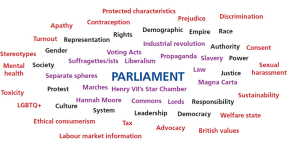
Bettney and Ridley focus on the context in which we teach and in which our students learn and on history in the context of the whole school curriculum and in relation to education about personal development. Taking the example of learning about parliament, they explore how the history curriculum and...
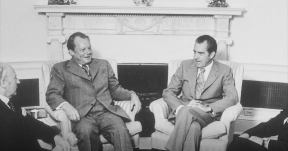
Germany as a divided and defeated nation is explored through the lens of how the two new Germanys rebuilt their States politically and culturally. Professor Anna Saunders reflects on the different inequalities that existed between the two states and how stability was established between political leaders, even when political dissent...
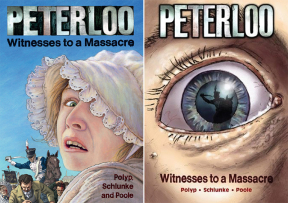
While previous work on historical interpretations has focused students’ attention on the particular questions that historians have been asking or the context in which they have been posing those questions, less attention has been paid to the process of historical narration itself – the decisions that are made in telling...
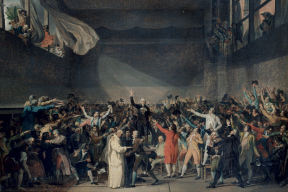
Many pupils love the Horrible Histories books, television programmes and songs. Over the years a number of A-level pupils have proudly told me that it was Horrible Histories that sparked their love of the subject, and they are quick to recite the songs word for word! But it is also...
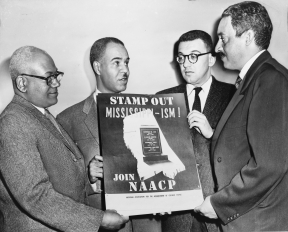
In this film, Professor Brian Ward and Professor Joe Street of Northumbria University look at two of the key groups that played a significant role in the development of the Civil Rights Movement: the NAACP (The National Association for the Development of Coloured People) and the Black Panthers. If you're...
Professor Tony Badger, Professor Joe Street and Professor Brian Ward discuss the African-American Civil Rights movement and examine different ways we might interpret the significance of key individuals, groups, institutions and events that played a role in its development and progress. In this film individual civil rights campaigners' actions are...
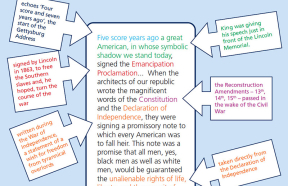
Sam Pullan explains how a chance encounter has helped him to improve his introduction to the modern themes and founding documents of US politics. Working with a professional historian whom he met, by chance, over dinner, he was able to produce lessons at the cutting edge of subject knowledge to...
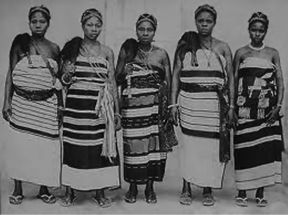
As an Early Career Teacher, Eleri Hedley-Carter set out to make the history she teaches in school more reflective of her undergraduate study of history – a discipline that strives to uncover a diverse past through various lenses and historical methods. In addition to expanding her school’s curriculum to include...