
Society
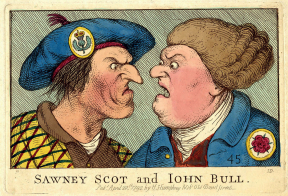
The simple answer is that historians are arguing about what it is that they are arguing about. Linda Colley’s profoundly influential Britons, 1707-1832: forging a nation, published in 1992, illustrates the point. Beginning with the parliamentary union of England and Scotland in 1707, the book links the emergence of British...
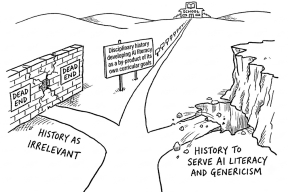
Many young people, aware of the rapid development and widespread use of generative forms of artificial intelligence, assume that the knowledge and skills they will need to navigate their future bear little relationship to those offered by the study of history. In response to these assumptions, Kieran Lavis and Katharine...
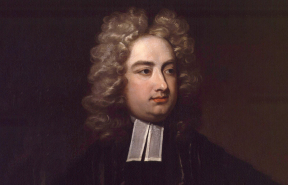
In Episode 12, Professor Michael Brown of the University of Aberdeen discusses who held power in Ireland in 1714 and how the protestant ascendancy developed following the fall of James II and the rise of the Hanoverian dynasty. This is a period increasingly defined by the exclusion of Ireland’s Catholic...
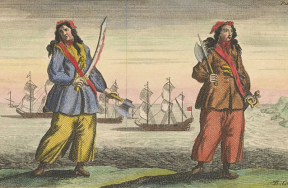
The topic of early modern global piracy has attracted increasing scholarly attention in recent decades, partly due to its own intrinsic interest and, it must be said, its entertainment value. However, historians have also explored its connections with broader themes such as empire and colonisation, social history, global economic networks,...
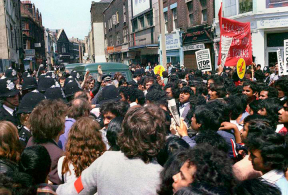
In this article, Joel Sharples explains the organising principles that underpinned his planning for a new enquiry sequence inspired by a local photography exhibition. The exhibition’s title ‘Brick Lane 1978: The Turning Point’ prompted him to think afresh about the idea of ‘a turning point’ – a concept that he...
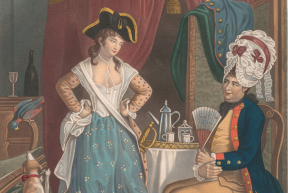
In episode 10, Dr Declan Kavanagh (University of Kent), reflects on Queer British history 1714-1785. Dr Kavanagh looks at the history of the language of LGBTQ+, in particular the term ‘queer’ in its very recent usage and how the language of descriptors for these communities has been influenced. Dr Kavanagh...
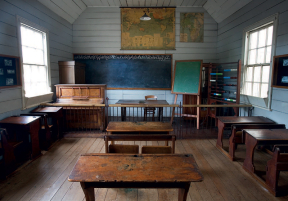
The history of schooling and the British Empire encompasses a complex body of literature. Histories of formal education intersect with work on race, class and capitalism and link to adjacent fields such as histories of childhood. A basic contention shared throughout this field, however, is that there was a profound...
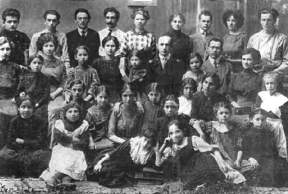
When Alistair Dickins came to teach A-level Russian and Soviet history (1855–1964) he was rather surprised by the very limited references to Jewish history within the exam board specification. His own detailed knowledge in this area (a ‘little side-project’ from his doctorate on the Russian Revolution), led to a revision...

Historical anniversaries can be a great way to get children and young people interested in a subject or to raise awareness about a particular issue. This resource is free to everyone. For access to hundreds of other high-quality history and education resources along with free or discounted CPD and membership...
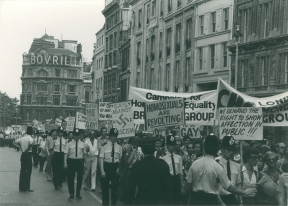
While academic historians began to make important contributions to our understanding of British LGBTQ+ history in the 1970s (and, indeed, this built on historical scholarship from as early as the 1880s), the field of British queer history became properly established within university history departments and mainstream academic scholarship from the...
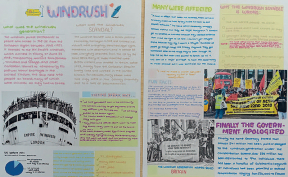
Mark Fowle began work on an enquiry to contextualise the Windrush scandal for his pupils in south London, in response to the first national Stephen Lawrence Day, in 2018. He went on to work with his colleagues in a new school to broaden pupils’ historical perspective through stories of migration...
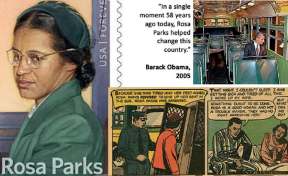
Inspired by Jeanne Theoharis’s biography of Rosa Parks, Ed Durbin initially planned to challenge the ‘fable’ that had been constructed around her life. He soon realised, however, that he wanted to take the opportunity to get ‘behind’ the fable and help his students understand how and why it had been...
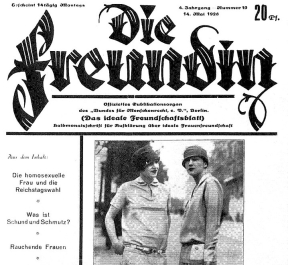
Berlin staged its first Christopher Street Day celebration in 1979. This queer pride event commemorated the Stonewall riots that took place a decade earlier in New York City, and it has continued to be a popular annual event in Germany. Its celebration of a landmark moment in American history, however,...
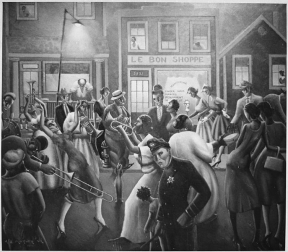
Inspired by reading the work of Stephen Tuck, Ellie Osborne set out to design a new sequence of lessons that would help her students adopt a longer lens on the American civil rights movement. At the same time, Osborne wanted to put more emphasis on the agency and campaigns of...
In this article Michael Riley and Alison Kitson seek to unlock the potential of the secondary history curriculum to educate young people about the current ecological and climate crisis in ways that might also inform their thinking about how to create a more sustainable future. The article (which mirrors a...

Barbara Trapani’s article sprung from, and is written in, hope. Through introducing the history of, specifically, Europeans’ relationships with trees in Madeira, the Banda Islands and Britain, Trapani enabled her Year 8 pupils to appreciate the ways in which exploitative nations have used irreplaceable resources and profoundly altered ecosystems and...
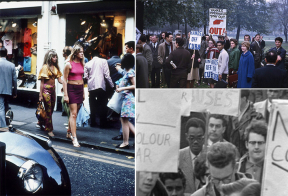
For such a boldly iconoclastic work, the Key Stage 3 textbook A New Focus on ... British Social History, c.1920–2000 (2023) provides a disarmingly conventional account of youth in the 1960s as ‘mostly better educated and informed than their parents had been at their age [and able] … to find...

Maya Stiasny was faced with difficulties familiar to many of us. Her new Year 12 students were struggling to get to grips with a new period of history. They were not interrogating primary sources with sufficient vigour. Her solution, detailed here, was novel. Working on the rich social history of...
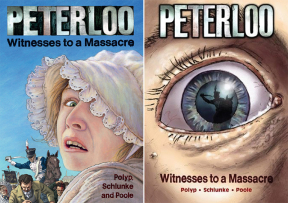
While previous work on historical interpretations has focused students’ attention on the particular questions that historians have been asking or the context in which they have been posing those questions, less attention has been paid to the process of historical narration itself – the decisions that are made in telling...
Many pupils love the Horrible Histories books, television programmes and songs. Over the years a number of A-level pupils have proudly told me that it was Horrible Histories that sparked their love of the subject, and they are quick to recite the songs word for word! But it is also...