
World 1066-1509
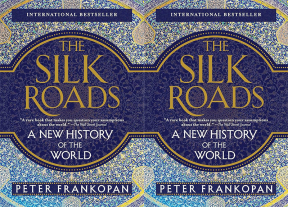
It has been the same for history teachers all over the country: the dramatic shift in perspective after reading Peter Frankopan’s The Silk Roads. Frankopan’s groundbreaking scholarship transported me to distant lands. His book introduced me to cultures and civilisations previously unknown. I wanted my pupils to venture along the...
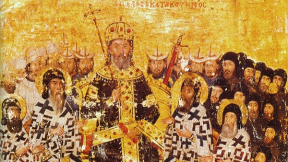
Medieval history is often a story of kings and their dates, primarily of England or, at best, western Europe. This funded webinar series aimed at secondary history teachers will introduce teachers to educational approaches to the Middle Ages that go beyond both kings and this narrow geographical range. It takes...
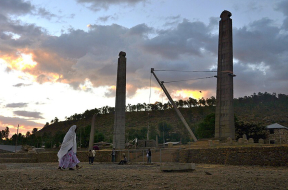
This Cunning Plan details an enquiry that I developed in order to achieve two curricular goals: to diversify our historical content and to help students to improve their disciplinary thinking and writing about similarity and difference. The enquiry addresses medieval Africa, specifically the East African kingdom of Aksum (approximately 300...
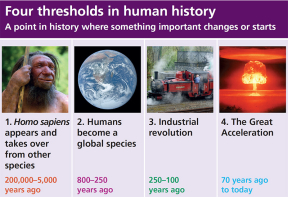
How can we bring climate change into our classrooms without making it ‘small’? Peter Langdon tackled this question by drawing on a ‘big history’ approach to design an enquiry that allowed his students to think about the relationship between humans and climate throughout the whole history of our species. Langdon’s...
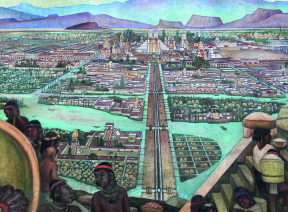
After discussing a new book about the Mexica (Aztecs) during a routine meeting with a trainee teacher, Niamh Jennings decided to construct a sequence of lessons around the history of the Mexica Empire. Struck by the vivid storytelling of historian Camilla Townsend in her book Fifth Sun, and fascinated by...

Offered five weeks to teach ‘whatever he wanted’ to Year 7, Andrew Slater decided that he wished to tackle the concept of significance head-on early in his students’ time in his school. He chose the expectedly unfamiliar substantive content of the Khmer Empire, challenging his students to justify the significance...
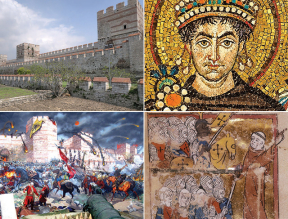
In this article, Jacob Olivey describes his department’s efforts to both diversify their Key Stage 3 curriculum and secure greater curricular coherence. Building on a large body of research and practice, Olivey sought new forms of curricular coherence through the selection and sequencing of substantive content across the curriculum. He...
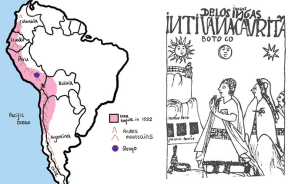
As part of her department’s effort to diversify the history curriculum, Paula Worth began a quest to research and then shape a lesson sequence around the Inkas. Her article shows how she allowed the new topic and its historiography to challenge and extend her own use of sources, particularly oral...
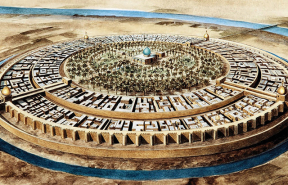
In 2005, in a Teaching History article entitled, ‘A need to know’, Nicolas Kinloch built an argument for teaching the history of Islamic civilisations to all pupils. Afia Chaudhry returns to this theme, reflecting deeply on the needs of her own students – Muslim and non-Muslim alike – within a...
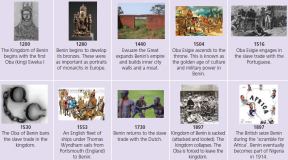
Josh Garry describes his effort to refresh his approach to teaching the British transatlantic slave trade. Drawing on reading, lectures and discussions during an Historical Association Teacher Fellowship programme, Garry built a sequence of lessons designed to contextualise the trade while showing African agency and complexity. The result was a...
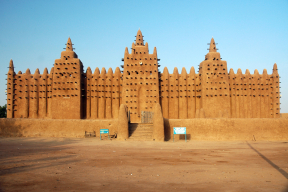
While lockdown, in response to the Covid-19 pandemic in the spring of 2020, brought a period of turbulence to the education sector, it also brought a wealth of generosity, with a vast range of free online CPD offered by different providers. One in particular was the webinar series ‘West African...
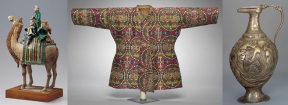
The stimulus for this article came from two developmental tasks that Barbara Trapani was set during the course of her initial teacher education programme: planning her first historical enquiry and bringing the work of an historian into the classroom. Trapani chose to tackle the two tasks together, using Susan Whitfield’s...
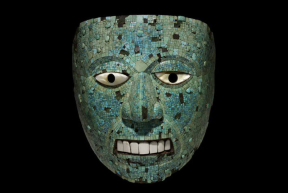
Ian Mursell set up Mexicolore in 1980 with his Mexican partner Graciela Sánchez and has worked since then with a wide variety of heritage and academic partners specialising in Aztec and Maya history. With the Aztecs now becoming a study unit on the OCR 2016 GCSE specification B, the Historical...
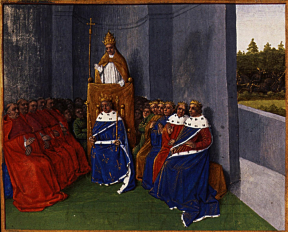
An HA Podcasted History of the Crusades featuring Professor Jonathan Riley-Smith, Professor Jonathan Phillips of Royal Holloway, University of London and Dr Tom Asbridge of Queen Mary, University of London.
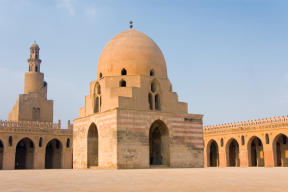
While preparing her Year 12 students for an International Baccalaureate paper on early Islam, Kirstie Murray became concerned that students' weaknesses in making claims would be particularly exposed by the challenging complexity of this topic's source record and its contested historiography. Drawing on the practice of other history teachers, especially...
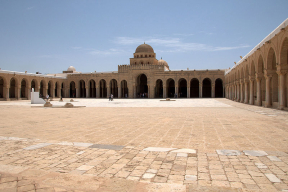
An HA Podcasted History of the Rise of an Islamic Civilisation featuring Dr Caroline Goodson of Birkbeck, University of London.
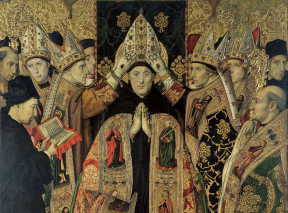
In this set of podcasts Professor Miri Rubin of Queen Mary University of London, Professor Robert Swanson of the University of Birmingham & Dr Francois Soyer of the University of Southampton look at Christianity, Judaism and Islam in Medieval Europe.
Nine centuries after enthusiasm for pope Urban's expedition to Jerusalem swept western Europe the phenomenon of the first crusade continues to fascinate. This pamphlet examines the nature of the crusades and the motives of those who joined it, describes the hardships of the long journey to the Holy Land and...

‘English king Frederick I won at Arsuf, then took Acre, then they all went home': exploring the challenges involved in reading and writing historical narrative Paula Worth draws on three professional traditions in history education in order to build a lesson sequence on the Crusades for her Year 7s. First,...
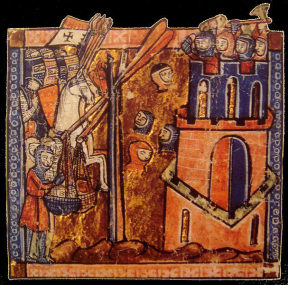
Taking new historical research into the classroom: getting medieval (and global) at Key Stage 3 Although history teachers frequently work with academic historical writing, direct face-to-face encounters with academic historians are rare in secondary history classrooms. This article reports a collaboration between an academic historian and a history teacher that...