
Curriculum Support     Principles of planning         Overview & Depth         Disciplinary concepts             Cause and consequence             Change and continuity             Similarity & difference             Significance             Evidence             Interpretations         Substantive Knowledge             Substantive concepts             Chronology             Long-term knowledge plans             Sense of period             Making knowledge secure         Using enquiry questions         Diversity in the past         Controversial issues         Progression & Assessment         Using historical scholarship         Extended Reading         Extended Writing         Historical Argument         Narrative in history         Inclusion         Independent Learning         Digital history         Triumphs Show     Teaching resources         Corporate lesson sequences         Free teaching resources             Medieval             Early Modern             Modern     Key Stage 3         Planning         Progression & Assessment         Local History         Transition         Learning outside the classroom         Connecting Classrooms through Global Learning     Key Stage 4         Planning             General             Thematic             Period Study             Depth Study             Historic Environment         Progression & Assessment         Non-GCSE     Key Stage 5         Planning         Progression & Assessment         Independent Study         Transition to HE     Periods and Themes         Periods             Ancient             Early Medieval             1066-1509                 Britain & Ireland 1066-1509                 Europe 1066-1509                 World 1066-1509             1509-1745                 Britain & Ireland 1509-1745                 Europe 1509-1745                 World 1509-1745             1745-1901                 Britain & Ireland 1745-1901                 Europe 1745-1901                 World 1745-1901             1901-present                 Britain & Ireland 1901-present                 Europe 1901-present                 World 1901-present         Themes             Politics             Women             Health             Power             Science & Industry             Religion             International Relations             Crime & Punishment             Economics             Society             Culture

Medieval

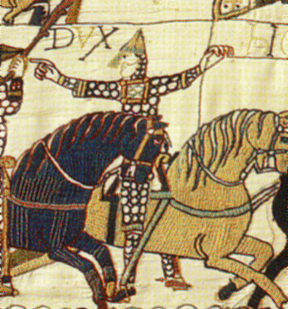
In the summer of 2020 a group of teachers took part in a mini teacher fellowship on medieval perceptions of conquest. Teachers took part in a two-day course led by academic historians Dr Emily Winkler of Oxford University and Dr Owain Jones of Bangor University. Sadly, due to the covid...
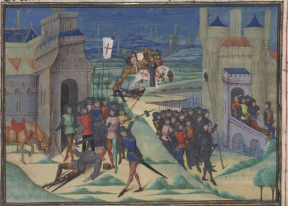
This Teacher Fellowship programme focused on developing the teaching of medieval history and the history of revolt, popular protest, power and the people, in partnership with The People of 1381 project. The project is focused on revealing new insights into the diverse range of people who played a part in...
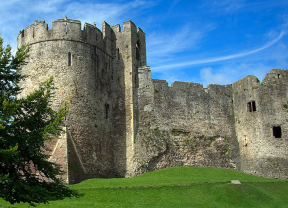
This series of lessons investigates the impact of the Norman Conquest. It does this by getting students to question Simon Schama’s interpretation that the Normans brought a ‘truck-load of trouble’ to England. The sequence is five lessons long, with the first four lessons delivering the content and the fifth wrapping...
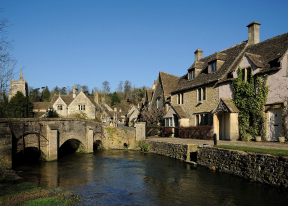
This series of lessons has been designed to make gaining knowledge of medieval rural life engaging for students and to teach them how good historical fiction is constructed. Students learn how to write a story about life in the fourteenth-century Suffolk village of Walsham and to do so successfully they...

Finding the time to research, plan and produce thoughtful, appropriately demanding and well crafted sequences of lessons is a challenge. At the Historical Association we are supporting our members by carefully collating a number of free fully resourced lesson sequences that have been produced through funded projects. The Teacher Fellowship...
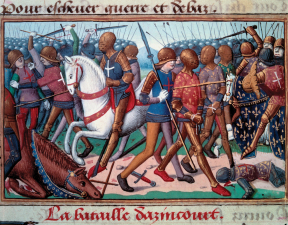
These resources were developed as part of the Historical Association’s inaugural Teacher Fellowship Programme funded by Agincourt 600. The programme was led by Ian Dawson and focused on developing teachers’ knowledge of late medieval history and translating this to the classroom. Featuring academic input from Professor Anne Curry, Professor Michael...
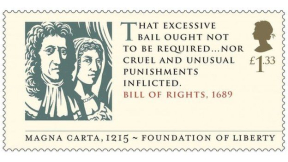
The following sequence of lessons is designed to build on pupils' existing knowledge and understanding of the medieval period. In particular it is assumed that pupils will already have an outline knowledge of the main features of medieval kingship and how monarchs exercised their power. In determining the focus for...