
Using historical scholarship
It has been the same for history teachers all over the country: the dramatic shift in perspective after reading Peter Frankopan’s The Silk Roads. Frankopan’s groundbreaking scholarship transported me to distant lands. His book introduced me to cultures and civilisations previously unknown. I wanted my pupils to venture along the...
Sarah Jackson-Buckley and Jessie Phillips found themselves perennially dissatisfied with the outcomes of their teaching of the Protestant Reformation. Determined that students should take away a sense of the momentous political and social consequences of the Reformation, they turned to historical scholarship, and to the work of other history teachers...
My students struggle with... Every student has an entitlement to learn history and to high quality history teaching. In this section you will find support for helping students who struggle with specific aspects of learning history. For each aspect of learning history that students struggle with you will find: A...
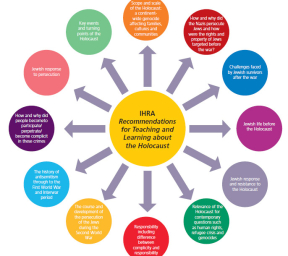
Convinced of the value of a good textbook as a teaching and learning resource, Alex Diamond set out to understand teachers’ thinking about Holocaust textbooks and what it would be for a textbook to represent Holocaust history adequately. As Diamond’s discussion shows, this is a multi-faceted issue. Evaluating textbook representation...
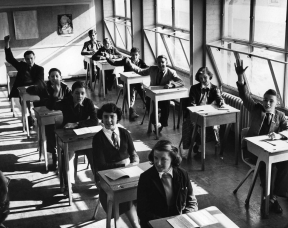
It is not emphasised enough that the progress of historiography often proceeds, not by historians arguing and then coming to some resolution, but simply by moving on. Historiography follows fashion, and subjects often exhaust themselves (for the time being)... A related issue is that of siloes. Historiography – academic writing...
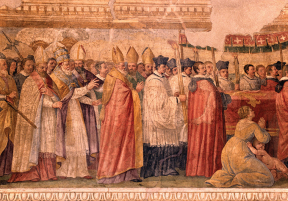
Much has been written in recent years about how historical scholarship can be used to shape practice in the classroom. As an historian of the medieval period now working as an history teacher, Dhwani Patel offers a fresh perspective on these debates. During her PGCE year, Patel found herself reflecting...

Lina Power has interpreted an emphasis on knowledge organisers and factual knowledge tests to mean that substantive knowledge is all that matters. Move Me On is designed to build critical, informed debate about the character of teacher training, teacher education and professional development. It is also designed to offer practical...
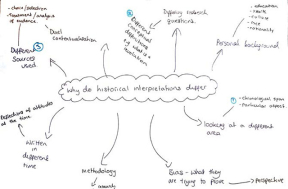
Holly Hiscox was concerned that many of her A-level students – asked to evaluate three different historical interpretations for their non-examined assessment task – still tended to hold unhelpful misconceptions about the nature of interpretations. In this article she explains how she created an introductory scheme of work to help...
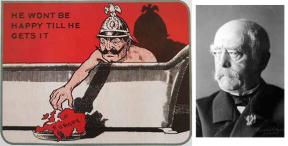
Frustrated by her students’ glib use of catch-all terms such as ‘militarism’ in addressing causation, Alexia Michalaki wanted her Year 9 students to produce mature causal explanations of World War I. To encourage this to happen she went back into decades of pedagogical writing and research, teasing out the ways...
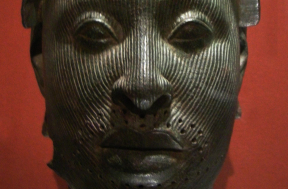
The George Floyd killing and the Black Lives Matter movement in the UK have led to an upsurge in interest in African history: how (and whether) it is taught, where it is taught, and who teaches it. Although it is widely recognised that slavery must be taught, there is a...

While lockdown, in response to the Covid-19 pandemic in the spring of 2020, brought a period of turbulence to the education sector, it also brought a wealth of generosity, with a vast range of free online CPD offered by different providers. One in particular was the webinar series ‘West African...
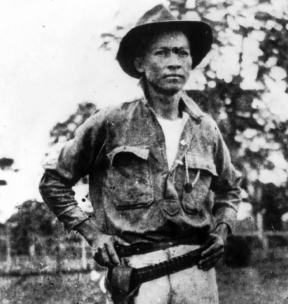
In his article in this journal just over a year ago, Steven Driver set out his vision for a less myopic range of topics in A-level coursework. In this edition, Driver demonstrates how he has built student enthusiasm for, and knowledge of, a topic which he had previously identified as...

We’ve been talking to our secondary school members and we know how difficult life is for teachers in the current circumstances, so we wanted to lend a helping hand. 'What’s the wisdom on…' is a new and already popular feature in our secondary journal Teaching History and provides the perfect...
We’ve been talking to our secondary school members and we know how difficult life is for teachers in the current circumstances, so we wanted to lend a helping hand. 'What’s the wisdom on…' is a new and already popular feature in our secondary journal Teaching History and provides the perfect...
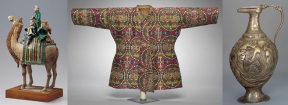
The stimulus for this article came from two developmental tasks that Barbara Trapani was set during the course of her initial teacher education programme: planning her first historical enquiry and bringing the work of an historian into the classroom. Trapani chose to tackle the two tasks together, using Susan Whitfield’s...
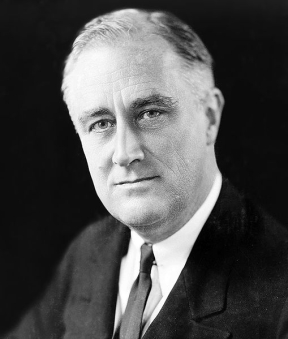
Over 50 years ago I read my first serious book on American history. I can still remember the excitement of reading William E. Leuchtenburg’s Franklin D. Roosevelt and the New Deal, 1932–1940. His description of FDR and American politics in the 1930s seemed so much more colourful and dramatic than...
David Hibbert and Zaiba Patel decided to work together after becoming concerned that school history curricula might not enable students to interrogate popular British mythologising about World War II. Building on these pre-existing concerns, their collaboration with the historian Yasmin Khan yielded an Interpretations enquiry which asked students to consider...
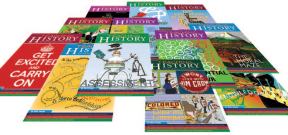
The year 1910 saw the publication of a remarkable book on history teaching by M.W.Keatinge. The purpose of this guide. What's the Wisdom On... is a short guide providing new history teachers with an overview of the ‘story so far’ of practice-based professional thinking about a particular aspect of history...

Reflecting on challenges that had surfaced in their own and others’ efforts to get pupils to write historical narratives, Rachel Foster and Kath Goudie went back to the drawing board to consider the disciplinary purposes of narrative. They used both historical scholarship and theoretical works by historians on narrative construction....

Inspired by the growing number of history teachers who have sought to introduce younger pupils to academic historical scholarship in the classroom, Tim Jenner wanted to bring about his own reading revolution at Key Stage 3. But rather than simply develop one-off lessons or enquiries based on scholarship his goal...