
Health

In order to contextualise and make sense of the Covid-19 pandemic, Verity Morgan worked with her school’s long-standing partner school in Ghana to devise an innovative project combining history and science, past and present. In this article, Morgan sets out the rationale for the project, her detailed adaptation of a...
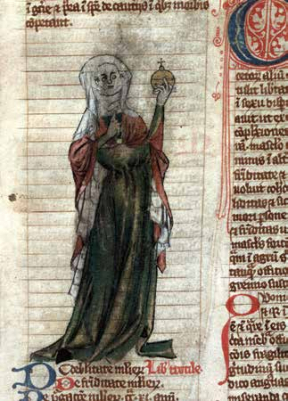
The history of medicine, health, and illness between c. 500 AD and 1500 has received a great deal of scholarly attention in recent decades. It’s a fascinating field that can tell us a great deal about medieval people’s everyday lives and their day-to-day worries: after all, everyone is ill or...
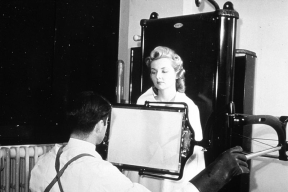
Health as a specific feature of central government strategy is a relatively recent phenomenon and Hugh Gault identifies how this feature of everyday headlines in our newspapers has been managed until the present time. At the start of the twentieth century Lord Salisbury’s Cabinet comprised four Secretaries of State –...
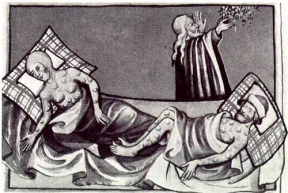
I started teaching ‘crime and punishment through time’ thematically a few years ago. I was teaching it as a Schools History Project ‘study in development’. We had moved from ‘medicine through time’ in order to keep things fresh. After six times through the content, much as I loved it, crime,...
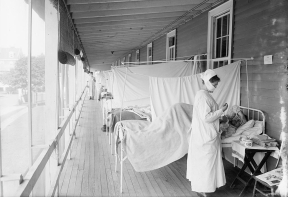
In our continuing Aspects of War series Hugh Gault reveals that the flu pandemic, which began during the First World War, presented another danger that challenged people’s lives and relationships. Wounded in the neck on the first day of the battle of the Somme, 1 July 1916, Arthur Conan Doyle’s...
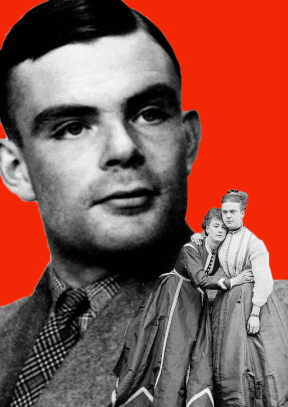
In this podcast, Dr Tommy Dickinson of the University of Manchester, looks at the historical medicalization of homosexuality and transvestism. 1. Introduction: the historical medicalization of homosexuality and transvestism HA Members can listen to the full podcast here Suggested Reading: Tommy Dickinson (2015) "Curing Queers": MentalNurses and their Patients 1935-1974....
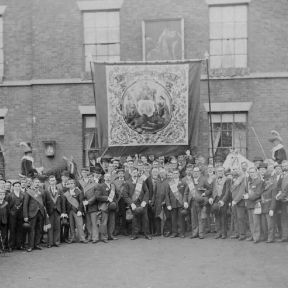
Friendly societies were designed to help members to cope with the illness, death or unemployment of a household's breadwinner. Each month members, mostly men, paid into the society, often at a meeting in a pub and in return payments from the pooled funds were made to ill members and to...
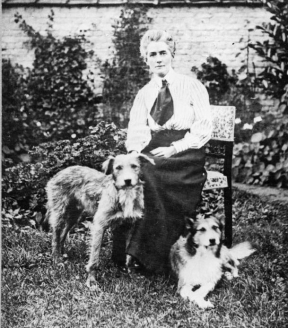
With the centenary approaching, article after article will appear on battles, the men who fought, those who refused, those that died, those who returned and those that made the decisions. There will be articles on the home front and the women that stepped into the men's shoes often to be...
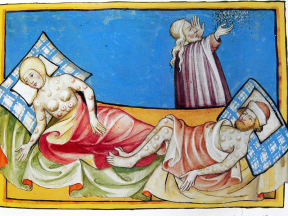
In this HA Podcast Ian Dawson looks at medicine during the medieval period.
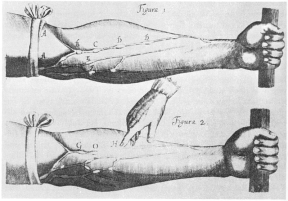
Medicine Through Time is a Development study. It traces the development of medical practice from prehistoric times to present day. This development is not always continuous and sometime knowledge went backwards or stayed the same for long periods of time. You will need to know the reasons for this. Medical...
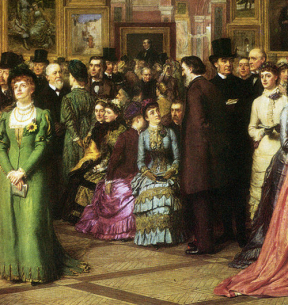
First referred to by Richard Morton (1637-98) in his Phthisiologia under the denomination phthisis nervosa as long ago as 1689, anorexia nervosa was given its name in a note by Sir William Gull (1816-90) in 1874. Gull had earlier described a disorder he termed apepsia hysterica, involving extreme emaciation without...

Following Jamie Oliver’s devastating television series on the inadequacy of school meals the present government has been quick to be seen to address the situation. In September 2005, Ruth Kelly, the then Education Secretary, announced a war on junk food in schools.1 This was nothing new, because the history of...
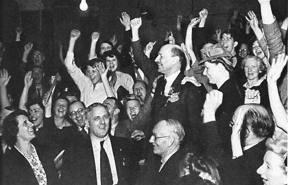
‘The past week will live in history for two things’, announced the Sunday Times of 29 July 1945, ‘first the return of a Labour majority to Parliament and the end of Churchill's great war Premiership.’ Most other newspapers concurred. The Daily Mirror, of 27 July, proclaimed that the 1945 general...
The concept ‘local government’ dates only from the middle of the nineteenth century. ‘Local government service’ emerged later still. In 1903 Redlich and Hirst1 wrote of ‘municipal officers’, while in 1922 Robson2 preferred ‘the municipal civil service’. ‘Local government service’ perhaps derives its pedigree from its use in the final...
Of the many social changes that occurred during the Victorian age, public health reform is widely agreed to be one of the most significant. In the early Victorian era the vast majority of Britons drank water from murky ponds and rivers, carried to their dwellings in buckets; and their excrement...