
Historic Environment
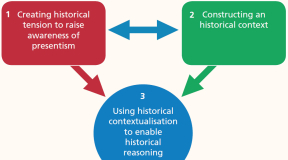
In this article, which is based on Huijgen’s PhD dissertation Balancing between the past and the present, Tim Huijgen and Paul Holthuis present the results of an experimental method of teaching 14–16-year-old students to contextualise their historical studies in a different way. In the four lessons described, students’ initial reactions...
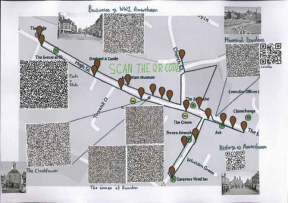
Why ‘do’ local history? The new (grades 9–1) GCSE specifications place a lot of importance on the local environment. The rationale for this is to get students to situate a site in its historical context, and to examine the relationship between local and national developments. Initially this change was the...

One of the biggest changes in the new GCSE specifications is the requirement for all students to undertake a study of the historic environment. Unsurprisingly the approach taken by the exam boards to this requirement varies widely. While some boards allow schools a free choice of site, others have decided...
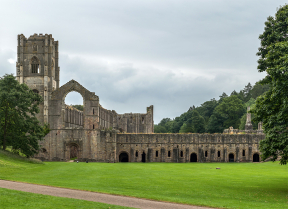
Working alongside local history teachers to prepare for the new GCSE specifications Steve Illingworth and Emma Manners were struck that many teachers were concerned about two issues in particular: the breadth and depth of knowledge demanded and new forms of assessment, especially the historic environment paper. In this article they...

A year after the end of the First World War, George V stated: "I believe that my people in every part of the Empire fervently wish to perpetuate the memory of the Great Deliverance and those who laid down their lives to achieve it." From that moment, the idea of...
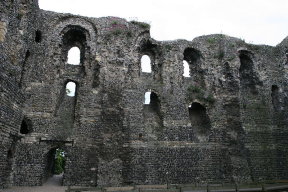
The GCSE History criteria specify that the courses should cover three geographical contexts: local, British and European/wider world. The requirement to include some local history has been developed into the study of a locality in its Historic Environment. This has been developed in four different ways by the Awarding bodies...
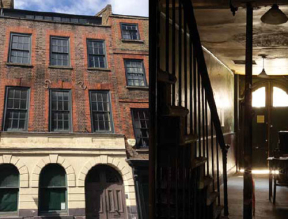
A host of histories: helping Year 9s explore multiple narratives through the history of a house Described by the author Monica Ali as a building that ‘sparks the imagination and sparks conversations', 19 Princelet Street, now a Museum of Diversity and Immigration, captivated the imagination of teacher David Waters. He...
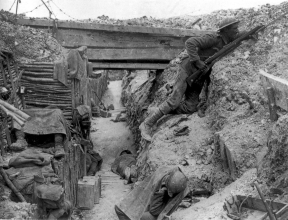
Remembering the First World War: Using a battlefield tour of the Western Front to help pupils take a more critical approach to what they encounter The first year of the government's First World War Centenary Battlefield Tours Programme is now under way, allowing increasing numbers of students from across Britain...
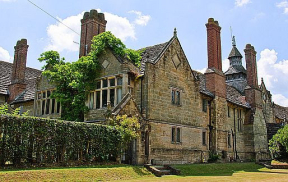
Sackville College almshouse in East Grinstead, Sussex, was founded in 1609, by Robert Sackville, 2nd Earl of Dorset, when he wrote his will. He died 17 days later without seeing one stone laid, yet the College still stands, providing affordable accommodation for local elderly people of limited means. It is...
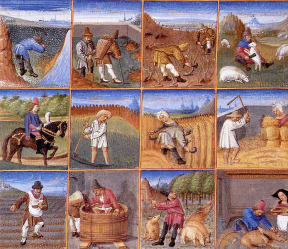
An HA Podcast with Professor Mark Ormrod of the University of York looking at the research project England's Immigrants 1330-1550. In this podcast Professor Ormrod explores the extensive archival evidence about the names, origins, occupations and households of a significant number of foreigners who chose to make their lives and...
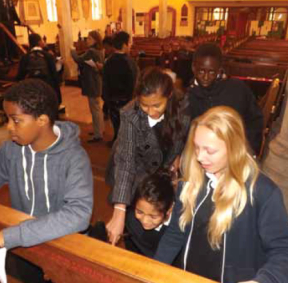
The short walk from our school to St Mary's Parish Church, Leyton, takes us past late Victorian terraces, post-Second World War apartment blocks and early twentyfirst century social housing in one of the most densely populated and ethnically diverse parts of East London, sandwiched as it is between Stratford and...
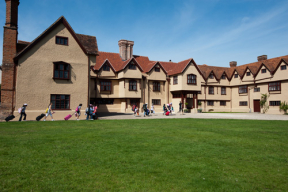
Ufton Court, an Elizabethan Grade 1 Manor House between Reading and Newbury, is an inspirational centre for schools. The Ufton team lead residential and day visits for KS2 that aim to give children a passion for history. Find out more: https://www.uftoncourt.org.uk/
One year ago (2011), the south eastern branch of English Heritage and the Historical Association came together to see what we could do better in partnership. The outcome was the Local Heritage Partnership Project. The vision was to work together to provide access to and inspiration to carry out local...
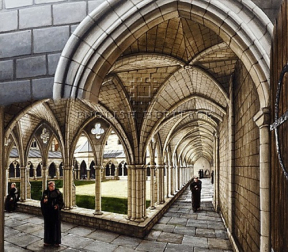
English Heritage and the Historical Association have teamed up to provide this great new CPD guide to getting the most out of local historical sites with your classes. This easy to follow unit provides the basis for an entire unit of local study using the built heritage around you. Examples...
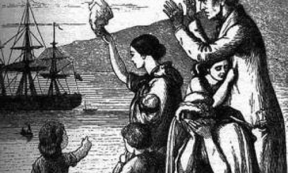
Irish migration to Britain has a long and chequered history, yet only in recent years have historians examined this subject in depth, through a growing body of local, regional and national studies which have supplemented the earlier pioneering research of J. E. Handley and J. A. Jackson. These studies have...
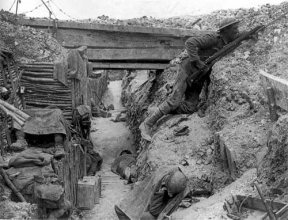
Having already reflected on ways of improving their students' understanding of historical diversity at Key Stage 3, Joanne Philpott and Daniel Guiney set themselves the challenge of extending this to post-14 students by means of fieldwork activities at First World War battlefields sites. In addition, they wanted to link the...
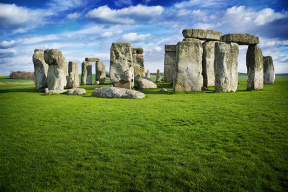
This is a momentous occasion in the history of designation in England and we hope you find the List and the online application form a useful resource. The National Heritage List for England is an online database which brings together information on all nationally designated heritage assets in one place...
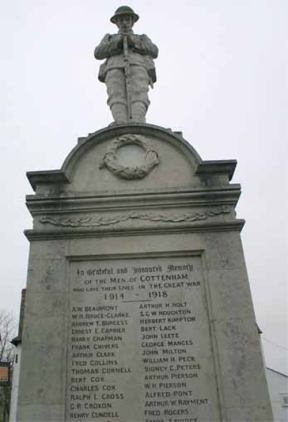
Please note: this article pre-dates the 2014 National Curriculum and some content may be outdated. The idea of engaging pupils with the relevance of local memorials is becoming commonplace in the history classroom. In Teaching History 109, Examining History Edition, Dale Banham's pupils used First World War memorials to assess...

Question: How can we plan to integrate local history into Key Stage 3 schemes of work so that pupils are engaged by the relevance of the subject across different periods of time? Local history can come in all shapes and sizes, from a large-scale oral history project to the perusal...
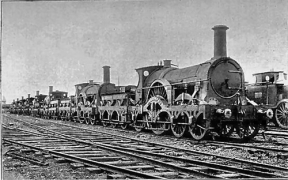
Please note: this article pre-dates the 2014 National Curriculum and some content may be outdated. Rigorous historical enquiry is integral to effective history teaching. The 2008 National Curriculum has recognised its importance by giving it a broader definition as a key process to include not only the use of historical...