
Significance
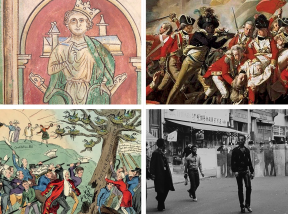
Have you ever felt that teaching significance at Key Stage 4 is hard with a limited cast of characters? Do students ask questions that you don’t have the resources to answer? Are you stuck for sources that push the standard narratives of key topics? These four workshops will fix that:...

Mark Fowle began work on an enquiry to contextualise the Windrush scandal for his pupils in south London, in response to the first national Stephen Lawrence Day, in 2018. He went on to work with his colleagues in a new school to broaden pupils’ historical perspective through stories of migration...
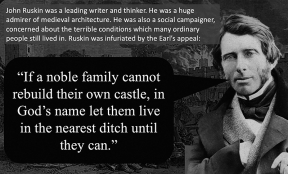
Reflecting on the reasons why generic models for teaching historical significance are never quite adequate, Rachel Foster found herself considering, instead, the specific contexts in which arguments about historical significance arise. These reflections took her to the fascinating example of stately homes. Drawing on scholarship such as that of Peter...

Move Me On is designed to build critical, informed debate about the character of teacher training, teacher education and professional development. It is also designed to offer practical help to all involved in training new history teachers. Each issue presents a situation in initial teacher education/training with an emphasis upon...

Offered five weeks to teach ‘whatever he wanted’ to Year 7, Andrew Slater decided that he wished to tackle the concept of significance head-on early in his students’ time in his school. He chose the expectedly unfamiliar substantive content of the Khmer Empire, challenging his students to justify the significance...
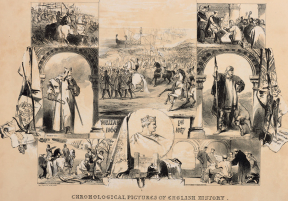
Jane Card’s previous work on the power of images in conveying particular interpretations and her advice about how to use visual material effectively in classrooms will be familiar to readers of Teaching History. In this article she focuses specifically on the capacity of visual representations to convey a compelling message...
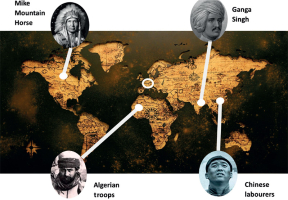
When Paula Worth met with history-teaching colleagues to explore how they could improve their teaching about historical significance, she found that she was far from alone in finding the process a daunting one. Prompted to investigate the difficulties she had encountered, Worth realised that that she had previously reached for...

'What’s the wisdom on…' is a popular feature in our secondary journal Teaching History and provides the perfect stimulus for a department meeting. 'What’s the wisdom on…' provides history teachers with an overview of the ‘story so far’ of many years of practice-based professional thinking about a particular aspect of...

The idea of historical significance eludes tidy answers. It doesn’t thrive on the quick fix. Yet we do not need to be confused by it. It just requires some clear thinking about what it distinctively offers. In other words, we need to clarify overall curricular aims, and think big about...
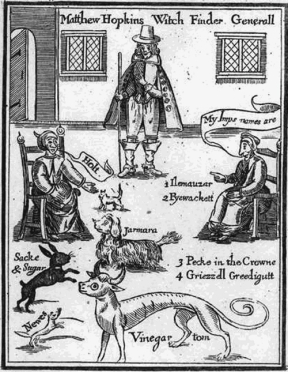
In this article Kerry Apps introduces students to the significance of the witch-hunts in the modern era, at the time when they occurred, and in the middle of the eighteenth century. She presents her rationale for choosing the witch-hunts as a focus for the study of significance, and shows how...
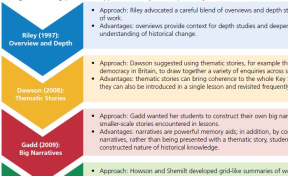
Inspired by The History Manifesto, Suzanne Powell describes in this article her rationale for expanding her students’ horizons by asking them to think about change, similarity and difference on a grand scale. She sets ‘big history’ into its curricular context, and shows the way in which her students could, and...
Please note: these links were compiled in 2009. For a more recent resource, please see: What's the Wisdom on: Historical significance. This selection of Teaching History articles on 'Significance' are highly recommended reading to anyone who wants to get to grips with this key concept. All Teaching History articles are...

A year after the end of the First World War, George V stated: "I believe that my people in every part of the Empire fervently wish to perpetuate the memory of the Great Deliverance and those who laid down their lives to achieve it." From that moment, the idea of...
There are three basic strands to our lessons. How should we teach? What skills should we enable our students to build? What content should we use to deliver those skills? In this article Tony McConnell, who has been re-designing the curriculum in his school in response to a changed examination...
Historical significance first appeared in England’s National Curriculum for history in 1995. It entered the assessment framework (Level Descriptions) in 2008. In 2014, it became part of the History NC ‘Aims’. One thing never changes, however: it is hard. But history teachers have written a great deal about historical significance...
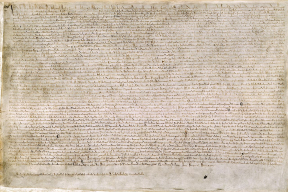
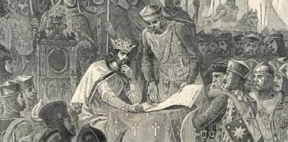
Both Dawson and Hayes have recently written Cunning Plans that show how exciting Magna Carta is. So why not stop there? Bring the barons to life with a flare of Dawson and send Magna Carta flying across the continent with just a hint of Hayes. Hey, from the same edition,...
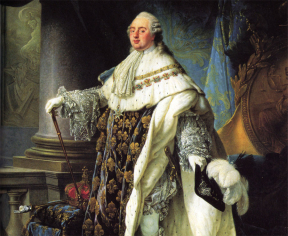
Setting us free? Building meaningful models of progression for a ‘post-levels' world Alex Ford was thrilled by the prospect of freedom offered to history departments in England by the abolition of level descriptions within the National Curriculum. After analysing the range of competing purposes that the level descriptions were previously...

Enquiry Question: What's worth knowing about the First World War? At the end of our scheme of work on the First World War, I asked myself how I might encourage my Year 9 pupils to reflect on the historical significance of the events we had studied. I was particularly interested...

Year 13 play a competitive game to help them arrive at strong and substantiated judgements. Year 13 were in the library again, sinking under tomes of weighty works on the German Reformation. James was feverishly rifling through a book on the ‘Reformation World' for something (anything!) to do with Luther's...
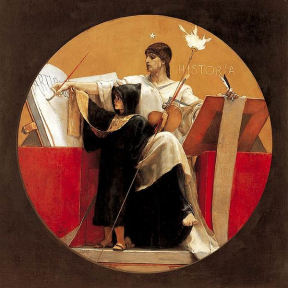
Joanne Pearson reflects on her experiences as a history teacher and teacher educator, considering the ways in which she has seen women represented in the history curricula of different schools in England. She makes the case that greater attention needs to be paid by history teachers to the criteria against...