
Cause and consequence
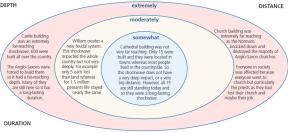
‘You think you’ve found a way to help our Year 7s explain historical consequence?’ My head of department sounded intrigued. ‘View them as shockwaves!’ I exclaimed. ‘Just like Boba Fett’s ship in Star Wars!’ My head of department raised an eyebrow. It was September 2024, and I had just joined...

Move Me On is designed to build critical, informed debate about the character of teacher training, teacher education and professional development. It is also designed to offer practical help to all involved in training new history teachers. Each issue presents a situation in initial teacher education/training with an emphasis upon...
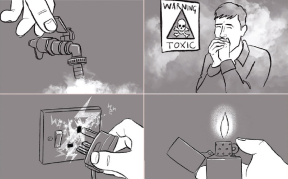
Alarmed by his students’ random use of causal language in their essays, James Edward Carroll resolved to help his students improve their understanding of causal processes. Carroll decided to introduce his students to the metaphors that historians use to describe causation in the historiography of the Salem witch trials. By...

'What’s the wisdom on…' is a popular feature in our secondary journal Teaching History and provides the perfect stimulus for a department meeting. 'What’s the wisdom on…' provides history teachers with an overview of the ‘story so far’ of many years of practice-based professional thinking about a particular aspect of...
Consequence easily becomes ‘causation’s forgotten sibling’, as Fordham noted, in the title of a workshop presented at the 2012 Historical Association conference. The choice to treat consequence separately from causation in this series of articles is, therefore, a very deliberate one. Yet an emphasis on the importance of consequences should...
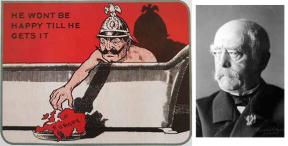
Frustrated by her students’ glib use of catch-all terms such as ‘militarism’ in addressing causation, Alexia Michalaki wanted her Year 9 students to produce mature causal explanations of World War I. To encourage this to happen she went back into decades of pedagogical writing and research, teasing out the ways...
Should we, and how do we, develop in our students a sense of period – or a series of senses of period – in a thematic study spanning a thousand years? This was the problem faced by Matthew Fearns-Davies in preparing for the GCSE ‘Health and the People’ paper. He...
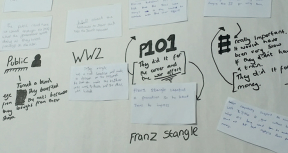
Building on research by the UCL Centre for Holocaust Education, Matthew Duncan was concerned that his students were drawn to simplistic explanations of Holocaust perpetrators’ actions. As well as the UCL Centre’s research, Duncan drew on history education research from Canada and history teachers’ theorisation in England for inspiration in...
We’ve been talking to our secondary school members and we know how difficult life is for teachers in the current circumstances, so we wanted to lend a helping hand. 'What’s the wisdom on…' is a brand-new and already popular feature in our secondary journal Teaching History and provides the perfect...
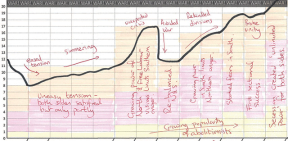
Aware both that causation is the bread and butter of the historian’s craft, and that trainee teachers find it far harder to teach well than they anticipate, Alex Ford sought to get to the heart of the problem with causation, especially at GCSE. When teaching to a specification and mark...
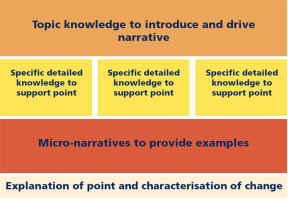
Is it structure or the selection of knowledge that makes writing historical narrative so difficult? Where does a conceptual focus on change, or causation, come in? James Ellis set out to explore the challenges his Year 9 pupils faced in writing historical narratives about change. Inspired by the work of...
What's the Wisdom On... is a short guide providing new history teachers with an overview of the ‘story so far’ of practice-based professional thinking about a particular aspect of history teaching. It draws on tried and tested approaches arising from teachers with years of experimenting, researching, practising, writing and debating...
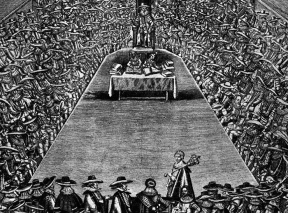
While weighing up the relative merits of the competing narratives of the Battle of Hastings that his department might present to Year 7, Matthew Stanford began to consider how the causal models that teachers introduce influence the causal arguments that students later go on to write. In this article, Stanford...
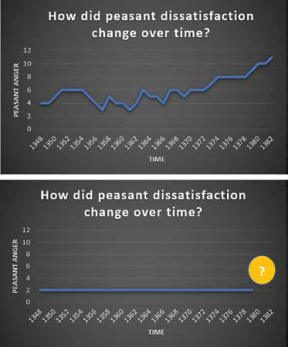
Tom Bennett begins his article with a tale of a frustrating afternoon with Year 7. We’ve all been there. In his case, his frustration was caused by his finding a conceptual gap between how well his class wanted to do and the actual quality of their causal thinking. Bennett decided...
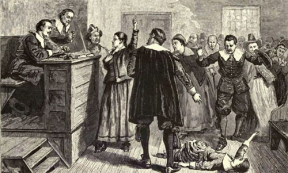
Puzzled by the shrugs and unimaginative responses of his students when asked certain counterfactual questions, James Edward Carroll set out to explore what types of counterfactual questions would elicit sophisticated causal explanations. During his pursuit of the ‘gold standard’ of counterfactual reasoning, Carroll drew upon theories of academic history in...
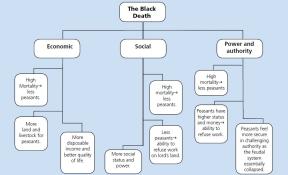
Do GCSE and A-level questions that purport to be about consequences actually reward reasoning about historical consequences at all? Molly-Ann Navey concluded that they do not and that they fail to encourage the kind of argument that academic historians engage in when reaching judgements about consequences. Navey decided that it...
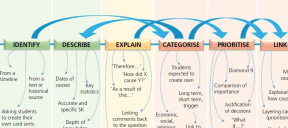
The disapplication of level descriptions in the 2014 National Curriculum has spurred many history departments to rethink their approach not only to assessment but to their models of progression. In this article Rachael Cook builds on the recent work of history teachers such as Ford (TH157), Hawkey et al (TH161),...

Like many history departments, Hugh Richards' department at Huntington School uses enquiry questions to structure their medium-term planning. Yet Richards noticed that his efforts to build knowledge across an enquiry by teaching macro-narratives as an unfolding story seemed to make it harder for some pupils to see and retain the...
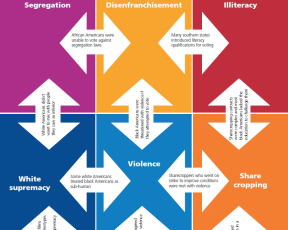
Identifying the challenges his students faced both with recall and analysis of the content they had learned for their GCSE course, Ed Durbin devised a solution which focused not on exam skills and revision lessons, but on using Key Stage 3 to build the ‘hinterland’ of contextual knowledge and causal...
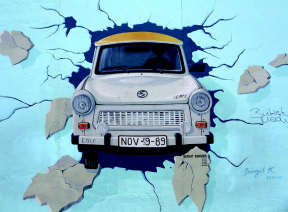
Bjorn Wansink and his co-authors have aligned their teaching of a recent and controversial historical issue – the Cold War – in the light of a contemporary incident. This article demonstrates a means of ensuring that students understand that different cultures’ views of their shared past are nuanced, rather than...