
Using enquiry questions
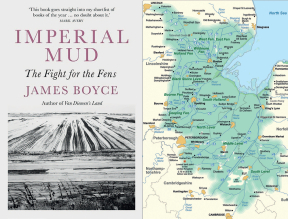
After reading Hawkey’s History and the Climate Crisis and Verity Morgan’s article in Teaching History, 194, I knew that I needed to revisit Boyce's Imperial Mud for my Year 8 curriculum. Morgan had given me the idea that I could simply adjust the focus of some of my enquiries, rather...
The defining qualities of a good enquiry question have been regularly revisited by contributors to Teaching History in the 25 years since Riley first outlined what he saw as three essential characteristics. Despite these endeavours, Ben Arscott notes that the properties of a good enquiry question remain somewhat elusive. His...
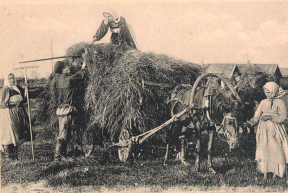
Barbara Trapani was troubled by the oversimplified judgements her students were making about the Russian Revolution. Could the women of the revolution help her students overcome their tendency to focus on success and failure? Trapani revised her enquiry, selecting stories of women who could ‘illuminate’ a longer, more complex history...
Hiscox wanted to broaden her students’ understanding of the complexity of the British past, and developed an enquiry into the Norman Conquest of Wales to help achieve that aim. Hiscox reports her enquiry design and its outcomes, sharing how she broadened both content and the types of sources that students...
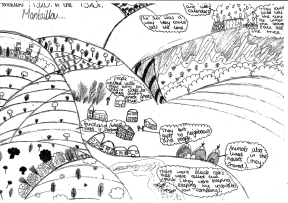
Jacob Olivey set out to design enquiries which would enable his pupils to reconstruct, using evidence, the perspectives of people in the past. In this article he shares in detail the planning and outcomes of two enquiries: one for Year 7 and one for Year 8. Olivey offers a example...
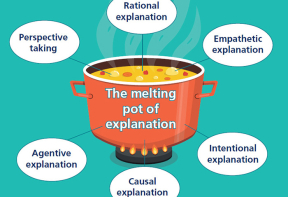
In this article Sophie Harley-McKeown identifies and addresses her Year 12 students’ blind spot over agentive explanation. Noticing that the examination board to which she teaches uses ‘motivations’ rather than ‘aims’ prompted her to consider whether her students really knew what that meant. Finding that her students’ causal explanations tended...

We’ve been talking to our secondary school members and we know how difficult life is for teachers in the current circumstances, so we wanted to lend a helping hand. 'What’s the wisdom on…' is a new and already popular feature in our secondary journal Teaching History and provides the perfect...
We’ve been talking to our secondary school members and we know how difficult life is for teachers in the current circumstances, so we wanted to lend a helping hand. 'What’s the wisdom on…' is a new and already popular feature in our secondary journal Teaching History and provides the perfect...
One way of explaining what is meant by an enquiry question is to start with what it is not. What's the Wisdom On... is a short guide providing new history teachers with an overview of the ‘story so far’ of practice-based professional thinking about a particular aspect of history teaching....

The stimulus for this article came from two developmental tasks that Barbara Trapani was set during the course of her initial teacher education programme: planning her first historical enquiry and bringing the work of an historian into the classroom. Trapani chose to tackle the two tasks together, using Susan Whitfield’s...
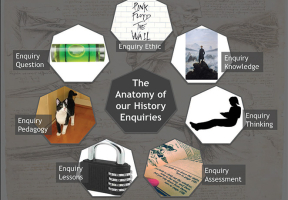
It is almost 20 years since Michael Riley first invited Key Stage 3 history teachers to ‘choose and plant’ their enquiry questions. Many members of the history education community have taken up that invitation, making use of overarching enquiry questions to structure students’ learning. But what is meant by enquiry...
David Hibbert and Zaiba Patel decided to work together after becoming concerned that school history curricula might not enable students to interrogate popular British mythologising about World War II. Building on these pre-existing concerns, their collaboration with the historian Yasmin Khan yielded an Interpretations enquiry which asked students to consider...
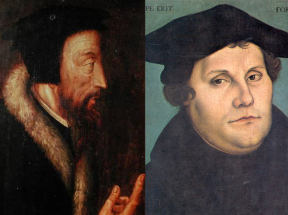
Faced with the introduction of a two-year key stage and a new whole-school assessment policy, Rachel Arscott and Tom Hinks decided to make a virtue out of necessity and reconsider their whole approach to planning, teaching and assessment at Key Stage 3. In this article they give an account of...
The question of how to prepare students to succeed in the examination while also ensuring that they are taught rigorous history remains as relevant as ever. Faced with preparing students to answer a question that seemingly precluded argument, Rachel Foster and Kath Goudie demonstrate how they used historical scholarship both...

Jaya Carrier’s decision to focus on developing a more independent approach to learning in history at Key Stage 3 was prompted by concerns about her A-level students. In seeking to establish secure foundations for students’ own historical research, Carrier first examined the assumptions of her colleagues and her students. She...
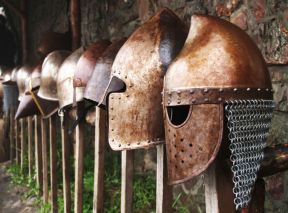
2015 was a year of anniversaries. As part of our funded commemoration projects surrounding the 600th anniversary of the Battle of Agincourt, we commissioned this scheme of work looking at interpretations of the battle and period, particularly aimed at pupils in Key Stage 3. It comes with a complete resource...
Exploring big overviews through local depth Rachel Foster and Kath Goudie's search for a more rigorous and interesting way of teaching Year 7 the Norman Conquest was initially driven by a desire to incorporate local history in a more meaningful way in their Key Stage 3 schemes of work. This...
From a compartmentalised to a complicated past: developing transferable knowledge at A-level Students find it difficult to join up the different things they study into a complex account of the past. Examination specifications do not necessarily help with this because of the way in which history is divided up into...
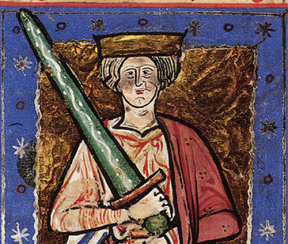
Ten years ago, two heads of department in contrasting schools presented a powerfully-argued case for resisting the use of level descriptions within their assessment regimes. Influenced both by research into the nature of children's historical thinking and by principles of assessment for learning, Sally Burnham and Geraint Brown argued that...

This page is for those new to the published writings of history teachers. Every problem you wrestle with, other teachers have wrestled with too. Quick fixes don't exist. But if you discover others' writing, you'll soon find - and want to join - something better: an international conversation in which...