
Transition
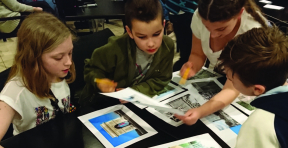
What’s been happening in primary history lately? Invited to write an update on this, I decided to identify some themes that might be helpful to secondary teachers. As a senior lecturer in primary education with responsibility for history and as a member of the HA Primary Committee, I was able...
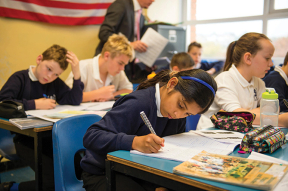
Often, primary schools and secondary schools are seen as separate entities. But why? At primary, is it our responsibility to nurture our children and to encourage them only until they finish their primary education after the Year 6 SATs? Do we then just wave goodbye as they embark on their...
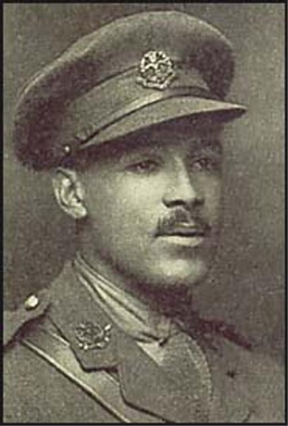
Schemes of work and resource packs Produced by the Northamptonshire Black History Association and originally published in 2008, these packs comprise a teachers' resource book and a schemes of work booklet of 10 activities for teachers to use in the classroom. The resource book contains a description of how to...
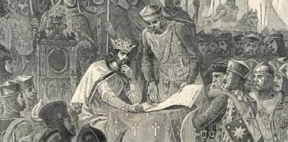
There are three basic strands to our lessons. How should we teach? What skills should we enable our students to build? What content should we use to deliver those skills? In this article Tony McConnell, who has been re-designing the curriculum in his school in response to a changed examination...

Connecting Classrooms: bringing together Bradford and Peshawar, primary and secondary schools, history and English In this article, Dianne Excell shares her experience of a crossphase, collaborative project funded by the British Council that brought together teachers and pupils from three schools in Bradford and five schools in Peshawar, Pakistan. Although...
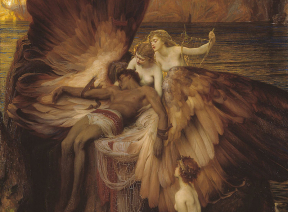
This resource was commissioned by the Historical Association to offer teachers an entry point into the new primary History curriculum using stories: folktales, myths and legends from the civilisations, communities and cultures of the statutory programmes of study. In this resource, pupils are encouraged to recall and retell stories orally,...
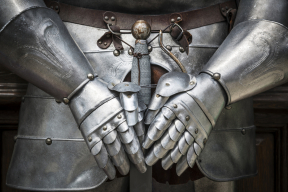
Do they learn about Agincourt in France? 2015 was a year of anniversaries. As part of our funded commemoration projects surrounding the 600th anniversary of the Battle of Agincourt, we have commissioned an enquiry looking at the battle and how it has been remembered, particularly aimed at pupils in years...
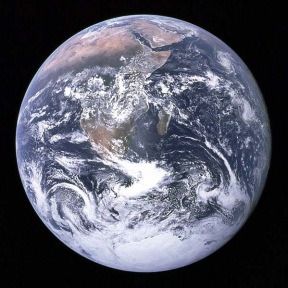
The Global Learning Programme (GLP) is a ground-breaking new programme which will create a national network of like-minded schools, committed to equipping their students to make a positive contribution to a globalised world by helping their teachers to deliver effective teaching and learning about development and global issues at Key...
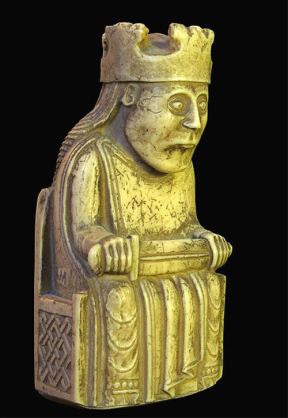
This e-cpd unit models how primary and secondary teachers of history might improve transition between KS2 and KS3 through collaboration on a transition unit aimed at Year 6 pupils on the Vikings. It contains original teaching and training materials written by Andrew Wrenn, former Cambridgeshire Humanities Advisor and funded as...

In the 2014 national curriculum for primary and secondary history one of the key differences is that, for the first time since 1991, there are no level descriptions against which you can assess pupils' progress. The new attainment target says simply that: ‘By the end of each key stage, pupils...

Enquiry Question: What's worth knowing about the First World War? At the end of our scheme of work on the First World War, I asked myself how I might encourage my Year 9 pupils to reflect on the historical significance of the events we had studied. I was particularly interested...
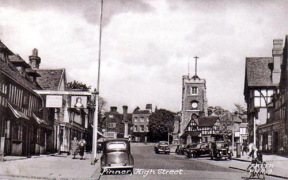
One street, twenty children and the experience of a changing town: Year 7 explore the story of a London street Michael Wood and others have recently drawn attention to the ways in which big stories can be told through local histories. Hughes and De Silva report a teaching unit through...
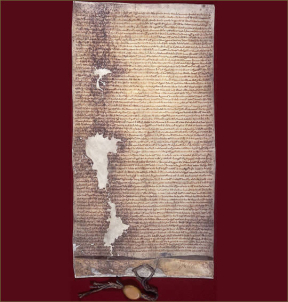
Weaknesses in pupils' grasp of historical chronology are a commonplace in popular discussion of the state of history education. However, as Blow, Lee and Shemilt argue, although undoubtedly necessary and fundamental, mastery of chronological conventions is not sufficient: the difficulties that pupils experience when learning history are conceptual, as much...
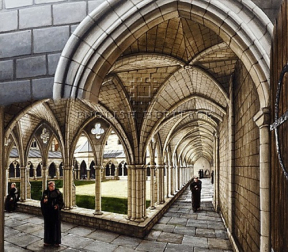
English Heritage and the Historical Association have teamed up to provide this great new CPD guide to getting the most out of local historical sites with your classes. This easy to follow unit provides the basis for an entire unit of local study using the built heritage around you. Examples...

Please note: these resources pre-date the 2014 National Curriculum. For more recent resources on Transition KS2-KS3 please see: Transition KS2–KS3 (Primary History article, 2021) Smooth Transitions: Key Stage 2 to 3 (Primary History article, 2020) Transition Key Stage 2 and 3 (Primary History article, 2016) Before 1066 & All That:...
This is the first of 5 sessions arising from the 2005 KS2-KS3 History Transition Project: Transition training session 1: Historical Enquiries & Interpretations Transition training session 2: Using ICT in the teaching of history Transition training session 3: Extended writing in history Transition training session 4: Joan of Arc -...
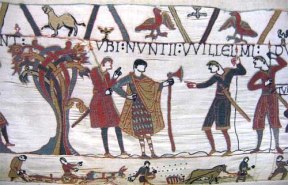
This is the third of 5 sessions arising from the 2005 KS2-KS3 History Transitions Project: Transition training session 1: Historical Enquiries & Interpretations Transition training session 2: Using ICT in the teaching of history Transition training session 3: Extended writing in history Transition training session 4: Joan of Arc -...
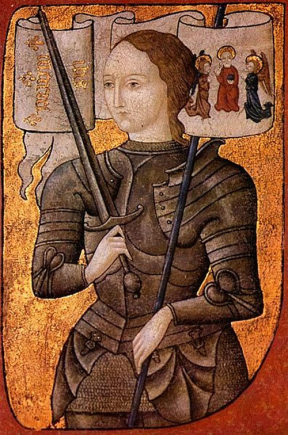
This is the 4th of 5 sessions arising from the 2005 KS2-KS3 History Transitions Project: Transition training session 1: Historical Enquiries & Interpretations Transition training session 2: Using ICT in the teaching of history Transition training session 3: Extended writing in history Transition training session 4: Joan of Arc -...
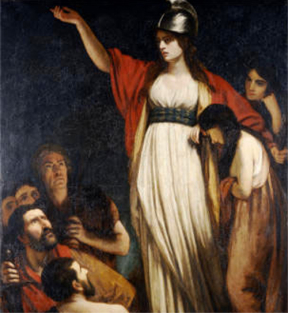
Please note: this resource pre-dates the 2014 National Curriculum. This unit centres on Queen Boudicca. While factual knowledge about her life and the Roman occupation are an essential component of the unit, the main focus is on contrasting interpretations of Boudicca over time and exploration of the reasons behind her...
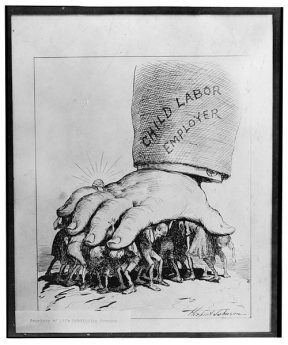
Please note: this resource pre-dates the 2014 National Curriculum. This unit centres on the portrayal of poor, Victorian children. While factual knowledge about conditions in workhouses is an essential component of the unit, the main focus is on contrasting portrayals of one fictional Victorian child, Charles Dicken's Oliver Twist. The...