
Independent Study
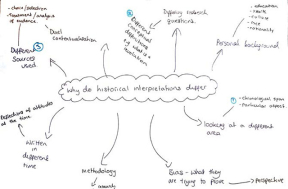
Holly Hiscox was concerned that many of her A-level students – asked to evaluate three different historical interpretations for their non-examined assessment task – still tended to hold unhelpful misconceptions about the nature of interpretations. In this article she explains how she created an introductory scheme of work to help...
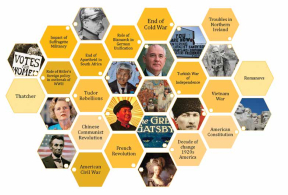
Faced with the introduction of the new A-levels in 2015 and with a move to a new school, Eleanor Thomas took the opportunity to embrace yet another challenge: giving her students a complete free choice about the focus of their non-examined assessment (NEA). This article presents the rationale for her...
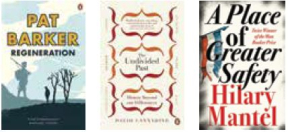
Discussions with sixth-form students about reading led Carolyn Massey and Paul Wiggin to start a sixth-formreading group. They describe here the series of themed sessions that they planned, and the student discussion and reflections that resulted. Listening to their students discuss their reading led Massey and Wiggin to reflect on...
Frustrated that her A-level students were being overly dismissive when asked to judge the convincingness of academic historians’ arguments, Paula Worth drew on previous history-teacher research and theories of history for inspiration. After noting that her students would unjustly reject esteemed historians’ accounts for lack of comprehensiveness, Worth explains here...
Hark the herald tables sing! Achieving higher-order thinking with a chorus of sixth-form pupils On 9 April 1930, a philanthropist called Edward Harkness donated millions of dollars to the Phillips Exeter Academy in the USA. He hoped that his donation could be used to find a new way for students...
A place for individual enquiry? Why we would miss controlled assessments in history Most history teachers will, at some point, recognise the tension between teaching an engaging history course while at the same time meeting the requirements of an exam specification. Mark Fowle and Ben Egelnick reflect here on how...
The quest for the common characteristics of the genus ‘historian' with 16- to 19-year-olds Diana Laffin writes about historical language and explores how understanding different historians' use of language can help sixth form students refine and deepen both their understanding of the discipline of history and their abilities to practise...
How can we help pupils learn to read historically? Gary Howells explores this question by explaining how he builds reading challenges into the course of his pupils' post-16 studies and by describing some of the tasks that pupils are set and the principles that underpin them. Howells argues that over...