
Planning
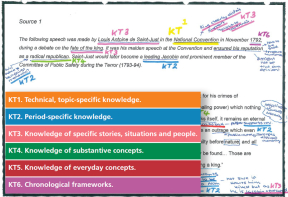
Frustrated by the generic statements that her Year 12 students were making about sources, Jacqueline Vyrnwy-Pierce resolved to undertake a research project into how her students were approaching sources about the French Revolution. Fascinated by the research of American educational psychologist Sam Wineburg, Vyrnwy-Pierce decided to use Wineburg’s methods to...
The history we present to students, however rigorous and challenging, and however full of integrity in eflecting history as a discipline, is a shiny show of our best resources. Peeling back this curtain and allowing students to see the real world of academic history was a major motivation in inviting...
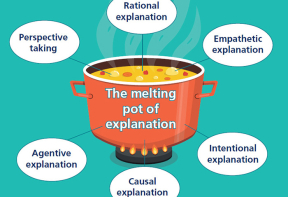
In this article Sophie Harley-McKeown identifies and addresses her Year 12 students’ blind spot over agentive explanation. Noticing that the examination board to which she teaches uses ‘motivations’ rather than ‘aims’ prompted her to consider whether her students really knew what that meant. Finding that her students’ causal explanations tended...
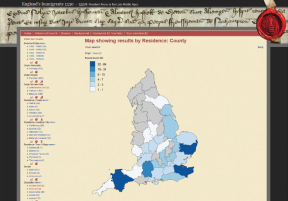
Ever wondered if there is a streak of masochism in those designing A-level history syllabi? The absence of the Spanish Armada from the current Edexcel breadth study in favour of (among other delights) ‘the new draperies’ prompts this question. But the challenge of enthusing modern teenagers with woollen cloth can...
Faced with the introduction of the new A-levels in 2015 and with a move to a new school, Eleanor Thomas took the opportunity to embrace yet another challenge: giving her students a complete free choice about the focus of their non-examined assessment (NEA). This article presents the rationale for her...
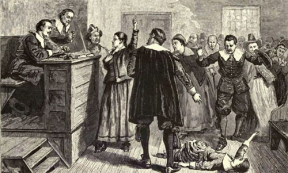
Puzzled by the shrugs and unimaginative responses of his students when asked certain counterfactual questions, James Edward Carroll set out to explore what types of counterfactual questions would elicit sophisticated causal explanations. During his pursuit of the ‘gold standard’ of counterfactual reasoning, Carroll drew upon theories of academic history in...

This page is for those new to the published writings of history teachers. Each problem you wrestle with, other teachers have wrestled with too. Quick fixes don’t exist. But in others’ writing, you’ll find something better: conversations in which history teachers have debated or tackled your problems – conversations which...
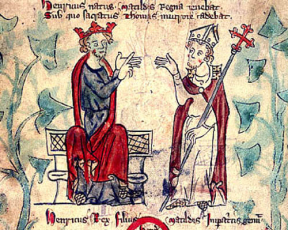
‘The Becket Dispute’ (or ‘Controversy’) refers to the quarrel between Henry II and Thomas Becket, Archbishop of Canterbury, which dominated English ecclesiastical politics in the 1160s. It was a conflict with multiple dimensions: a clash of Church and State; a prolonged struggle between two prominent individuals; a close friendship turned...
Jim Carroll was concerned that A-level textbooks failed to provide his students with a model of the multi-voicedness that characterises written history. In order to show his students that historians constantly engage in argument as they write, Carroll turned to academic scholarship for models of multi-voiced history. Carroll explains here...

Bjorn Wansink and his co-authors have aligned their teaching of a recent and controversial historical issue – the Cold War – in the light of a contemporary incident. This article demonstrates a means of ensuring that students understand that different cultures’ views of their shared past are nuanced, rather than...
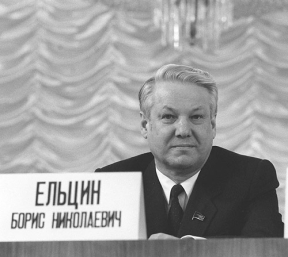
A great deal of new writing on the Cold War sits at the crossroads of national, transnational and global perspectives. Such studies can be so self-consciously multi-archival and multipolar, methodologically pluralist in approach and often ‘decentring’ in aim, that some scholars now worry that the Cold War risks losing its...

Medieval history is on the rise. Among the many recent reforms in the history curriculum is a requirement for medieval themes at GCSE and across the country the new linear A-level offers fresh opportunities for teachers to look beyond the traditional diet of Tudors and modern history. The huge divide...

As postgraduate historians with teaching responsibilities at the University of York, Bridget Lockyer and Abigail Tazzyman were concerned to tackle some of the challenges reported by their students who had generally only encountered women’s history in a disconnected way through stand-alone topics or modules. Their response was to create a...
Julia Huber and Katherine Turner found that their A-level students struggled to identify the line of argument in a passage of historical scholarship, an essential prerequisite for answering their coursework question. They devised an activity that helped students to unpick and visually contrast historians’ interpretations of the relative importance of...
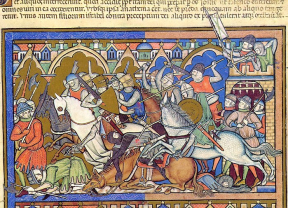
Medieval history has always been a Cinderella era for post-16 students. Some schools offer A-levels in classical civilisation, but most A-level history courses focus on the early-modern and modern periods. A few schools teach an A-level medieval module, with the Crusades being a popular choice. I was therefore excited at...

How nominalisation might develop students’ written causal arguments Frustrated that previously taught writing frames seemed to impede his A-level students’ historical arguments, James Edward Carroll theorised that the inadequacies he identified in their writing were as much disciplinary as stylistic. Drawing on two discourses that are often largely isolated from...
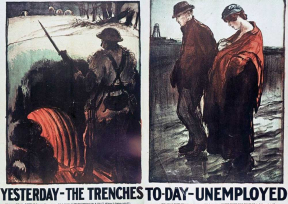
Is it a good thing to have a lot of evidence? Surely the historian would answer that yes, it is: the more evidence that can be used, the better. The problem with this approach, though, is that too much data can be overwhelming for the history student - and, in...

Hark the herald tables sing! Achieving higher-order thinking with a chorus of sixth-form pupils On 9 April 1930, a philanthropist called Edward Harkness donated millions of dollars to the Phillips Exeter Academy in the USA. He hoped that his donation could be used to find a new way for students...
Teaching in Singapore, Tze Kwang Teo cannot conceive of a history teacher unfamiliar with the mnemonic ‘PEE' (or ‘PEEL') used to structure students' essays. Its ubiquity is testimony to its power, reminding students both to explain and to substantiate their claims. Yet, as Foster and Gadd have argued, its neat...
From a compartmentalised to a complicated past: developing transferable knowledge at A-level Students find it difficult to join up the different things they study into a complex account of the past. Examination specifications do not necessarily help with this because of the way in which history is divided up into...