
Religion

In this podcast Professor Ronald Hutton of the University of Bristol looks at Ancient British and Irish Pagan Religion.
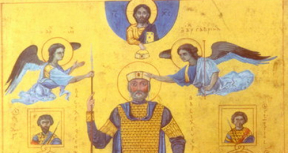
This resource is a pamphlet titled ‘The Byzantine Empire on the Eve of the Crusades’ and written by R. J. H. Jenkins in 1953. As such, some of the scholarship has been updated since then, although it can provide useful historiography. It is not strange that there should in recent...

Prehistory is an attempt to reconstruct the story of human societies inhabiting a given region before the full historical record opens there. Its data, furnished by archaeology, are the constructions members of such societies erected and the durable objects they made. The events which should form its subject matter naturally...
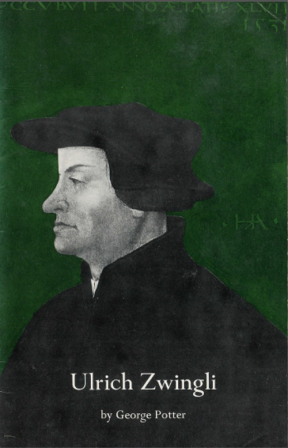
The Reformation of the sixteenth century has many sides, and not the least significant of these is the contribution from Switzerland. How under the leadership of Zwingli, Zurich, Berne, Basle and St Gall broke away from Rome, how this led to civil war, how and why agreement with the German...
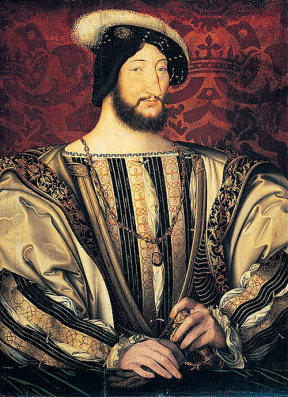
Francis I of France reign lasted for more than thirty years and coincided with movements as significant as the Renaissance and the Reformation. Text-books are apt to gloss over the domestic history of France before the outbreak of the Wars of Religion and convey the impression that Francis was more...
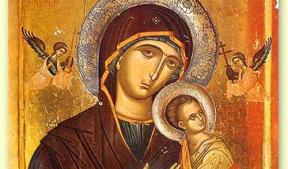
The First Crusade may be considered the only really successful crusade in that it achieved its stated goal, but it demanded great courage and stamina of its participants in their journey to the Holy City of Jerusalem, fighting their way through an unforgiving hostile territory. But courage and stamina by...
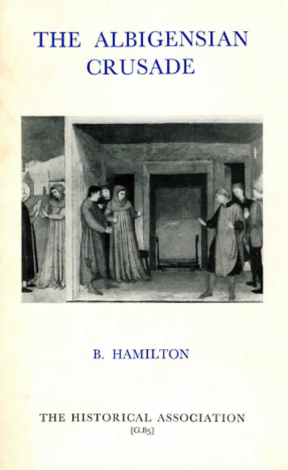
At the time of the First Crusade southern France was strongly Catholic: the army led by Raymond IV of Toulouse was the largest single force to take part in the expedition and was recruited from all classes. Yet eighty years later the Count's grandson, Raymond V, sent this appeal form...
The Reformation which Queen Elizabeth and her ministers created was a series of acts of state, but if we consider it only at the level of official hopes and pronouncements, we will paint a picture of hopeless unreality. For the Reformation to success, the government needed to follow up its...
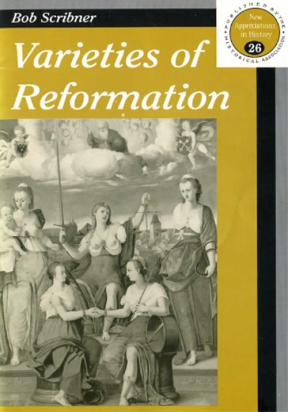
The most significant change to have occurred in our view of the Reformation in recent years is the growing acknowledgement of historians that it was no unitary phenomenon whose triumph was assured and inevitable. What we refer to in short-hand as ‘the' Reformation was a many-sided affair which began with...
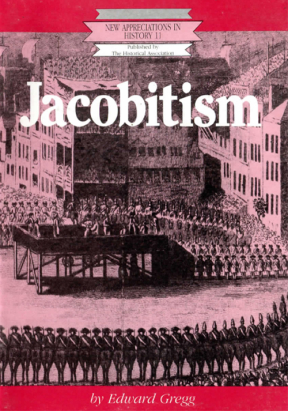
In recent years, the debate over the nature, extent, and influence of the Jacobite movement during the 70 years following the Glorious Revolution of 1688 has become one of the new growth industries among professional historians, spawning scholarly quarrels almost as ferocious as those which characterised ‘the Cause' itself.The term...
The English Reformation of the Sixteenth century had been a compromise, both politically and theologically. The administrative framework of the medieval church, with its system of church courts, private patronage, pluralism, the social and financial gulf between the lower and higher clergy, its inadequacy of clerical education and its hierarchical...
The second English Revolution of the seventeenth century, the Revolution of 1688, ushered in during the next twenty-five years a series of changes which were to be profoundly important to the ultimate development of the country. Most conspicuously, the reigns of William III and Anne released Englishmen - though not...
This classic pamphlet takes you through the French reformation, the first, second and third war of religion, The St Bartholomew's Day massacre and the Fourth War, the later wars, the Catholic League, Henry IV, the nobility, the towns, confessional violence, social contexts and warfare and its costs.

Christopher Hill, the eminent historian of seventeenth century England, was a convinced Marxist throughout most of his long and productive life (1912-2003). He embraced this secular world-view when he was a young History student at Oxford in the polemical 1930s and never lost his ideological commitment, even though he resigned...
From the 1750s, after more than a century of intense political and religious disputes and of economic stagnation, Scotland began to enjoy several decades of almost unprecedented political stability, religious harmony, economic growth and cultural achievements. Jacobitism had been crushed and most propertied and influential Scots rallied to the Hanoverian...
On 14 February 1868, the Carlisle Journal reported as follows: … two meetings were held in the Athenaeum in this city , “for the purpose of forming an auxiliary to co-operate with the Church Association in London, to uphold the principles and order of the United Church of England and...
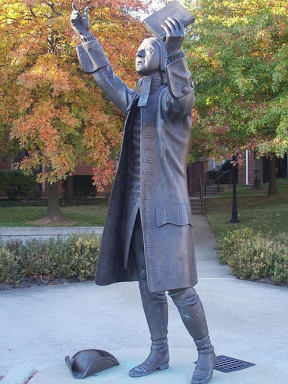
The tercentenary of John Wesley’s birth has been celebrated not just in his native country, but round the world – as widely, in fact, as the Methodism associated with him has spread. Over the years, in addition to innumerable biographies there have been many studies of particular aspects of his...
“I am greatly honoured to receive the Medlicott medal and I thank the President for his much-too-kind remarks. It is fifty years since I attended my first meeting of the Historical Association and heard a lecture by Professor Medlicott himself, no less. The Association does a wonderful job in encouraging...
Much has been said about the clash between religion and science in Victorian times but there has been less research into the relationship between them in the eighteenth century. This article considers three Georgian clergymen who were also notable scientists – the Reverend William Stukeley, the pioneer of scientific field...
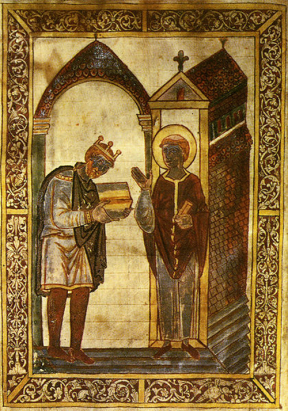
Much research has been devoted in recent years to Bede’s Ecclesiastical History of the English People (EH), completed in 731 at the joint monastery of Monkwearmouth-Jarrow; but in one crucial respect little progress has been made: the editing of the text. The excellent edition published by Charles Plummer in 1896...