
Britain & Ireland 1509-1745
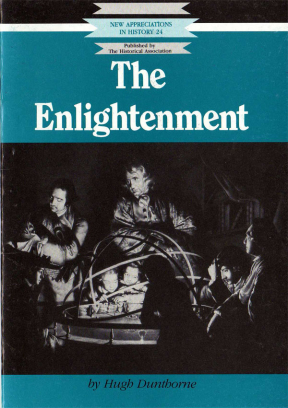
Can a movement as varied and diffuse as the Enlightenment of the eighteenth century be contained within the covers of a short pamphlet? The problem would certainly have appealed to the intellectuals of that time. Generalists rather than specialists, citizens of the whole world of knowledge, they relished the challenge...
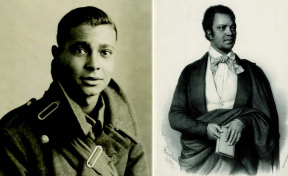
Produced by the Northamptonshire Black History Association and originally published in 2008, this is one of a set of resources for schools offering a more inclusive map of the past that includes an appreciation of Black History within the local, national and global context. The resources provide a range of...

What should pupils know and understand as a result of their historical studies? This question is much in the news currently and too often quickly posed and glibly answered. In this article, Jonathan Howson poses this problem in the light of an ongoing research tradition that has sought complex answers...
Are top sets always our top priority? Of course, we know that every child matters (should that now have capital letters?) but those of us who teach in an ability-setted context also know that a bottom set left unable to access the curriculum is likely to pose bigger problems than...
Our Polychronicon in Teaching History is a regular feature helping school history teachers to update their subject knowledge, with special emphasis on recent historiography and changing interpretation. This edition of 'Polychronicon' focuses on interpretations of the Gunpowder Plot.
Gary Howells offers us a challenge: are we sure that we are teaching the study of interpretations correctly? It is much criticised at GCSE, but do we really engage our students in the process of writing history, and in understanding how history works, from 11-14? Or do we use reductive...
Please note: this article pre-dates the 2014 National Curriculum and some content may be outdated. Contributors to this journal have long recognised that success in public examinations is at least partly achieved by carefully teaching in Key Stage 3. A critical component of A-Level is that students who wish to...
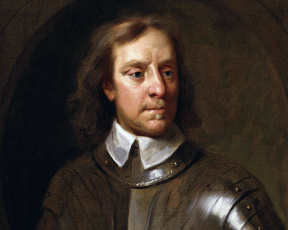
Polychronicon was a fourteenth-century chronicle that brought together much of the knowledge of its own age. Our Polychronicon in Teaching History is a regular feature helping school history teachers to update their subject knowledge, with special emphasis on recent historiography and changing interpretation. This edition of 'Polychronicon' investigates the differing...
Unusually, instead of moving from a narrative to an analytic structure, David Waters moves his pupils from causal analysis to narrative. By the time pupils are ready to produce their storyboard narrative, their thinking about the Great Fire has been shaped and re-shaped not only by structural exercises and argument...
In December 1687 Sir William Petty, a founder member, attended the annual dinner of the Royal Society. He was obviously seriously ill and in 'greate pain' and shortly afterwards, on December 16th, he died in his house in Piccadilly, opposite St James Church. It was a quiet end to a...
Flesh and blood people bring history to life. Capture the interest of our Year 8 pupils by making sure they engage with human dilemmas and dangers. A focus on individual people as the starting point for enquiries helps pupils to tackle the ‘big' stories (overviews) and difficult concepts.
This unit contains complex concepts. It is distant from twentieth century life. The challenge is to understand power struggles between King and Parliament, a changing society and a religious upheaval. How do we interest students in religion when they live in a society in which religion takes a back seat?
Please note: this article pre-dates the 2014 National Curriculum and some content may be outdated Ian Gibson and Susan McLelland describe their work using cause boxes. They identity the type of historical learning that they felt was taking place and the range of factors which they judged to be critical...
W. A. Speck reviews an historical debate central to the interpretation of the eighteenth century in Britain. Few British historians treat the eighteenth century as consisting simply of the hundred years from 1701 to 1800. Until recently political historians tended to end it in 1783. Many textbooks reflect this treatment...