
Cause and consequence
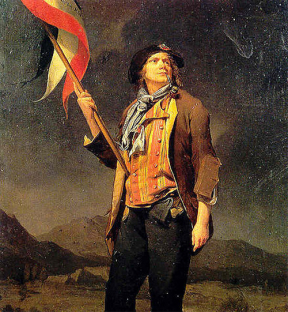
Year 8 use counterfactual reasoning to explore place and social upheaval in eighteenth-century France and Britain Two linked motivations inspired Ellen Buxton's research study: she wanted pupils to make connections between British and French history and she wanted to explore the potential of counter-factual reasoning within a causation enquiry. It...

Please note: this article pre-dates the 2014 National Curriculum and some content may be outdated. What do we know about progression in historical understanding? In Teaching History 113, Lee and Shemilt discussed what progression models can and cannot do to help us think about measuring and developing pupils' understanding and...
Please note: this article pre-dates the 2014 National Curriculum and some content may be outdated. Giles Fullard and Kate Dacey wanted to enrich their department's planning for progression across Key Stage 3 with a strong sequence of activities fostering argument. They wanted an opportunity for students to draw together their...
Jennifer Evans and Gemma Pate, history teachers in two Essex schools, had noticed that sometimes a writing frame did the opposite of what was intended. Sometimes a card sort fostered rich discussion and ownership; sometimes it led the students down a reductive rather than mind-opening path. Sometimes modelling of paragraphs...
The following model examines progression in learning within a particular domain - cause and consequence. The Teaching History Research Group produced a series of stage descriptions which they tell us were based on a mixture of "personal experience, observation in many schools, discussions with teacher and research findings". It is...
Arthur Chapman and James Woodcock have collaborated before: Woodcock extended Chapman’s familiar casual metaphor of the final straw breaking a poor abused camel’s back. Here, they collaborate more explicitly to suggest a means of teaching students to produce adequately nuanced historical explanation. Their two central ideas are to produce a...
Please note: this article pre-dates the 2014 National Curriculum and some content may be outdated. Does new vocabulary help students to express existing ideas for which they do not yet have words or does it actually give them new ideas which they did not previously hold? James Woodcock asks whether...
In the last edition of Teaching History, Arthur Chapman described how he uses ICT to develop sixth form students’ conceptual understanding of interpretations, significance and change. In this article, he turns his attention to causal reasoning and analysis. Drawing on the work of historians such as Evans and Carr, he...
Here is another breath of fresh air from the Thomas Tallis history department. In TH 103, Head of Department Tony Hier showed how he developed a rigorous framework for implementing government initiatives and improving departmental professional discourse at the same time. This time, from history teacher Vaughan Clark, we get...
Please note: this article pre-dates the 2014 National Curriculum and some content may be outdated Gary Howells asks hard questions about typical teaching and assessment of historical causation at Key Stage 3. Popular activities that may be helpful in addressing particular learning areas, or in teaching pupils to use the...

This Issue's Problem: Melville Miles, student history teacher, is in Term 3 of his PGCE year. Melville has taught a number of excellent lessons in which he enabled pupils to reach high levels of historical understanding. His diagnostic assessment of pupils' work is unusually sophisticated for a PGCE student. Melville's...