
Cause and consequence

Jim Carroll noticed basic literacy errors in his Year 13s’ writing, but on closer examination decided that these were not best addressed purely as literacy issues. Through an intervention based on clauses, Carroll managed to enable his students to write better, but he did this by teasing out principles of...

Alex Alcoe was concerned that mastery of certain keywords and question formulae at GCSE perhaps obscured fundamental gaps in his students’ understanding of the nature of causation. These gaps were revealed when he invited Year 12 students to make explicit, by annotating a diagram, their understanding of the relationship between...

How nominalisation might develop students’ written causal arguments Frustrated that previously taught writing frames seemed to impede his A-level students’ historical arguments, James Edward Carroll theorised that the inadequacies he identified in their writing were as much disciplinary as stylistic. Drawing on two discourses that are often largely isolated from...
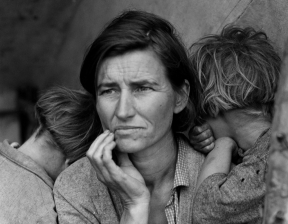
Focusing on students’ attempts to explain the relative significance of different factors in Hitler’s rise to power, Catherine McCrory explores the vexed question of why students who seem able to express necessary historical knowledge on one occasion cannot effectively reproduce it on another. Drawing on a detailed analysis of what...
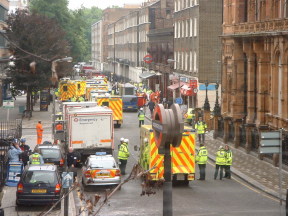
‘Miriam's Vision' is an educational project developed by the Miriam Hyman Memorial Trust, an organisation set up in memory of Miriam Hyman, one of the 52 victims of the London bombings of 2005. The project has developed a number of subject-based modules, including history, which are provided free to schools...
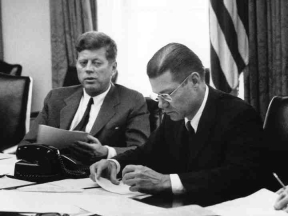
‘What exactly is parliament?' finding the place of substantive knowledge in history The relationship between knowledge and literacy is a central concern for all teachers. In his teaching, Palek noted that his students were struggling to understand complex substantive concepts such as ‘parliament' and decided to explore the relationship between...
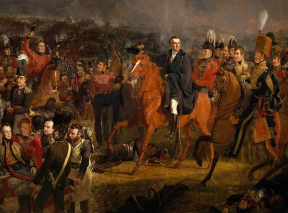
Defying the Iron Duke: assessing the Battle of Waterloo in the classroom The approaching bicentenary of the Battle of Waterloo has stimulated debate about how it should be commemorated. This article reports a collaboration between the Waterloo200 Committee and Tom Wheeley, history teacher, to create a lesson sequence analysing the...
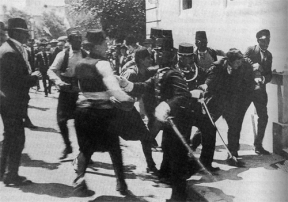
Waking up to complexity: using Christopher Clark's The Sleepwalkers to challenge over-determined causal explanations Teaching student to construct causal argument is a staple of history teaching and, in this year, questions about the causes of the First World War are particularly pertinent and once again the public eye. Claire Holliss,...

‘But I still don't get why the Jews': using cause and change to answer pupils' demand for an overview of antisemitism Research by the Centre for Holocaust Education has suggested that students need and want more help with building an overview of the historical roots of antisemitism and that they...
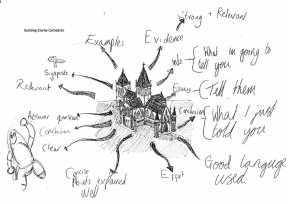
From Muddleton Manor to Clarity Cathedral: improving Year 12's extended writing through an enhanced sense of the reader Mary Brown recognised that her A-level students were finding extended writing difficult, particularly in terms of guiding the reader through the argument with appropriate ‘signposting'. To help her students manage this, Brown...
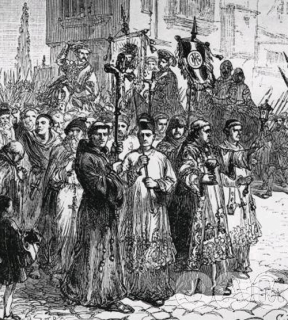
The quest for the common characteristics of the genus ‘historian' with 16- to 19-year-olds Diana Laffin writes about historical language and explores how understanding different historians' use of language can help sixth form students refine and deepen both their understanding of the discipline of history and their abilities to practise...
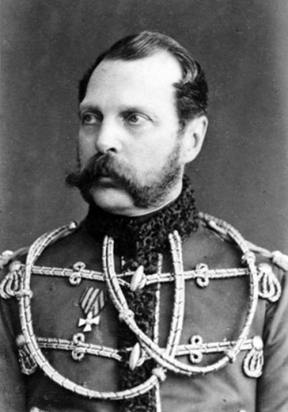
Paula Worth was searching not only for a rigorous question, capable of engendering genuine debate, but also for an engaging and enjoyable activity that would secure GCSE students' substantive knowledge. The answer - or rather the question - lay in counterfactual thinking: a carefully crafted game that she devised, based...
Every problem you're wrestling with in the history classroom, other history teachers have wrestled with too. This page is for all those new to the published writings of history teachers in Teaching History. It shows how to make a start in understanding how others have explored and discussed common and...
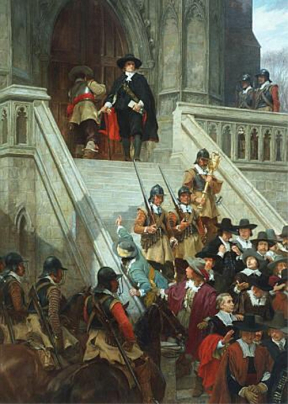
Struck by what he saw as the complexity, artistry and cognitive achievement of historians' narrative accounts, Robin Kemp decided to explore ways of teaching his pupils to write narrative and to analyse the role of such writing in developing various kinds of historical thinking. Working with Year 8 and Year...
Please note: This unit was produced before the 2014 National Curriculum and therefore while much of the advice is still useful, there may be some out of date references or links. For more recent resources on key concepts, see our What's the Wisdom on series. The key concepts can be...
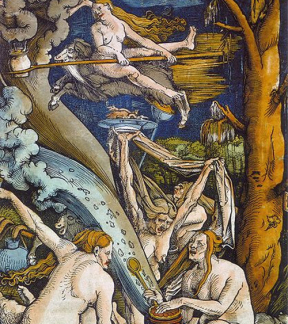
Which women were executed for witchcraft? And which pupils cared? Paula Worth was concerned that her low-attaining set were only going through the motions when tackling causal explanation. Identifying, prioritising and weighing causes seemed an empty routine rather than a fascinating puzzle engaging intellect and imagination. She was also concerned...
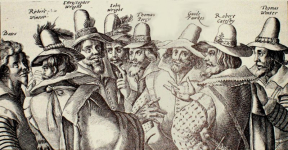
Analogies for teaching about causation abound. Rick Rogers is alert, however, to the risks inherent in drawing on everyday ideas to explain historical processes. What most often gets lost is the importance of the chronological dimension; both the length of time during which some contributory causes may have been present,...
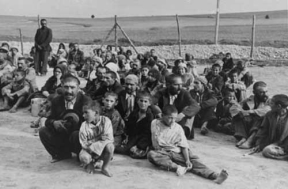
Students make sense of new learning on the basis of their prior understandings: we cannot move our students' thinking on unless we understand what they already know. In this article, Edwards and O'Dowd report how they set out to scope a group of Y ear 8 students' prior learning and...
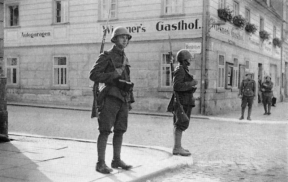
The Holocaust is often framed, in textbooks and exam syllabi, from a perpetrator perspective as a narrative of Nazi policy. We are offered a different orientation here. Interrogating and understanding the Holocaust involves understanding why the people who perpetrated the Holocaust did the things that they did. As Wolf Kaiser...
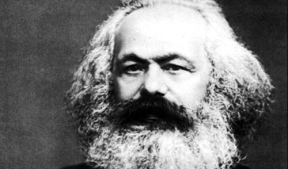
WHAT COLOUR ARE THE UNICORNS?Professor Steve Rigby, recently retired from the University of Manchester, delivered ‘Historical Causation: Is One Thing More Important Than Another?' to the Bolton Branch of the Historical Association on 29th November 2010. His lecture gives a fascinating introduction to the philosophy of historical causation, looking at...