
Europe 1745-1901
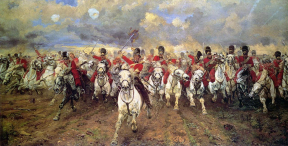
John Morewood explores the events of 18 June 1815 in detail and asks just how accurate is our view of what happened on the field of Waterloo. Summary Waterloo is the most famous battle in a four-battle campaign fought from 15 June to 19 June 1815. On one side were...
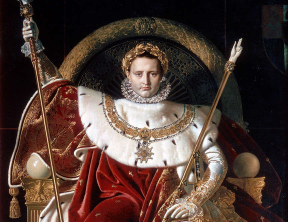
In this set of podcasts we look at the origins and the development of the French Revolution, the rise and fall of Napoleon, the Peninsular War and the Battle of Waterloo. These podcasts feature: Professor David Andress, Emeritus Professor Malcom Crook, Emertius Professor William Doyle, Emeritus Professor Alan Forrest &...
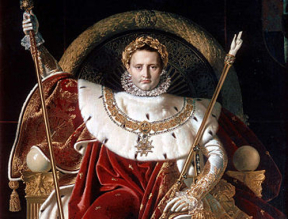
On 18 June 2015, the two-hundredth anniversary of the great battle of Waterloo will be commemorated in Britain and on the continent (though not in France). It will represent the climax of the Napoleonic bicentenary, which has been in full flow since the turn of the twenty-first century. Fresh biographies...
The French Revolution raises many questions not least: What sort of Revolution was it - one of "poverty" or "prosperity" ? a bourgeois revolution that overthrew feudalism? A national struggle for liberty, democracy, or "eternal Justice" ? or, again, a criminal conspiracy against the old social order? What did it...
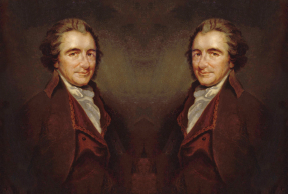
In this set of podcasts Emeritus Professor W. A. Speck of the University of Leeds looks at the life and ideas of Thomas Paine.
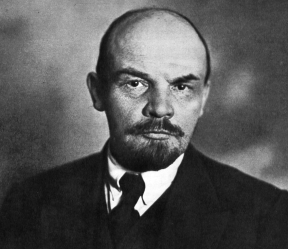
An HA Podcasted History of Russia and the USSR featuring Dr Beryl Williams, Dr Jonathan Davis of Anglia Ruskin University, Dr Edwin Bacon of Birkbeck University of London and Professor Peter Waldron of the University of East Anglia.
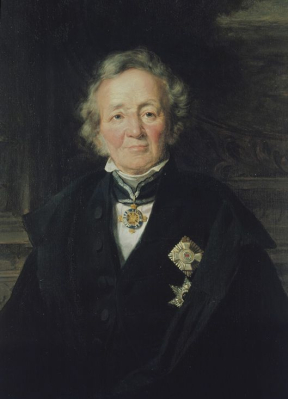
Leopold von Ranke (21 December 1795 - 23 May 1886) was a German historian and a founder of modern source-based history. According to Caroline Hoefferle, "Ranke was probably the most important historian to shape historical profession as it emerged in Europe and the United States in the late 19th century."...
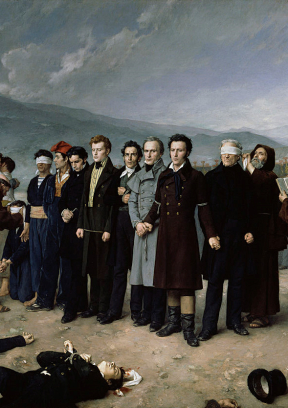
Irene Collins explores the origins of Liberalism within a turbulent nineteenth century Europe. From the beginnings of its use for Spanish rebels in 1820 and the insult it became when used by French royalists, to the growth of political Liberalism in Marxism and Russia in the turn of the century....
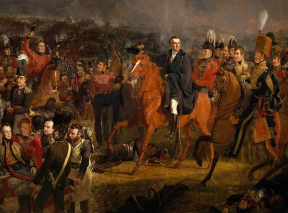
Defying the Iron Duke: assessing the Battle of Waterloo in the classroom The approaching bicentenary of the Battle of Waterloo has stimulated debate about how it should be commemorated. This article reports a collaboration between the Waterloo200 Committee and Tom Wheeley, history teacher, to create a lesson sequence analysing the...
In this podcast Dr Anne Murphy of the University of Hertfordshire looks at the early origins of the European financial markets from the Italian Renaissance to the present day. Dr Murphy also provides a useful introduction to finance, the stock market and the bond market.
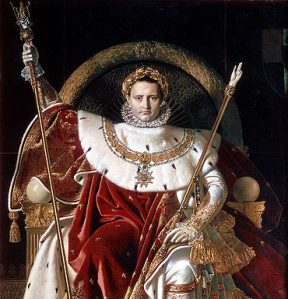
Lecture from the Historical Association 2013 Annual Conference - Podcast Professor Alan Forrest - University of York Napoleon would become a nineteenth-century hero, the stuff of legend in a romantic age. This lecture examines the genesis of the Napoleonic myth, and shows how throughout his career he consciously burnished his...
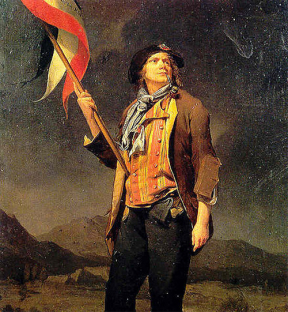
For most of the last two centuries, historical interpretations of the French Revolution have focused on its place in a grand narrative of modernity. For the most ‘counter-revolutionary' writers, the Revolution showed why modernity was to be resisted - destroying traditional institutions and disrupting all that was valuable in an...
This is a new feature summarising an event or person using ten statements of only 140 characters (including spaces!). Compiled by Paula Kitching.The Crimean WarThe Crimean War exposed the power games amongst European powers & the declining Ottoman Empire using religious upset for political advanceAfter much posturing Russia attacked Turkey...
A set of free online resources for students taking the French Revolution and Terror at A-level has been produced by the Society for the Study of French History. Authored by Professor David Andress, in collaboration with the staff and students of St. Catherine's School, Bramley, Guildford, the free revision-guide and...
How my interest in what I don't teach has informed my teaching and enriched my students' learning Flora Wilson argues here for the importance of maintaining a fascination with history as an academic subject for experienced, practising history teachers. Just as medical professionals keep their knowledge up to date by...
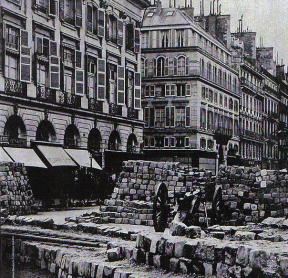
Although a century has passed since the red flag flew for 72 days over the twenty town halls of Paris, the 1871 Commune de Paris cannot be said to belong primarily to historians. The picture of the Communards 'storming the gates of heaven' continues to serve both as a model...
It may seem a little perverse to write a pamphlet on Cavour in 1972, the centenary year of the death of Mazzini, but no doubt there will be more than one publication on Mazzini to mark the occasion. To pretend that the two men had much in common would be...
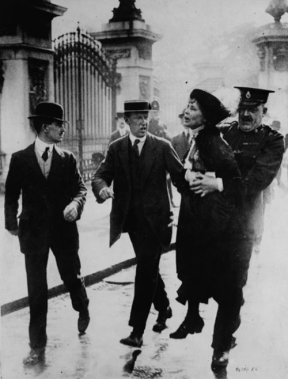
Visual sources, Jane Card argues, are a powerful resource for historical learning but using them in the classroom requires careful thought and planning. Card here shares how she has used visual source material in order to teach her students about the women's suffrage movement. In particular, Card shows how a...
Year 8 use counterfactual reasoning to explore place and social upheaval in eighteenth-century France and Britain Two linked motivations inspired Ellen Buxton's research study: she wanted pupils to make connections between British and French history and she wanted to explore the potential of counter-factual reasoning within a causation enquiry. It...
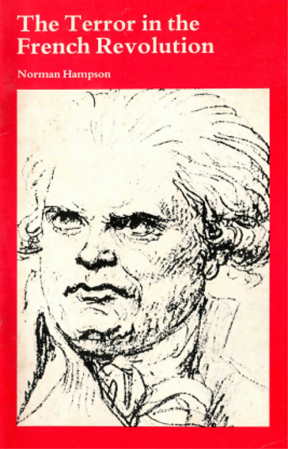
A natural reaction to the history of the French Revolution is to see it as a glorious movement for liberty which somehow ‘went wrong', ending in a nightmare of blood and chaos. This pamphlet explains what really happened, and why. It shows how the apparent achievements of the first two...