
Narrative in history
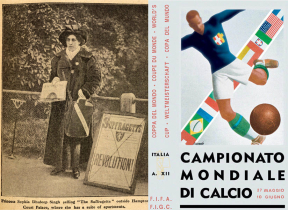
Oliver Scott explains how he fused two goals: planning a new Year 9 history curriculum and finding a way to help Year 9 connect it all together. Inspired by the distinctive style of E.H. Gombrich, Scott decided to have his pupils write a grand narrative at mid- and end-year points....
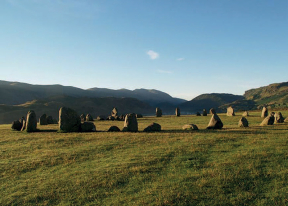
From a young age I have been fascinated by the history of the landscape. Family holidays in the Lake District offered early encounters with the past that did not come mediated through textbooks, but through place. Driving over Dunmail Raise, my father would point out that the ancient ruler, Dunmail...
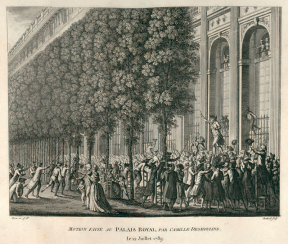
Recognising a significant return to stories in the history classroom, Holliss and Carroll wanted to think carefully about what this meant for A-level history. While stories had always been present in their classrooms, they wanted to experiment with the methods of the ‘new storytellers’, building lessons, then sequences of lessons,...
My students struggle with... Every student has an entitlement to learn history and to high quality history teaching. In this section you will find support for helping students who struggle with specific aspects of learning history. For each aspect of learning history that students struggle with you will find: A...
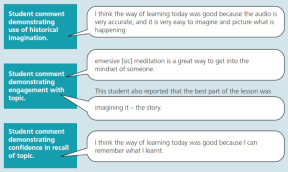
James Hopkins’s Year 10 class had been excited by their course on medicine through time, but were less enthused about their new study of Norman England. They told him that the topic felt ‘distant’ and ‘not real’. Recalling his own experience as a student, Hopkins was interested in the ways...
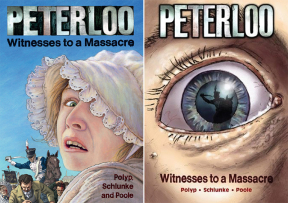
While previous work on historical interpretations has focused students’ attention on the particular questions that historians have been asking or the context in which they have been posing those questions, less attention has been paid to the process of historical narration itself – the decisions that are made in telling...
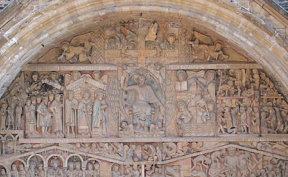
In principle, Rachel Foster had long been aware of the value of creating an interplay between depth and overview across the history curriculum. But in practice, as she acknowledges here, she had tended to shy away from telling outline stories that encompassed a big chronological or geographical range. Recognising the...
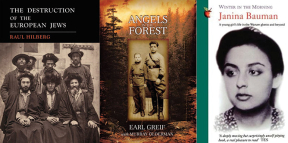
Inspired by the work of the social and cultural historian Tim Cole, Stuart Farley decided to look again at the way he teaches the Holocaust. He wanted to focus on the geographical concept of place as a way of enabling his Year 9 students to build far more diverse narratives,...
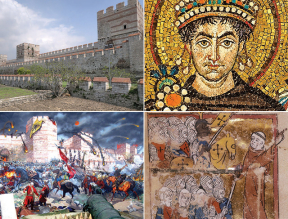
In this article, Jacob Olivey describes his department’s efforts to both diversify their Key Stage 3 curriculum and secure greater curricular coherence. Building on a large body of research and practice, Olivey sought new forms of curricular coherence through the selection and sequencing of substantive content across the curriculum. He...
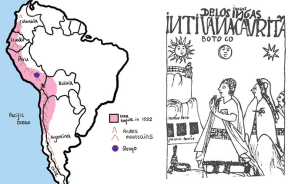
As part of her department’s effort to diversify the history curriculum, Paula Worth began a quest to research and then shape a lesson sequence around the Inkas. Her article shows how she allowed the new topic and its historiography to challenge and extend her own use of sources, particularly oral...
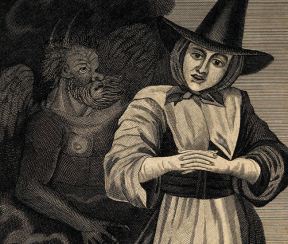
‘Gruesome!’ was how we decided to describe our teaching of seventeenth-century British history, although ‘inadequate’ was probably more accurate. Oh, how much was wrong! We had… Incoherence. The Civil War and Protectorate years plonked in between the Elizabethan Age and the origins of the industrial revolution. We had lost years!...
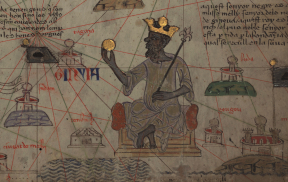
Influenced by her own experiences, preliminary research, and recent political events, Teni Oladehin sought to thoroughly review how Black history was introduced to her students at Key Stage 3. In particular, she aimed to introduce Black history with an ‘authentic’ narrative which brought Black agency into the foreground. In this...
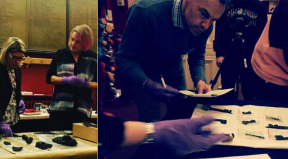
Lots has been written in recent years about how history teachers can bring academic scholarship into the classroom. This article takes this interest in academic practice a step further, examining how pupils can engage directly with the kinds of sources to which historians are increasingly turning their attention: the ‘everyday’...
‘Who hates PEE paragraphs?’ A collective groan resounds around my classroom. ‘Today, Year 10 we are going to master PEE paragraphs, and make our written historical explanations explode.’ I always remember one deflated Year 10 student who said, ‘Miss, I just don’t get PEE paragraphs. I couldn’t do them in...
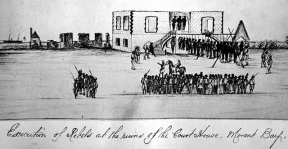
Nathanael Davies explains his radical rethink of how to teach transatlantic slavery. He explains how he came to question his earlier approach of focusing on the causation of ‘abolition’ and ‘emancipation’ and, instead, allowed scholarship, sources and his own students’ meaning-making to guide him to a different, and much more...
Mike Hill was concerned that his students were unable to genuinely inhabit the historical places they encountered in his lessons. Drawing on fields as varied as history-teacher research, philosophy, and literary and media theory, Hill identified ways to curate his students’ constructions of ‘secondary worlds’ in the historical past, including...

We’ve been talking to our secondary school members and we know how difficult life is for teachers in the current circumstances, so we wanted to lend a helping hand. 'What’s the wisdom on…' is a new and already popular feature in our secondary journal Teaching History and provides the perfect...
We’ve been talking to our secondary school members and we know how difficult life is for teachers in the current circumstances, so we wanted to lend a helping hand. 'What’s the wisdom on…' is a new and already popular feature in our secondary journal Teaching History and provides the perfect...
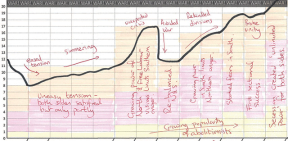
Aware both that causation is the bread and butter of the historian’s craft, and that trainee teachers find it far harder to teach well than they anticipate, Alex Ford sought to get to the heart of the problem with causation, especially at GCSE. When teaching to a specification and mark...
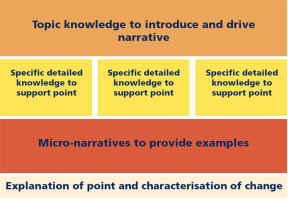
Is it structure or the selection of knowledge that makes writing historical narrative so difficult? Where does a conceptual focus on change, or causation, come in? James Ellis set out to explore the challenges his Year 9 pupils faced in writing historical narratives about change. Inspired by the work of...