
Culture

Historical anniversaries can be a great way to get children and young people interested in a subject or to raise awareness about a particular issue. This resource is free to everyone. For access to hundreds of other high-quality history and education resources along with free or discounted CPD and membership...
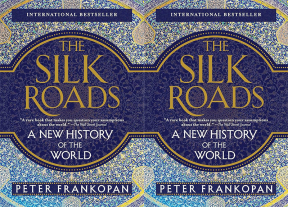
It has been the same for history teachers all over the country: the dramatic shift in perspective after reading Peter Frankopan’s The Silk Roads. Frankopan’s groundbreaking scholarship transported me to distant lands. His book introduced me to cultures and civilisations previously unknown. I wanted my pupils to venture along the...
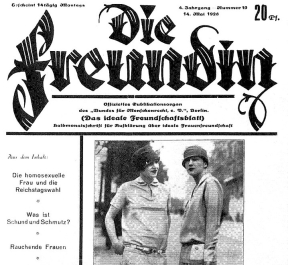
Berlin staged its first Christopher Street Day celebration in 1979. This queer pride event commemorated the Stonewall riots that took place a decade earlier in New York City, and it has continued to be a popular annual event in Germany. Its celebration of a landmark moment in American history, however,...
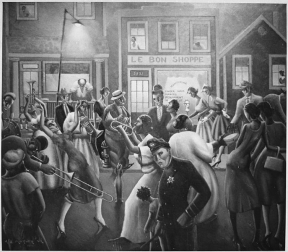
Inspired by reading the work of Stephen Tuck, Ellie Osborne set out to design a new sequence of lessons that would help her students adopt a longer lens on the American civil rights movement. At the same time, Osborne wanted to put more emphasis on the agency and campaigns of...
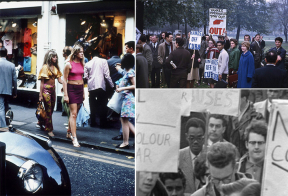
For such a boldly iconoclastic work, the Key Stage 3 textbook A New Focus on ... British Social History, c.1920–2000 (2023) provides a disarmingly conventional account of youth in the 1960s as ‘mostly better educated and informed than their parents had been at their age [and able] … to find...
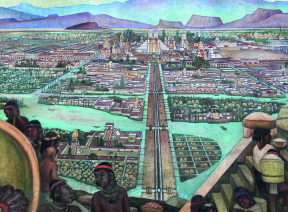
After discussing a new book about the Mexica (Aztecs) during a routine meeting with a trainee teacher, Niamh Jennings decided to construct a sequence of lessons around the history of the Mexica Empire. Struck by the vivid storytelling of historian Camilla Townsend in her book Fifth Sun, and fascinated by...
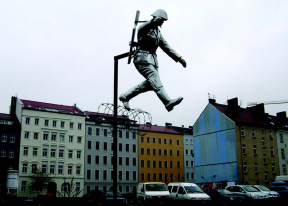
The principles and approaches outlined in our article on Pages 59 to 64 of this edition can be applied to any site, although not necessarily all on the same trip! If you are visiting Berlin, and you want to examine it as a contested space, in what order might you...
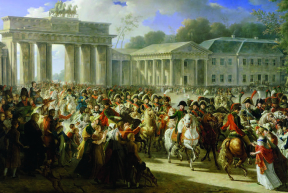
Geraint Brown and Matt Stanford share the daunting challenge and intriguing opportunities that are presented by leading a school history trip to a site as complex as Berlin. That the city is a palimpsest, layered with stories and tissued with conflicting identities, experiences and meanings, makes planning a trip extremely...

Offered five weeks to teach ‘whatever he wanted’ to Year 7, Andrew Slater decided that he wished to tackle the concept of significance head-on early in his students’ time in his school. He chose the expectedly unfamiliar substantive content of the Khmer Empire, challenging his students to justify the significance...
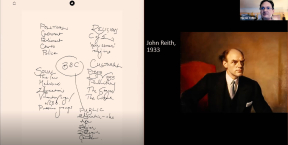
In the centenary year of the BBC, this Virtual Branch talk from Marcus Collins relates the strange tale of how the BBC did and did not broadcast about homosexuality in the 1950s and 1960s and what it tells us about sexuality, broadcasting and the origins of permissiveness in mid-twentieth century...
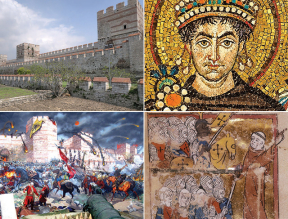
In this article, Jacob Olivey describes his department’s efforts to both diversify their Key Stage 3 curriculum and secure greater curricular coherence. Building on a large body of research and practice, Olivey sought new forms of curricular coherence through the selection and sequencing of substantive content across the curriculum. He...
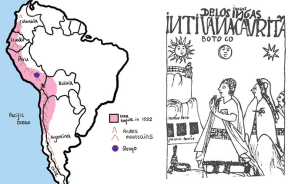
As part of her department’s effort to diversify the history curriculum, Paula Worth began a quest to research and then shape a lesson sequence around the Inkas. Her article shows how she allowed the new topic and its historiography to challenge and extend her own use of sources, particularly oral...
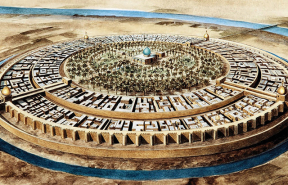
In 2005, in a Teaching History article entitled, ‘A need to know’, Nicolas Kinloch built an argument for teaching the history of Islamic civilisations to all pupils. Afia Chaudhry returns to this theme, reflecting deeply on the needs of her own students – Muslim and non-Muslim alike – within a...
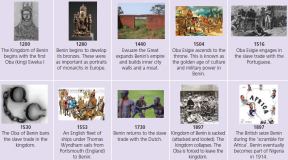
Josh Garry describes his effort to refresh his approach to teaching the British transatlantic slave trade. Drawing on reading, lectures and discussions during an Historical Association Teacher Fellowship programme, Garry built a sequence of lessons designed to contextualise the trade while showing African agency and complexity. The result was a...
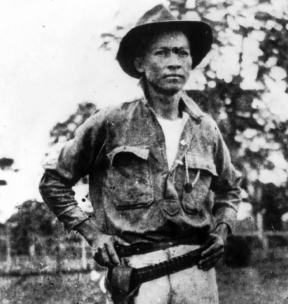
In his article in this journal just over a year ago, Steven Driver set out his vision for a less myopic range of topics in A-level coursework. In this edition, Driver demonstrates how he has built student enthusiasm for, and knowledge of, a topic which he had previously identified as...
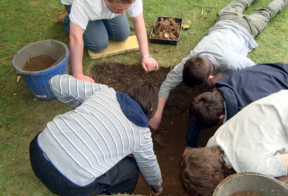
In March 2020, when Covid-19’s lockdown restrictions saw schools closed to the majority of children, Carenza Lewis quickly began thinking of ways to help both teachers and parents. Drawing on extensive experience of enabling children and young people to learn from practical engagement in archaeology, she came up with a...
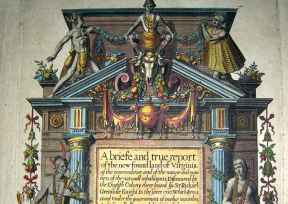
In autumn 2019, Kara Walker’s monumental sculpture, Fons Americanus, went on display in the Tate Modern, offering a poignant, troubling challenge to national commemoration. Walker depicts not the lingering vestiges of imperial glory, but sharks, tears, and haunted memories. She brings history into conversation with its contemporary legacies and engages...

Cunning Plan for using the metaphor of a tree to help students characterise the process of change and engage with a historian’s argument. In this Cunning Plan, Eve Hackett sets out how she used a recent work of history about the Norman Conquest as inspiration for her teaching of Year...
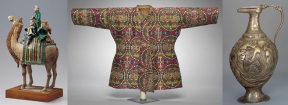
The stimulus for this article came from two developmental tasks that Barbara Trapani was set during the course of her initial teacher education programme: planning her first historical enquiry and bringing the work of an historian into the classroom. Trapani chose to tackle the two tasks together, using Susan Whitfield’s...
Triumphs Show is a regular feature which offers a quick way for teachers to celebrate their successes and share inspirational ideas with one another. While the ideas are always explained in sufficient depth for others to be able to take them forward in their own practice, the simple format allows...