

Curriculum Support     Principles of planning         Overview & Depth         Disciplinary concepts             Cause and consequence             Change and continuity             Similarity & difference             Significance             Evidence             Interpretations         Substantive Knowledge             Substantive concepts             Chronology             Long-term knowledge plans             Sense of period             Making knowledge secure         Using enquiry questions         Diversity in the past         Controversial issues         Progression & Assessment         Using historical scholarship         Extended Reading         Extended Writing         Historical Argument         Narrative in history         Inclusion         Independent Learning         Digital history         Triumphs Show     Teaching resources         Corporate lesson sequences         Free teaching resources             Medieval             Early Modern             Modern     Key Stage 3         Planning         Progression & Assessment         Local History         Transition         Learning outside the classroom         Connecting Classrooms through Global Learning     Key Stage 4         Planning             General             Thematic             Period Study             Depth Study             Historic Environment         Progression & Assessment         Non-GCSE     Key Stage 5         Planning         Progression & Assessment         Independent Study         Transition to HE     Periods and Themes         Periods             Ancient             Early Medieval             1066-1509                 Britain & Ireland 1066-1509                 Europe 1066-1509                 World 1066-1509             1509-1745                 Britain & Ireland 1509-1745                 Europe 1509-1745                 World 1509-1745             1745-1901                 Britain & Ireland 1745-1901                 Europe 1745-1901                 World 1745-1901             1901-present                 Britain & Ireland 1901-present                 Europe 1901-present                 World 1901-present         Themes             Politics             Women             Health             Power             Science & Industry             Religion             International Relations             Crime & Punishment             Economics             Society             Culture

Culture

Polychronicon was a fourteenth-century chronicle that brought together much of the knowledge of its own age. Our Polychronicon in Teaching History is a regular feature helping school history teachers to update their subject knowledge, with special emphasis on recent historiography and changing interpretation. This edition of 'Polychronicon' investigates World War...
“I am greatly honoured to receive the Medlicott medal and I thank the President for his much-too-kind remarks. It is fifty years since I attended my first meeting of the Historical Association and heard a lecture by Professor Medlicott himself, no less. The Association does a wonderful job in encouraging...
The study of history has to be vibrant. It is about real people, real dramas, real narrative, real human dilemmas. It is not surprising that, despite manifold structural pressures working against us, take-up for GCSE history is once again buoyant. There are all manner of reasons for this - is...
Commenting in early 1934 at the University College, Hull, at the time of the centenary of William Morris’ birth and of a large exhibition at the Victoria and Albert Museum, the historian and active socialist, G.D.H. Cole commented, William Morris’ influence is very much alive today: but let us not...
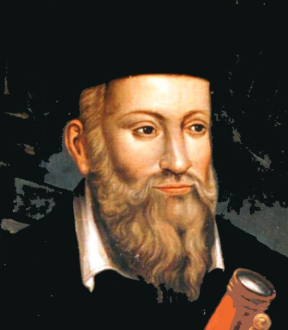
In this podcast Professor Penelope Corfield looks at the history of 'End of the World Cults'. 1. Why do people at times become urgently convinced that 'the End of the World is Nigh?' HA Members can listen to the full podcast here Short Reading list for End-of-the-World Cults: Two wide-ranging...