
Triumphs Show
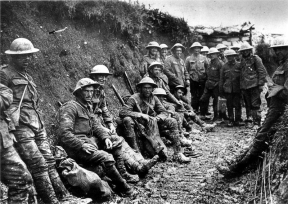
Year 9 think they know a lot about the First World War. After all, they read Michael Morpurgo's novel Private Peaceful in their English lessons all the way back in Year 7, they've seen Blackadder so many times they can recite it, and in the centenary year of the war's...

Towards victory in that battle... 10A were nearly a term into their GCSE history course, working on an 1890-1918 British history ‘depth study'. They had already completed work on the Liberal welfare reforms and on the women's suffrage movement, and they had been practising a range of source evaluation approaches....
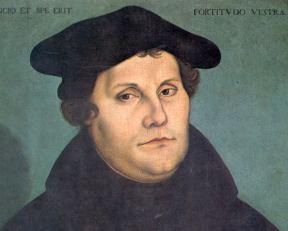
Year 13 play a competitive game to help them arrive at strong and substantiated judgements. Year 13 were in the library again, sinking under tomes of weighty works on the German Reformation. James was feverishly rifling through a book on the ‘Reformation World' for something (anything!) to do with Luther's...
A collaborative project between Richard Rose Central Academy and University of Cumbria PGCE History trainees to meet the challenges of the A2 synoptic unit. "If I tell you to eat, you will eat! You wanted cake! You stole cake! And now you've got cake! What's more, you're going to eat...
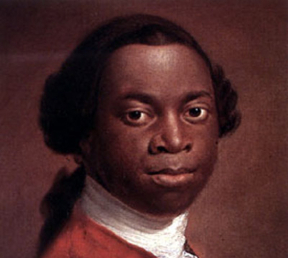
How a drink in the bar at the SHP conference - and discovery of a shared interest in ICT - led to the campaign for a Blue Plaque for an eighteenth-century abolitionist. What do the 1970 Brazil World Cup-winning team, Charles Darwin and Vanilla Ice all have in common? This...

Using pupil dialogue to encourage sophisticated engagement with source material - even at GCSE! Frustrated by the mechanistic approach that their pupils were using when working with historical sources, Tim Jenner and Paul Nightingale sought to experiment with a method of teaching sources which eschewed practice source questions in favour...
Department meetings have a range of purposes, and all teachers will be aware of some of the more tedious tasks that have to be completed at such meetings. The most exciting meetings for us are those where we can sit down as a history department and design a new enquiry....
Active learning to engage and challenge ‘challenging students' Historical significance may have been the ‘forgotten element' in 2002 when Rob Phillips first offered us the acronym ‘GREAT', but it has been seized upon with enthusiasm by the history education community. Christine Counsell's now famous five ‘R's (remarkable, remembered, resonant, resulting...
Headteachers, Hungarians and hats: using family photos to bring the diversity of Jewish lives to life It is 9.35am on a wet Tuesday. As the rain falls outside, fingers twitch in a Y ear 9 history classroom. The instruction is given and 28 pairs of hands spring into action, rifling...
Who would true valour see...let him (or her) lead a school re-enactment group While many teachers may have called on the services of historical re-enactors to inspire their students and create a living sense of the past, few have taken on the challenge of establishing their own historical re-enactment group....
Whodunnit? The Felling mining disaster, 1812 The room buzzes as pathologists swap stories about injuries on the latest bodies. Some have virtually all limbs missing, others have been crushed by rockfall. Others have been found seemingly asleep with not a mark on their bodies. You have stepped into a Year...
Licking the stones: a kinaesthetic interpretation of Dover castle in 360 degrees This is the story of one history department that, in collaboration with a local historical site, embarked on a ‘curriculum co-development project' with the art department. The aim was to use learning experiences outside the classroom to bring...
Assessing through reflection: How one history department has found a way to satisfy the Senior Leadership Team, parents and pupils through tightly focused self-assessment Teachers are caught between a rock and hard place when it comes to assessment. Senior leaders want to see evidence of regular ‘levelling' while (most) pupils...
Devising worthwhile and engaging homework tasks, week in week out, can prove both demanding and frustrating - particularly in contexts where we know students will have be chased to complete them. How can we make homework planning easier and more effective - and cut down the time spent chasing recalcitrant...
Beheading Headlines: Holding a live debate around an historical theme Studying the events surrounding the execution of Charles I is exciting on many levels: the first English King to be executed by his ‘people', the gory public beheading and the controversy surrounding the trial and verdict... But studying the Civil...
What do you know about how your local museums can help your GCSE planning and teaching? How can your new GCSE courses for September make use of the free resources, artefacts and images that our local and national museums house? That's just what the PGCE history group from Leeds Trinity...
Students can find it hard to understand and remember the differing schools of interpretation that they encounter at A2. The process of studying differing historiographic claims can also seem rather dry and tedious. It is crucial that they grasp differences in interpretation if they are to succeed in their examinations,...
It is often remarked that history is under pressure nationally at GCSE. Our history numbers have never been enormous, and we have recently gone down from 2 sets to one set. The crunch came in 2007 when we collapsed to a dismal 12 students. A variety of factors may have...
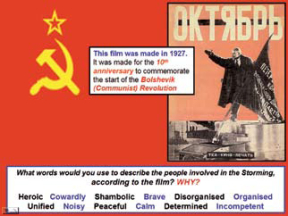
It was period 5 on a wet Wednesday afternoon deep into the winter term. Year 9 were even more difficult than usual. Being cooped up inside at lunch, without supervision, had not helped the situation. What was I going to do with this untamed bunch? Put on a trusted video?...
Some of the most effective role play activities are those which draw on the common experiences of pupils to promote serious learning outcomes. Chris Higgins experiments with a number of situations and strategies that draw upon popular games and television show formats. These are used to engage, to provide structure...