
Using enquiry questions
Silk purse from a sow's ear? Why knowledge matters and why the draft History NC will not improve it Katie Hall and Christine Counsell attempt to construct a Key Stage 3 scheme of work out of the draft National Curriculum for history that was released for consultation in England in...
Maria Osowiecki's search for the right questions to frame her students' study of the Holocaust was driven initially by the proximity of her school to the site of Bergen-Belsen, and the particular interests and concerns of her students as members of British Forces families. But, as this article richly demonstrates,...
The Association for Historical Dialogue and Research (AHDR) is a Cyprus-based organization that works to foster dialogue among history teachers and other educators across the divide in Cyprus. In one of their UN-funded projects, ADHR members worked with UK colleagues to shape a lesson sequence and resources on the Ottoman...
The current National Curriculum for history requires pupils to ‘identify and investigate specific historical questions, making and testing hypotheses for themselves'. While Kate Hammond relished the encouragement that this gave to her pupils to engage in the process of historical enquiry, she was keen to develop a much clearer sense...

Robin Conway's interest in student led enquiry derived from a concern to encourage his students to take much more responsibility for their own learning. Here he explains how his department gradually learned to entrust students with defining the enquiry questions and planning the kinds of teaching and learning activities to...
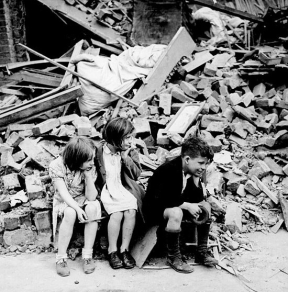
Getting students to generate their own questions can seem like a formidable challenge, even for experienced teachers with extensive subject knowledge developed over years of teaching. Imagine how much more alarming it appeared to a student-teacher being encouraged to take risks by handing more responsibility to the students. Could it...

Understanding historical interpretation involves understanding how historical knowledge is constructed. How do sixth formers model historical epistemology? In this article Arthur Chapman examines a small sample of data relating to sixth form students' ideas about why historians construct differing interpretations of the past. He argues that understanding interpretation requires students...
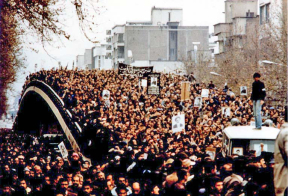
Although the curriculum changes of 2008 brought with them new GCSE specifications, Jonathan White was disappointed by the dated feel of some ‘Modern World' options, particularly the depth studies on offer. Drawing on his experience of teaching comparative history within the International Baccalaureate, and building on previous arguments in Teaching...
This Issue's Problem: Rafe Sadler has just started his second teaching placement and is worried about the very different ways of working and expectations of teachers in his new department. In his first school, where history was taught within a humanities programme, the Key Stage 3 scheme of work had...

Please note: this article pre-dates the 2014 National Curriculum and some content may be outdated. As a local authority adviser, Andrew Wrenn's advice has often been sought by history departments, both those seeking to resist ill-conceived and potentially damaging cross-curricular initiatives and those keen to exploit new opportunities for meaningful...

Drawing upon a range of practice, Michael Riley analyses the characteristics of a good enquiry question. He explores the importance of careful wording of the question if it is genuinely to help the teacher to integrate areas of content into a purposeful learning journey and without distortion.He then moves on...
Please note: this article pre-dates the 2014 National Curriculum and some content may be outdated. In this article, Andrew Wrenn explores some issues that teachers might consider when supporting 14 and 15 year olds in their study of war memorials as historical interpretations. Tony McAleavy has argued that ‘popular' and...
This resource is intended to provide a short ‘aide memoire’ to the hard pressed teacher providing a series of ‘launching pads’ for historical enquiry…
Sometimes particular problems can lead to unexpected solutions. In this case, Sally Burnham decided to solve a problem that she had identified among her Year 12 students by changing the way in which she teaches Year 7. Her Year 12s were finding it difficult to set appropriate questions for their...
Michael Riley, member of the HA Secondary Committee and History PGCE Tutor at Bath Spa University. In recent years, teaching about different interpretations of history has been one of the most exciting and challenging aspects of Key Stage 3 history. Interpretations-focused enquiries allow pupils to see that argument and debate...
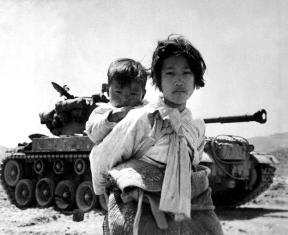
Interpretation of the Cold War is a fascinating area. Many students begin to study it certain pre-formed ideas – gleaned from their parents, perhaps, or from films or computer games. Historians have interpreted it in different ways – and those who believe in the ‘twenty-year rule’ that historical judgment is...
The idea of gaining pupils’ attention, interest and curiosity at the start of the lesson with an intriguing image, story, analogy or puzzle has long been used by our best history teachers. Michael Riley, through writing and inset, popularised the term ‘hook’ and emphasised its special role at the start...
Jamie Byrom describes the learning activities within a final enquiry for a National Curriculum area of study - Britain 1066-1500. The strong message in this article is that the learning in each enquiry is only as good as the planning and teaching of the enquiries that precede it. Byrom's model...
In this article, Andrew Wrenn explores some issues that teachers might consider when supporting 14 and 15 year olds in their study of war memorials as historical interpretations. Tony McAleavy has argued that ‘popular' and ‘personal' interpretations and representations are just as worthy of study at Key Stage 3 as...