
Using historical scholarship
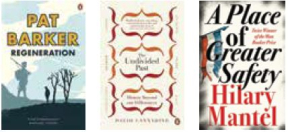
Discussions with sixth-form students about reading led Carolyn Massey and Paul Wiggin to start a sixth-formreading group. They describe here the series of themed sessions that they planned, and the student discussion and reflections that resulted. Listening to their students discuss their reading led Massey and Wiggin to reflect on...
Frustrated that her A-level students were being overly dismissive when asked to judge the convincingness of academic historians’ arguments, Paula Worth drew on previous history-teacher research and theories of history for inspiration. After noting that her students would unjustly reject esteemed historians’ accounts for lack of comprehensiveness, Worth explains here...
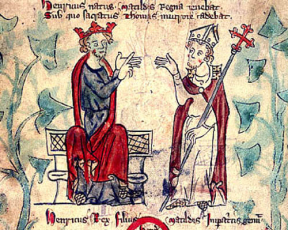
‘The Becket Dispute’ (or ‘Controversy’) refers to the quarrel between Henry II and Thomas Becket, Archbishop of Canterbury, which dominated English ecclesiastical politics in the 1160s. It was a conflict with multiple dimensions: a clash of Church and State; a prolonged struggle between two prominent individuals; a close friendship turned...
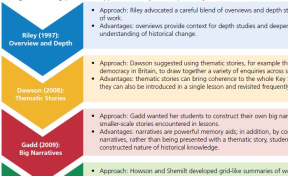
Inspired by The History Manifesto, Suzanne Powell describes in this article her rationale for expanding her students’ horizons by asking them to think about change, similarity and difference on a grand scale. She sets ‘big history’ into its curricular context, and shows the way in which her students could, and...
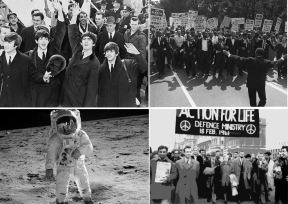
During her PGCE year, it became evident to Rachel Coleman just how much pupils struggled with the complicated nature of history. They were troubled in particular by the lack of definitive answers, by the range of perspectives that might be held at the time of a particular event or development...
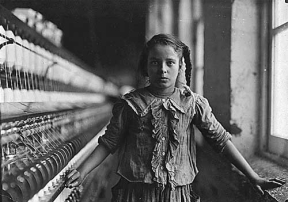
‘Disastrous and terrible.’ For Arnold Toynbee, the historian who gave us the phrase ‘industrial revolution’, these three words sum up the period of dramatic technological change that took place in Britain across the eighteenth and nineteenth centuries. We may not habitually use Toynbee’s description in the classroom, but it is...
International Journal of Historical Learning, Teaching and Research IJHLTR, Volume 14, Number 2 – Spring/Summer 2017 ISSN: 14472-9474 Abstract This article presents some findings of a qualitative interview study with 42 Austrian history teachers, conducted in the framework of an on-going three-year research project (2015–2018) funded by the Austrian Science...
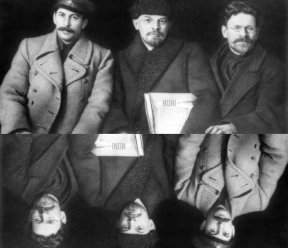
In her introduction to this piece, Carolyn Massey describes history teachers as professionals who pride themselves on ‘a sophisticated understanding of change and continuity’. How often, though, do we bemoan change when it comes, as it so often has recently? Massey’s article provides an example of how to embrace change,...
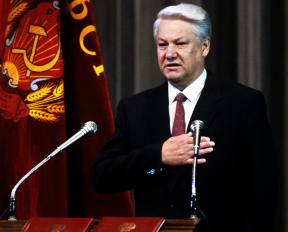
A quarter-century on from 1989-91, with a large amount of archive and media material available, these epic years are ripe for historical analysis. Yet their proximity to our time also throws up challenging questions about the practice of ‘contemporary history’, and the complexity of events raises larger issues about how...

Struck by the dullness of some of her students’ essay introductions, Paula Worth reflected on the fact that she had never focused specifically on introductions. After surveying existing work by history teachers on essay structure in general and introductions in particular, she turns to the work of historians. Drawing on...
Julia Huber and Katherine Turner found that their A-level students struggled to identify the line of argument in a passage of historical scholarship, an essential prerequisite for answering their coursework question. They devised an activity that helped students to unpick and visually contrast historians’ interpretations of the relative importance of...
Jim Carroll noticed basic literacy errors in his Year 13s’ writing, but on closer examination decided that these were not best addressed purely as literacy issues. Through an intervention based on clauses, Carroll managed to enable his students to write better, but he did this by teasing out principles of...
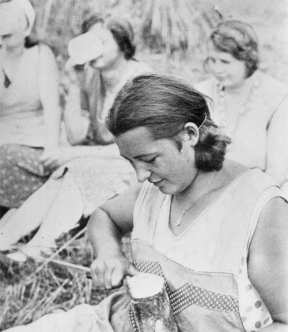
The question of how to prepare students to succeed in the examination while also ensuring that they are taught rigorous history remains as relevant as ever. Faced with preparing students to answer a question that seemingly precluded argument, Rachel Foster and Kath Goudie demonstrate how they used historical scholarship both...

The history department at Cottenham Village College has one more member than you might expect. Ruth Brown is a teaching assistant (TA) and one of the longest-standing members of the department, and this article is about how her work has an impact on specific pupils, whole classes and teachers. The...

On 23 June, electors in the United Kingdom will vote on whether they wish to remain part of the European Union. The passionate debate around the question has seen the spectre of Hitler and the example of Churchill invoked, with varying plausibility, by both sides. It has also drawn on...

How nominalisation might develop students’ written causal arguments Frustrated that previously taught writing frames seemed to impede his A-level students’ historical arguments, James Edward Carroll theorised that the inadequacies he identified in their writing were as much disciplinary as stylistic. Drawing on two discourses that are often largely isolated from...
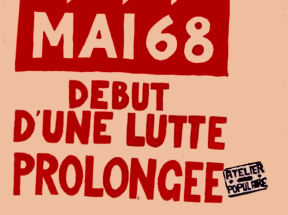
As Kristin Ross has persuasively argued, by the 1980s interpretations of the French events of May 1968 had shrunk to a narrow set of received ideas around student protest, labelled by Chris Reynolds a ‘doxa’. Media discourse is dominated by a narrow range of former participants labelled ‘memory barons’ –...
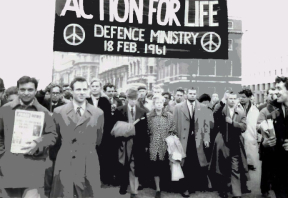
Dan Smith was concerned that his pupils were drawing on over-simplified generalisations about different periods of the past when they were considering why interpretations change over time. This led him to consider how pupils’ contextual knowledge and chronological fluency might be used more explicitly in order to avoid weak generalisations...

This issue’s problem: James Connolly is finding it difficult to judge how much or what kind of reading he should expect of his students. James Connolly, an eager and knowledgeable historian, has frequently struggled to pitch things appropriately for students. This applies particularly to his expectations of their reading, but...
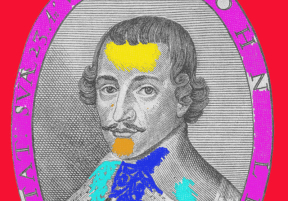
John Lilburne might have been destined for obscurity in less interesting times. He was the second son of a minor gentry family, apprenticed to a London woollen merchant in 1632. It was his master’s connections that drew him into religious opposition to Charles I and the illegal book trade, resulting...