
Using historical scholarship
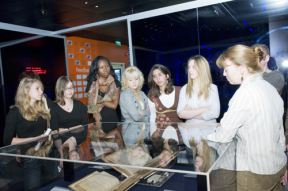
Exploring big overviews through local depth Rachel Foster and Kath Goudie's search for a more rigorous and interesting way of teaching Year 7 the Norman Conquest was initially driven by a desire to incorporate local history in a more meaningful way in their Key Stage 3 schemes of work. This...
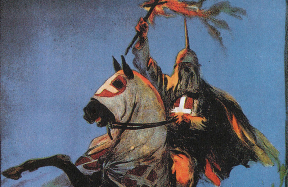
Controversial from the first year of its release in 1915, 'The Birth of a Nation' has been hailed as both the greatest film ever made and the most racist. On 8 February 1915, it premiered in Los Angeles as 'The Clansman', the name of the novel and play upon which...

While preparing her Year 12 students for an International Baccalaureate paper on early Islam, Kirstie Murray became concerned that students' weaknesses in making claims would be particularly exposed by the challenging complexity of this topic's source record and its contested historiography. Drawing on the practice of other history teachers, especially...
Long, unreadable sentences in her students' essays led Rachel Foster to improve her post-16 students' punctuation. Her journey resulted, however, in more than improved punctuation. It led her to theorise what historians are really doing in their ‘signpost sentences'. She found herself showing students how an academic historian anticipates a...
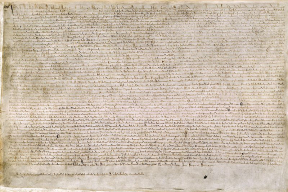
First some history: the question of how historiographic and public historical representations of Magna Carta have changed over the last 800 years is an important one. The ‘myth' of Magna Carta as a foundational document for modern democracy is still very powerful. That tradition of understanding the legacy and history...
Hark the herald tables sing! Achieving higher-order thinking with a chorus of sixth-form pupils On 9 April 1930, a philanthropist called Edward Harkness donated millions of dollars to the Phillips Exeter Academy in the USA. He hoped that his donation could be used to find a new way for students...
From a compartmentalised to a complicated past: developing transferable knowledge at A-level Students find it difficult to join up the different things they study into a complex account of the past. Examination specifications do not necessarily help with this because of the way in which history is divided up into...
On 18 June 2015, the two-hundredth anniversary of the great battle of Waterloo will be commemorated in Britain and on the continent (though not in France). It will represent the climax of the Napoleonic bicentenary, which has been in full flow since the turn of the twenty-first century. Fresh biographies...
Setting us free? Building meaningful models of progression for a ‘post-levels' world Alex Ford was thrilled by the prospect of freedom offered to history departments in England by the abolition of level descriptions within the National Curriculum. After analysing the range of competing purposes that the level descriptions were previously...

‘English king Frederick I won at Arsuf, then took Acre, then they all went home': exploring the challenges involved in reading and writing historical narrative Paula Worth draws on three professional traditions in history education in order to build a lesson sequence on the Crusades for her Year 7s. First,...
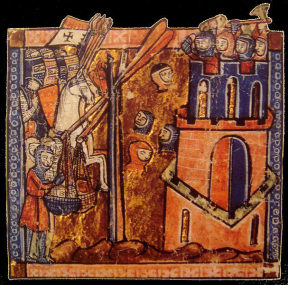
Taking new historical research into the classroom: getting medieval (and global) at Key Stage 3 Although history teachers frequently work with academic historical writing, direct face-to-face encounters with academic historians are rare in secondary history classrooms. This article reports a collaboration between an academic historian and a history teacher that...
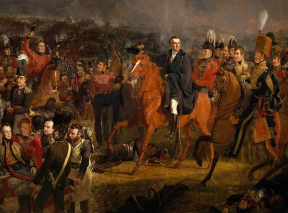
Defying the Iron Duke: assessing the Battle of Waterloo in the classroom The approaching bicentenary of the Battle of Waterloo has stimulated debate about how it should be commemorated. This article reports a collaboration between the Waterloo200 Committee and Tom Wheeley, history teacher, to create a lesson sequence analysing the...
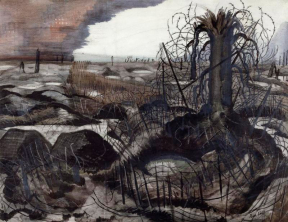
A world turned molten: helping Year 9 to explore the cultural legacies of the First World War Rachel Foster shows how her own study of cultural history led to a new dimension in her planning. She wanted to show her students not only that historians are interested in many different...
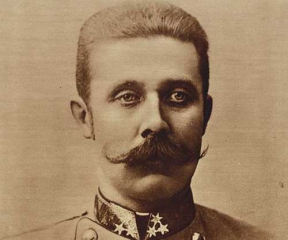
As I write this article I have before me my grandfather's Victory Medal from the First World War. It has inscribed on the reverse side, ‘The Great War for Civilisation 1914-1919'. The absolute certainty of such a justification for Britain's entry into the war seems somewhat hollow as we approach...
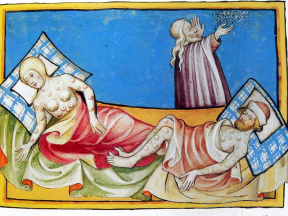
Period, place and mental space: using historical scholarship to develop Year 7 pupils' sense of period What is a sense of period? And how can pupils' sense of period be developed? Questions such as these have troubled history teachers for many years, often revolving around debates over the role played...
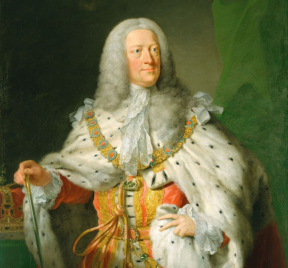
Making sense of the eighteenth century Pressures on curriculum time force us all to make difficult choices about curriculum content, but the eighteenth century seems to have suffered particular neglect. Inspired by the tercentenary of the accession of the first Georgian king and the interest in the Acts of Union...
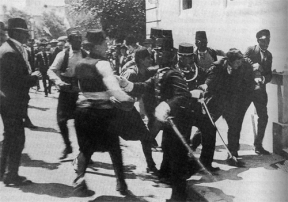
Waking up to complexity: using Christopher Clark's The Sleepwalkers to challenge over-determined causal explanations Teaching student to construct causal argument is a staple of history teaching and, in this year, questions about the causes of the First World War are particularly pertinent and once again the public eye. Claire Holliss,...

As another World Book Day goes past, you have been watching the English department wax lyrical about all of the wonderful books that pupils might read. You know that there is a wealth of well-written historical scholarship out there for pupils to dive into, yet you are not sure about...
The more things change, the more they stay the same: developing students' thinking about change and continuity Finding ways to characterise the nature of change and continuity is an important part of the historian's task, yet students find it particularly challenging to do. Building on her previous work on change,...
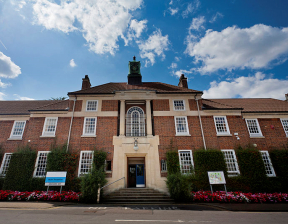
Where's the other ‘c'? Year 9 examine continuity in the treatment of mental health through time Helen Murray, Rachel Burney and Andrew Stacey-Chapman show how they strengthened three goals of their practice - secure knowledge, narrative shapes and conceptual analysis - by securing strong connection between them. The curricular focus...