
Britain & Ireland 1745-1901

In this podcast Dr Anne Murphy of the University of Hertfordshire looks at the early origins of the European financial markets from the Italian Renaissance to the present day. Dr Murphy also provides a useful introduction to finance, the stock market and the bond market.

The past 30 years have seen a general revival in scholarly activity relating to ‘all aspects of 18th-century British history'. However, this increase in academic study, which has broadly coincided with the introduction and development of the National Curriculum in England, has not resulted in the period being studied in...

The workhouse has long held a negative reputation in the popular imagination as the dreaded destination of the destitute, an institution guaranteed to strike fear into the hearts of the Victorian poor. This is partly owing to its design under the New Poor Law of 1834 as an explicit punishment...
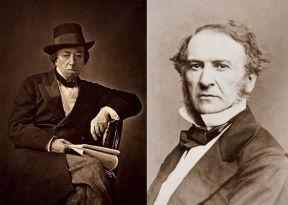
Keynote Speech from the Historical Association 2013 Annual Conference - Podcast Sir Richard Evans FBA - Regius Professor of History and President of Wolfson College, University of Cambridge ‘Study problems, not periods', Lord Acton famously advised in his Inaugural Lecture at Cambridge. Centuries in themselves have no historical meaning; the...

This pamphlet provides an interesting approach to a historical topic which has been too frequently covered from a single viewpoint. The pamphlet delivers a thoroughly Scottish approach to the nature of the 1707 Union and the changing nature of Scotland in the following centuries. It highlights the disparity of the...
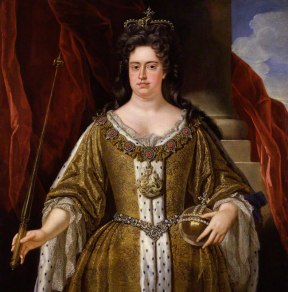
In June 2012 the Historical Association and Historic Royal Palaces joined forces to offer a fantastic CPD opportunity in line with the Queen's diamond jubilee. Two CPD events around the theme of Royal Women charted the private histories of queens of the past from within the walls of their palaces....
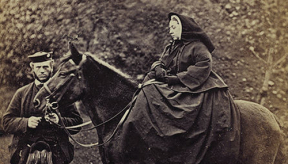
Developing Year 8 students' conceptual thinking about diversity in Victorian society Elizabeth Carr writes here about a new scheme of work she developed to teach students about diversity in Victorian society. When dealing with a concept such as diversity, it can be easy for students to slip into stereotypes based...
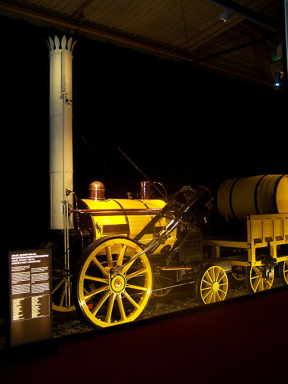
The period 1750-1830, traditionally marking the classical industrial revolution, achieved in Great Britain what Professor Rostow has called the economy's "take-off into self-sustained growth". A revolution in transportation was part of the complex of changes - industrial, agricultural, mercantile and commercial - occurring roughly concurrently.The impetus to transport change is...
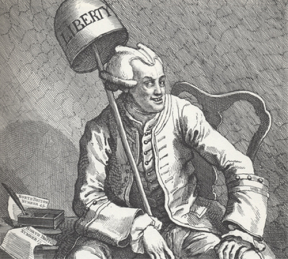
For Lord North in 1775, one John Wilkes was enough, ‘though ... to do him justice, it was not easy to find many such'. The impact of Wilkes between 1760 and 1780 was profound, a cause as much as a person. For Philip Francis, thought to be the satirist ‘Junius',...

Thirty thousand pounds was an enormous sum of money in 1746. That was the reward offered by the British government for the capture of Prince Charles. Many Highlanders knew where he was at various times and places after Culloden, but they did not betray him. As one of his helpers...
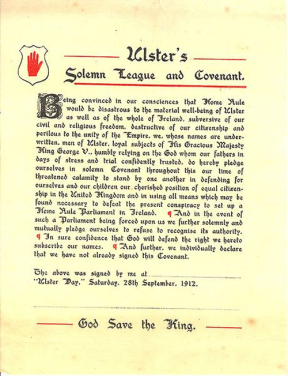
It is difficult to exaggerate the importance of Irish unionism for British and Irish politics in the late nineteenth and early twentieth centuries. The movement was supported almost exclusively by Irish Protestants who were of Anglo-Irish or Scotch-Irish descent and who comprised roughly one-quarter of the population of Ireland. Its...
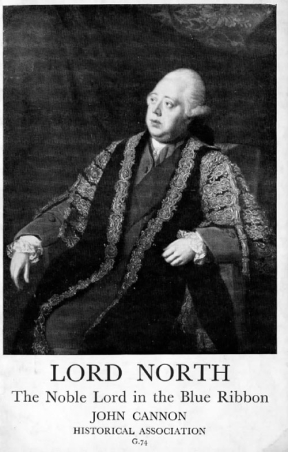
In the last weeks of his life Lord North, we are told, expressed anxiety about his place in history - ‘how he stood and would stand in the world'. This, he owned, ‘might be a weakness, but he could not help it'. It was a weakness one suspects that he...
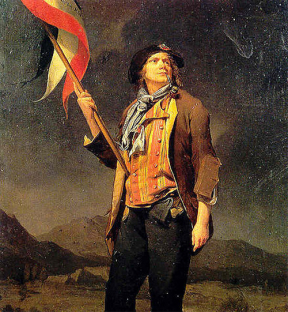
Year 8 use counterfactual reasoning to explore place and social upheaval in eighteenth-century France and Britain Two linked motivations inspired Ellen Buxton's research study: she wanted pupils to make connections between British and French history and she wanted to explore the potential of counter-factual reasoning within a causation enquiry. It...
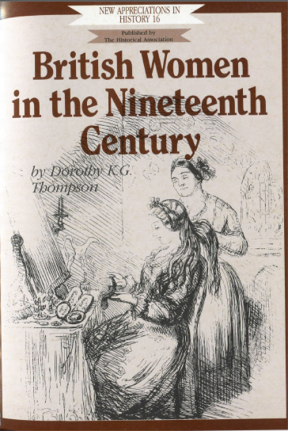
A short pamphlet surveying the historical record of rather more than half the population of Britain over a period of a hundred years must of necessity be sketchy and incomplete. The great interest in history of women which has arisen in the last few decades has produced a great deal...
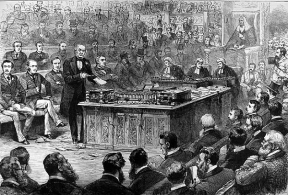
One hundred and twenty years ago the advent of the first red May Days caused major concern across Europe. To general surprise, in 1890 and the next few years some of the largest rallies occurred in London. In Britain the main demonstration on the nearest Sunday to May Day passed...
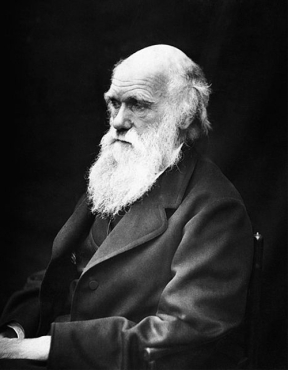
Jonathan White wanted to fill a gap in his students' knowledge of the history of ideas. Despite the appearance of Marx, Smith, Darwin and Malthus in the department's workscheme for Year 9, his Year 13 students appeared to lack any meaningful grasp of these nineteenth-century intellectual reference points. White therefore...
Revolutions of the magnitude of the industrial revolution in England provoke historical controversy: such a revolution is a major discontinuity which a profession more skilled in explaining small changes finds difficult to understand. A revolution that touches a whole society is so diffuse that its significant events are difficult to...
The pattern of overseas trade is always in movement: new commodities are constantly appearing, old ones fading into unimportance, different trading partners coming to the fore-front. But between the latter end of the sixteenth and the second half of the eighteenth century, change took specially far reaching forms. In 1570...

How can we interest students in the world of ideas? How can we help them to see how important ideas were in shaping and reflecting the world of the Victorians? Working with the overarching enquiry question, ‘Why did some Victorians believe in progress in the nineteenth century and others did...
Two hundred years ago it must have seemed to some as if the time for political and economic reform in Britain had arrived. A number of the necessary conditions appeared to be in place: recent examples from America and France showing how readily and rapidly established systems could be overturned...