Britain & Ireland 1901-present

War and conflict, technology, illness and medicine and the battle for civil and national rights have all been key elements of the 20th century through to today, thus, all of those themes and many more are explored in this section. Underpinning many of these articles and included here are articles exploring pedagogical issues, managing knowledge and transferring knowledge. Read more

Sort by: Date (Newest first) | Title A-Z
  • The British General Strike 1926

    Article

    ‘The General Strike is a challenge to Parliament and is the road to anarchy and ruin.' (Stanley Baldwin, Prime Minister, 6th May 1926). ‘The General Council does not challenge the Constitution ... the sole aim of the Council is to secure for the miners a decent standard of life. The Council...

    Click to view
  • The Coming of War in 1939

    Article

    I. The Legacy of Versailles The Outbreak of a second world war on 1 September 1939 might have been expected to produce in due course a great controversy on ‘war guilt'. But there has been nothing comparable with the debate which took place during the 1920s on the 1914 issues. The...

    Click to view
  • The Coronation of King Charles III

    Article

    2023 will see the first coronation of a British monarch for 70 years. Only those now in their 70s or above will remember the last one. The UK is the only country in Europe still to carry out a coronation, a ceremony that has its roots in traditions over a...

    Click to view
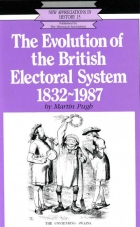
  • The Evolution of the British Electoral System 1832-1987

    Article

    During the last 20 years our perspective on the great Victorian question of parliamentary reform has noticeably changed. We have acquired a comprehensive picture of the organisation and political socialisation of those who won the vote; and some interesting debates have developed about the social characteristics of the electors and...

    Click to view
  • The Great Charter: Then and now

    Article

    Magna Carta is a document not only of national but of international importance. Alexander Lock shows how its name still has power all over the world, especially in the United States. Although today only three of its clauses remain on the statute book, Magna Carta still flourishes as a potent...

    Click to view
  • The Harkness Method: achieving higher-order thinking with sixth-form

    Article

    Hark the herald tables sing! Achieving higher-order thinking with a chorus of sixth-form pupils On 9 April 1930, a philanthropist called Edward Harkness donated millions of dollars to the Phillips Exeter Academy in the USA. He hoped that his donation could be used to find a new way for students to sit around a table...

    Click to view
  • The Irish in Britain 1815-1914

    Article

    Irish migration to Britain has a long and chequered history, yet only in recent years have historians examined this subject in depth, through a growing body of local, regional and national studies which have supplemented the earlier pioneering research of J. E. Handley and J. A. Jackson. These studies have...

    Click to view
  • The Life & Significance of Alan Turing

    Podcast

    In this podcast, Dr Tommy Dickinson of the University of Manchester, discusses the life and significance of Alan Turing.

    Click to view
  • The National Insurance Act 1911: three perspectives, one policy

    Article

    Sandwiched between the Parliament Act and the Home Rule Act, the National Insurance Act 1911 is easily overlooked and often forgotten. Yet, as Gilbert has pointed out, it was critical both of itself and as the foundation for social legislation up to current times. It came into force on 15...

    Click to view
  • The Northern Ireland Question 1886-1986

    Article

    The nature of the rights of majorities and minorities is one of the most intractable of the issues raised by the Northern Ireland question, especially since much depends on definitions. Ulster Protestants are a majority in that province but a minority in both Ireland and the United Kingdom, while Catholics,...

    Click to view
  • The Origins of the Second Great War

    Article

    This pamphlet provides a detailed account of  the events leading up to the outbreak of war in 1939, covering the various factors that played a role in the outbreak of war such as tension over Poland and the Spanish Civil War, as well as the nature and effect of diplomatic...

    Click to view
  • The People's Pensions

    Article

    Why did the British get pensions when they did? What part did the great social surveys (Booth and Rowntree) play? Was there something rotten at the heart of Empire? What part did fears of a Red Peril play? Was Britain slow, with Bismarck and even the Tsar providing some measures of...

    Click to view
  • The Reformed Electoral System in Great Britain, 1832-1914

    Article

    The struggle for parliamentary reform between 1830 and 1832 has long been regarded as one of the decisive battles of British political history. The Tories lamented that the passage of the Reform Bill meant the destruction of the constitution. Middle class Radicals welcomed the Reform Bill as the instrument that...

    Click to view
  • The Second World War

    Article

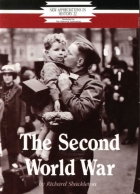
    On 5 September 1939 the German Führer, Adolf Hitler, paid a surprise visit to the corps which was in the forefront of his army's ferocious assault upon Poland. As they passed the remains of a smashed Polish artillery regiment, the corps commander, General Guderian, astonished Hitler by telling him that...

    Click to view
  • The great Liberal landslide: the 1906 General Election in perspective

    Article

    On 1 May 1997 the Conservative party suffered an electoral defeat so overwhelming that political commentators were left rummaging through the statistics of the previous two centuries to find anything similar. The Times concluded on 3 May that it was the party's worst performance since 1832, though 'The disaster suffered...

    Click to view
  • Triumphs Show 144: Active learning to engage ‘challenging students'

    Article

    Active learning to engage and challenge ‘challenging students' Historical significance may have been the ‘forgotten element' in 2002 when Rob Phillips first offered us the acronym ‘GREAT', but it has been seized upon with enthusiasm by the history education community. Christine Counsell's now famous five ‘R's (remarkable, remembered, resonant, resulting...

    Click to view
  • Triumphs Show 155: beyond trivial judgements of 'bias'

    Article

    Towards victory in that battle... 10A were nearly a term into their GCSE history course, working on an 1890-1918 British history ‘depth study'. They had already completed work on the Liberal welfare reforms and on the women's suffrage movement, and they had been practising a range of source evaluation approaches....

    Click to view
  • Triumphs Show 193: Year 8 imagine the First World War trenches

    Article

    Deep into my PGCE year, I found myself discussing with my mentor how to pre-empt the barriers to understanding the past that students may face. One barrier we discussed was presentism: the tendency of students to interpret the past in light of their own modern knowledge, values and experiences. In particular, we considered...

    Click to view
  • Triumphs Show: ‘The Strands of Memory’

    Article

    In 2014, a group of French pupils from Lycée Léopold Sédar Senghor in Évreux was due to meet a British Second World War veteran, Eric Rackham, to hear him talk about his war experiences. Sadly, he passed away before the planned meeting. Paradoxically, this failed meeting led to the development...

    Click to view
  • Unpacking the suitcase and finding history: doing justice to the teaching of diverse histories in the classroom

    Article

    Unpacking the suitcase and finding history: doing justice to the teaching of diverse histories in the classroom It has become a truism that Britain is a multi-cultural society yet, as Mohamud and Whitburn argue, there is still a great deal of thinking to be done by history teachers in accounting...

    Click to view