
Change and continuity
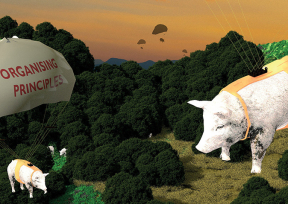
As a PGCE student, Miles Eades confronted the challenge of teaching about change and continuity. Reflecting on scientific, mathematical and sociological conceptualisations of change as a constantly occurring process led him to reconsider the common characterisation of continuity in history as the opposite of or absence of change. Eades set...
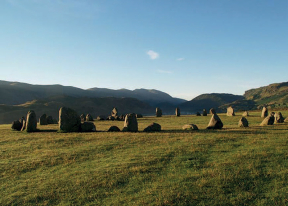
From a young age I have been fascinated by the history of the landscape. Family holidays in the Lake District offered early encounters with the past that did not come mediated through textbooks, but through place. Driving over Dunmail Raise, my father would point out that the ancient ruler, Dunmail...
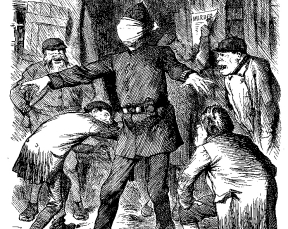
While history teachers (and examiners) regularly invite students to consider what cartoons or paintings reveal about contemporary attitudes to particular social or political developments, such sources are often difficult to interpret and to use appropriately. Drawing on a wealth of detailed research and a passion to support teachers and students...
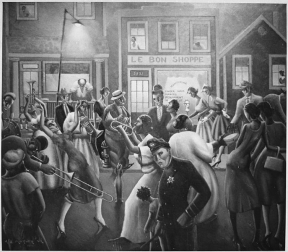
Inspired by reading the work of Stephen Tuck, Ellie Osborne set out to design a new sequence of lessons that would help her students adopt a longer lens on the American civil rights movement. At the same time, Osborne wanted to put more emphasis on the agency and campaigns of...
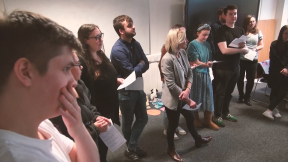
Active learning strategies are engaging but, far more importantly, they make history learning memorable, they encourage resilience and independence, and they are an excellent way to make complex history accessible for all. When used with clear purpose and with knowledge of specific students' needs, they are a tried and tested...
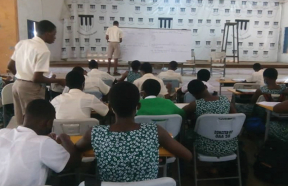
In order to contextualise and make sense of the Covid-19 pandemic, Verity Morgan worked with her school’s long-standing partner school in Ghana to devise an innovative project combining history and science, past and present. In this article, Morgan sets out the rationale for the project, her detailed adaptation of a...
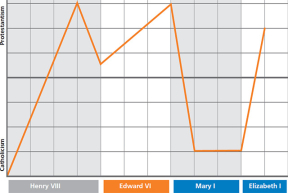
While looking to revamp his department’s Year 7 enquiry on the Tudors, Jack Mills turned to historiographical debates regarding the ‘mid-Tudor crisis’ to inform his curricular decision making. In doing so, Mills noted that the debate hinged on interpretations of substantive concepts such as ‘crisis’. He therefore also drew on...
Should we, and how do we, develop in our students a sense of period – or a series of senses of period – in a thematic study spanning a thousand years? This was the problem faced by Matthew Fearns-Davies in preparing for the GCSE ‘Health and the People’ paper. He...
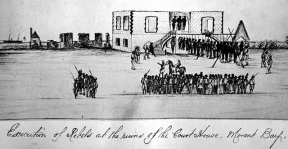
Nathanael Davies explains his radical rethink of how to teach transatlantic slavery. He explains how he came to question his earlier approach of focusing on the causation of ‘abolition’ and ‘emancipation’ and, instead, allowed scholarship, sources and his own students’ meaning-making to guide him to a different, and much more...

We’ve been talking to our secondary school members and we know how difficult life is for teachers in the current circumstances, so we wanted to lend a helping hand. 'What’s the wisdom on…' is a new and already popular feature in our secondary journal Teaching History and provides the perfect...
When it comes to historical change and continuity, what are history teachers asking pupils to think about and do? What's the Wisdom On... is a short guide providing new history teachers with an overview of the ‘story so far’ of practice-based professional thinking about a particular aspect of history teaching....
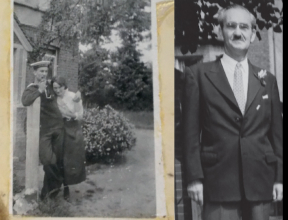
Alex Benger asks whether the mode of enquiry adopted by cultural historians, the construction of webs of past meaning from past perspectives, is underexplored in school history. Benger used a cultural history approach in his building of an enquiry for Year 9 around one man’s experience of the First World...

Cunning Plan for using the metaphor of a tree to help students characterise the process of change and engage with a historian’s argument. In this Cunning Plan, Eve Hackett sets out how she used a recent work of history about the Norman Conquest as inspiration for her teaching of Year...
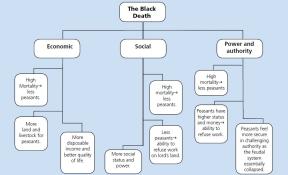
Do GCSE and A-level questions that purport to be about consequences actually reward reasoning about historical consequences at all? Molly-Ann Navey concluded that they do not and that they fail to encourage the kind of argument that academic historians engage in when reaching judgements about consequences. Navey decided that it...
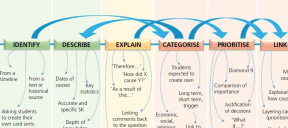
The disapplication of level descriptions in the 2014 National Curriculum has spurred many history departments to rethink their approach not only to assessment but to their models of progression. In this article Rachael Cook builds on the recent work of history teachers such as Ford (TH157), Hawkey et al (TH161),...
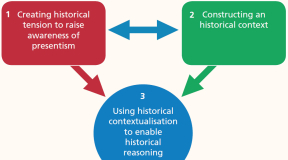
In this article, which is based on Huijgen’s PhD dissertation Balancing between the past and the present, Tim Huijgen and Paul Holthuis present the results of an experimental method of teaching 14–16-year-old students to contextualise their historical studies in a different way. In the four lessons described, students’ initial reactions...
Danielle Donaldson began to notice the verbs that her pupils used to express their ideas. She noticed that more successful pupils were using carefully chosen verbs to express their conceptual thinking about causation or change, and wondered how this might relate to, and reflect, the breadth and security of their...
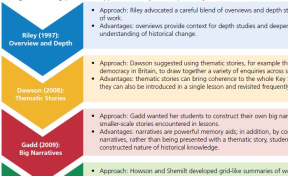
Inspired by The History Manifesto, Suzanne Powell describes in this article her rationale for expanding her students’ horizons by asking them to think about change, similarity and difference on a grand scale. She sets ‘big history’ into its curricular context, and shows the way in which her students could, and...

As historians, we are dependent on evidence, which comes in many varieties. Rosalind Stirzaker here introduces a project which she ran two years ago to encourage her students to think about artefacts in a different way. They have examined randomly preserved artefacts such as those of Pompeii, and sets of...
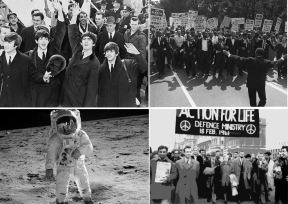
During her PGCE year, it became evident to Rachel Coleman just how much pupils struggled with the complicated nature of history. They were troubled in particular by the lack of definitive answers, by the range of perspectives that might be held at the time of a particular event or development...