
Change and continuity
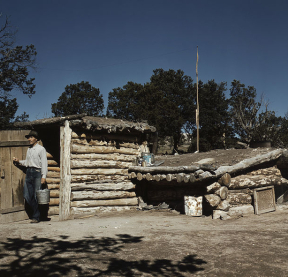
When Peter Clements was introduced to the creative strategy that he describes in this article, his immediate reaction was to dismiss it as childish and trivial. Yet, upon closer examination, he realised that ‘Picture This' offered far more than a lively way of increasing variety and engagement in his GCSE...
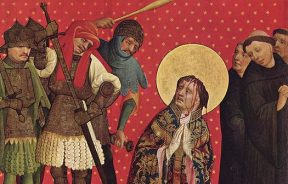
Tim Jenner was working on a causation enquiry with his Year 7 students when he noticed that weak conceptions of change were limiting their ability to produce powerful and period-sensitive arguments. He therefore decided to digress into a temporary but explicit focus on analysing historical change. He created a deceptively...

This issue's problem: Debbie Samson is finding it difficult to teach about change and continuity in meaningful ways.
Please note: this article pre-dates the 2014 National Curriculum and some content may be outdated. School history teachers are not the only ones wrestling with the challenges of building ‘big pictures' that do justice to complexity. In this article, social and cultural historian Penelope Corfield puts our interest in long-term...
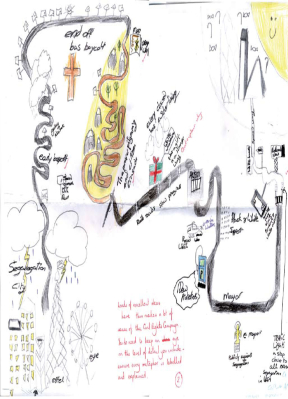
Please note: this article pre-dates the 2014 National Curriculum and some content may be outdated. Rachel Foster, a trainee teacher on teaching placement in November of her PGCE year, wanted her Year 9 pupils to understand the complexity of historical change. She also wanted them to find the difficult challenge...
Mary Woolley decided to make four revision sheets for her lower-band Year 11 set. Each was to help them view their American West study through a different lens. She was rather uncertain, however (and so were the pupils) about her fourth sheet on places. Her reflections on the revision sheet...
How do we relate to the past? Does it tell us who we are? Is it a source of examples to follow and mistakes to avoid? Or can we go beyond that to something genuinely historical? Arthur Chapman and Jane Facey argue that as history teachers we have a responsibility...
I recently had the pleasure of teaching a class about a Victorian “inventor” (although we eventually agreed that ‘innovator” may be a more appropriate term). The man in question was Joseph Lister. I told the class the story of how he came to use carbolic acid as an antiseptic. I...
Gary Clemitshaw describes a five-lesson sequence integrating history, citizenship and ICT. He examines the varied rationales and problems underlying a citizenship-history link and then argues for the role of the local dimension in securing a connection that preserves the integrity of the discipline of history. He focuses upon causation as...