
Controversial issues
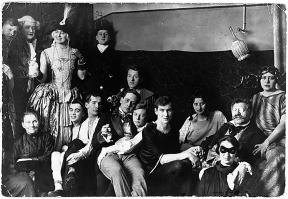
In this article, Jacob Thorpe relates his attempts to humanise the teaching of Nazi persecutions by focusing on individuals’ experiences and identity. Deep immersion in the sources enabled him to find the stories fitting his key themes of love, community, identity and culture. Thorpe built on the work of other...
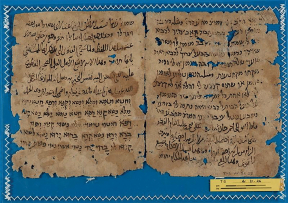
A conversation with some undergraduate students prompted Rob Kanter to explore how his own historical research on Jewish–Muslim relations could be integrated into the history curriculum in secondary schools. Kanter identified two stories of Muslim rescue during the Holocaust which he shares here to empower teachers to challenge misconceptions and...
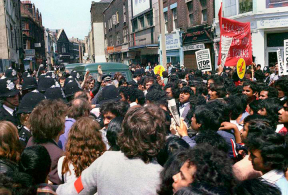
In this article, Joel Sharples explains the organising principles that underpinned his planning for a new enquiry sequence inspired by a local photography exhibition. The exhibition’s title ‘Brick Lane 1978: The Turning Point’ prompted him to think afresh about the idea of ‘a turning point’ – a concept that he...
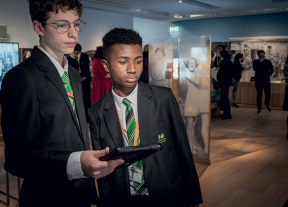
Educators at Imperial War Museums (IWM) have been leading voices in Holocaust education since the Holocaust Exhibition opened at IWM London in June 2000. In this article, Clare Lawlor shares the design of IWM’s new Holocaust Learning Programme for schools, and the pedagogic research that underpinned the design process. The...
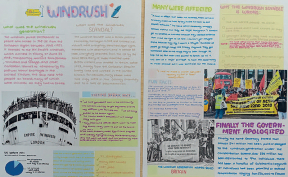
Mark Fowle began work on an enquiry to contextualise the Windrush scandal for his pupils in south London, in response to the first national Stephen Lawrence Day, in 2018. He went on to work with his colleagues in a new school to broaden pupils’ historical perspective through stories of migration...

Move Me On is designed to build critical, informed debate about the character of teacher training, teacher education and professional development. It is also designed to offer practical help to all involved in training new history teachers. Each issue presents a situation in initial teacher education/training with an emphasis upon...
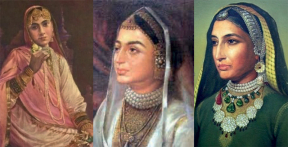
Danielle Donaldson’s history department was already working within a professional culture that sought opportunities for making the history curriculum diverse and representative. Responding to wider debates within and beyond the history education community, however, the department began to ask fresh questions about what it meant to decolonise a curriculum. Donaldson...
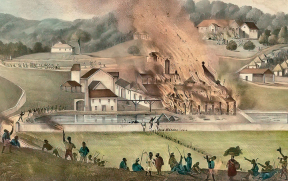
Can the ‘subaltern’ speak, Year 8s? When the Indian scholar and literary theorist Gayatri Chakravorty Spivak asked this question in 1988, she wasn’t asking Year 8s on a Monday morning. What she wanted to explore was whether those marginalised people written out of the archive – ‘the subaltern’ – could...
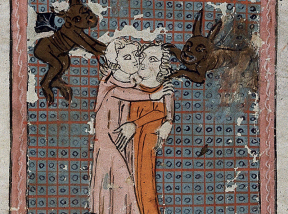
Although they overlap, gender and sexuality are each a distinctive field of historical research. Researching in these fields involves cross-disciplinary work and a range of media and methods. One of the greatest challenges is that of terminology: how to refer to the gender identity or sexuality of a subject in...

Controversial History formed the focus of the Historical Association’s report, Teaching Emotive and Controversial History 3-19 (TEACH). Published in 2007, it offered teachers invaluable guidance for teaching historical topics that can stir emotion and controversy. However, the authors noted how the nature of the sensitivity can be affected by ‘time,...
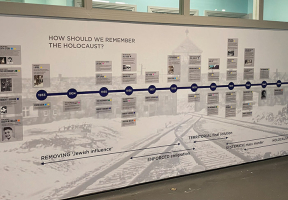
How can we help students understand the Holocaust in its full historical complexity, particularly when they often come to class with misconceptions arising from the representation of the Holocaust in popular culture? Over a three-year period, Sam Ineson set out to integrate the historical Holocaust into his school’s formal and...
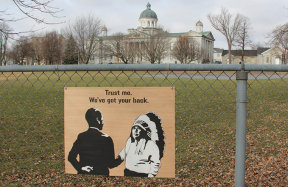
Michael Pitblado and Agnieszka Chalas, history teacher and art teacher respectively, describe how and why they responded to a call by Canada’s Truth and Reconciliation Commission to engage students with difficult aspects of Canada’s past, including the forced cultural assimilation of Indigenous peoples through the Indian Residential School System. Having...
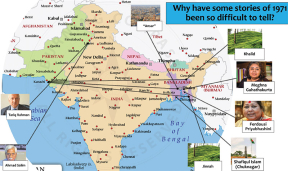
Nathanael Davies recognised that previous efforts to diversify the history taught at his school by weaving new stories into the curriculum had made little impression on his students’ assumptions about what really counted as history. Planning a new enquiry on the creation of Bangladesh was intended both to bridge a...
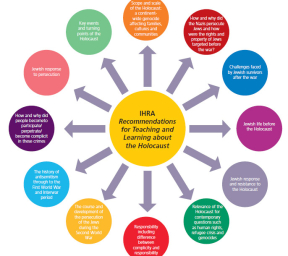
Convinced of the value of a good textbook as a teaching and learning resource, Alex Diamond set out to understand teachers’ thinking about Holocaust textbooks and what it would be for a textbook to represent Holocaust history adequately. As Diamond’s discussion shows, this is a multi-faceted issue. Evaluating textbook representation...
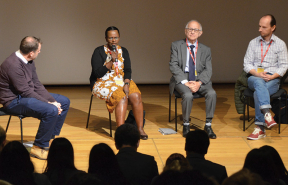
In this article, Andy Lawrence returns to arguments made in Teaching History 153 about the importance of teaching young people about other modern genocides in addition to the Holocaust. Building on those arguments with his own rationale, Lawrence also acknowledges the constraints on curriculum time that compel all departments to...
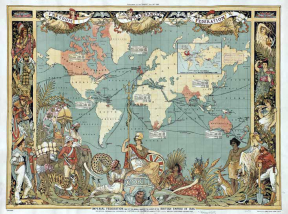
Concerned by the growing tendency of politicians and press to revive the moral balance-sheet approach to British imperial history and by some evidence of its resurgence in schools, Alex Benger set about devising a framework which would keep pupils’ analysis rigorously historical, rather than moral and politicised. In this article,...
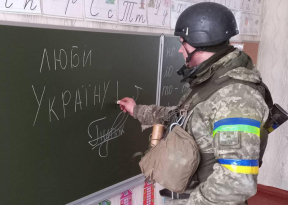
The events of the last few days appear to have come out of nowhere to many people, especially children. While tensions have existed in the region for some time Russia’s decision to attack Ukraine was without provocation. To have war return in such a way to the edges of Europe...
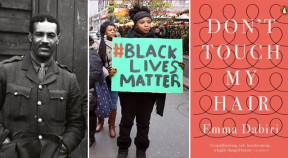
In this article, Dan Lyndon-Cohen makes the case that history departments should move from diversifying the curriculum to decolonising it. After reflecting on some examples of how he made the content of his lessons more representative, he explores how the influence of writers such as Michel-Rolph Trouillot and Emma Dabiri...
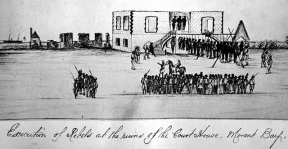
Nathanael Davies explains his radical rethink of how to teach transatlantic slavery. He explains how he came to question his earlier approach of focusing on the causation of ‘abolition’ and ‘emancipation’ and, instead, allowed scholarship, sources and his own students’ meaning-making to guide him to a different, and much more...
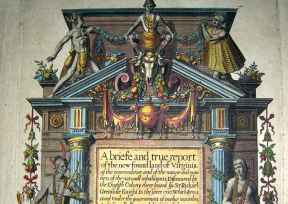
In autumn 2019, Kara Walker’s monumental sculpture, Fons Americanus, went on display in the Tate Modern, offering a poignant, troubling challenge to national commemoration. Walker depicts not the lingering vestiges of imperial glory, but sharks, tears, and haunted memories. She brings history into conversation with its contemporary legacies and engages...