
Controversial issues

A year after the end of the First World War, George V stated: "I believe that my people in every part of the Empire fervently wish to perpetuate the memory of the Great Deliverance and those who laid down their lives to achieve it." From that moment, the idea of...

"What shall I say next? We were all indeed huddled together like sheep in a fold, trembling and frightened, surrounded on all sides by enemies so that we could not turn in any direction. It was clear to us that this had happened because of our sins. A great clamour...
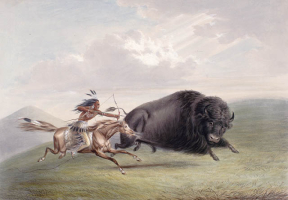
Jess Landy’s desire to introduce her pupils to a more complex narrative of the American West led her to the life story and work of a remarkable individual, George Catlin. In this article she shows how she used this unusual micro-narrative in order to challenge pupils’ ideas not just about...

In this article, Michael Maddison provides an overview of what schools must do in relation to promoting British values, as well as preventing extremism and radicalisation, and why it is so important that opportunities are taken in history to deal with these two pressing issues. It is an updated version...
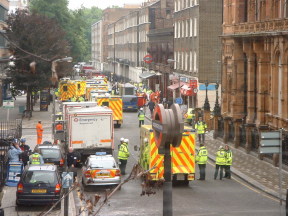
‘Miriam's Vision' is an educational project developed by the Miriam Hyman Memorial Trust, an organisation set up in memory of Miriam Hyman, one of the 52 victims of the London bombings of 2005. The project has developed a number of subject-based modules, including history, which are provided free to schools...
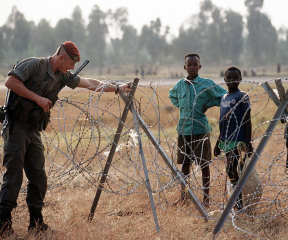
A short 20 years: meeting the challenges facing teachers who bring Rwanda into the classroom As the twentieth anniversary of the 1994 genocide in Rwanda approaches, Mark Gudgel argues that we should face the challenges posed by teaching about Rwanda. Drawing on his experience as a history teacher in the...
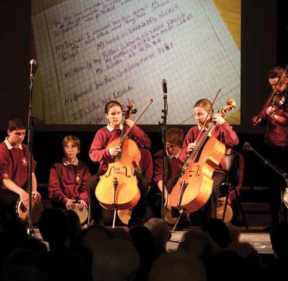
James Woodcock continues his theme from Teaching History 138 about the difference between superficial, thematic cross-curricularity and much more rigorous interdisciplinarity. His concern is to retain rather than compromise the integrity of the subject disciplines. Woodcock argues that interdisciplinary working adds value to learning only when the knowledge and the...
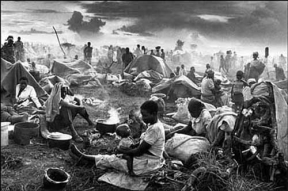
Connecting the dots: helping Year 9 to debate the purposes of Holocaust and genocide education Why do we teach about the Holocaust and about other genocides? The Holocaust has been a compulsory part of the English National Curriculum since 1991; however, curriculum documents say little about why pupils should learn...
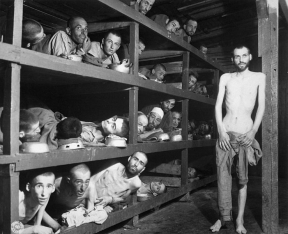
Patterns of genocide: can we educate Year 9 in genocide prevention? Alison Stephen, who has wrestled for many years with the challenges of teaching emotional and controversial history within a multiethnic school setting, relished the opportunity to link her school's teaching of the Holocaust with a comparative study of other...
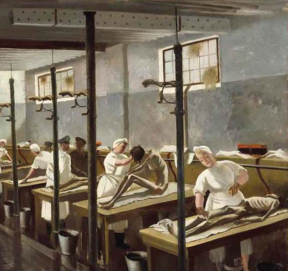
‘Never again'? Helping Year 9 think about what happened after the Holocaust and learning lessons from genocides ‘Never again' is the clarion call of much Holocaust and genocide education. There is a danger, however, that it can become an empty, if pious, wish. How can we help pupils reflect seriously...
In August 1945, Zalman Grinberg, a doctor from Kovno and spokesman for the Liberated Jews in the American Zone of Germany, addressed 1,700 Jewish survivors. ‘What is the logic of destiny to let these individuals remain alive?!' he asked them: We are free now, but we do not know what...
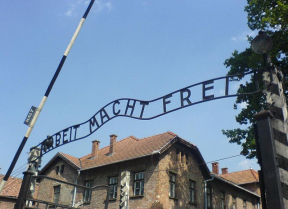
‘It made my brain hurt, but in a good way': helping Year 9 learn to make and to evaluate explanations for the Holocaust Why genocides occur is a perplexing and complex question. Leanne Judson reports a strategy designed to help students think about perpetration and evaluate and propose explanations for...

This page is for those new to the published writings of history teachers. Every problem you wrestle with, other teachers have wrestled with too. Quick fixes don't exist. But if you discover others' writing, you'll soon find - and want to join - something better: an international conversation in which...
It is common practice to invite survivors of the Holocaust to speak about their experiences to pupils in schools and colleges. Systematic reflection on the value of working with survivors of the Holocaust and other genocides and on how to make the most of doing so is rarer, however. In...
This issue's problem: Susie Cook is struggling to sustain an emphasis on developing historical knowledge and understanding in teaching about genocide. Susie Cook worked for nearly ten years as a web designer before deciding to move into teaching. Once she had secured her place on the programme she spent several...
‘But I still don't get why the Jews': using cause and change to answer pupils' demand for an overview of antisemitism Research by the Centre for Holocaust Education has suggested that students need and want more help with building an overview of the historical roots of antisemitism and that they...
Please note: this unit was produced before the 2014 curriculum and therefore while much of the advice is still useful, some references and links may be out of date. T.E.A.C.H. Online is a resource that follows on from the Historical Association's T.E.A.C.H. Report published in 2007 with support from DCSF....
A school-designed, post-14 course on multi-cultural Britain since 1945 Robin Whitburn and Sharon Yemoh describe the design of a school-generated GCSE course on the challenges that British people faced in forging a multicultural society in post-imperial Britain. Drawing on their own research into their students' experience, they build a discipline-based...
After a Fellowship in Holocaust Education at the Imperial War Museum, Andy Lawrence decided that something was missing in normal approaches to teaching emotive and controversial issues such as genocide, a deficit demonstrated by recent research by the Holocaust Education Development Programme. As part of his fellowship, Lawrence created an...
Facing History is an American organisation and website that provides CPD materials and resources on identity, memory and forgiveness. They have a series of case studies and video materials for teachers. There are materials on Civil Rights and, for example, the Armenian Genocide, on their website. Facing History Website>>> Holocaust...