
Controversial issues
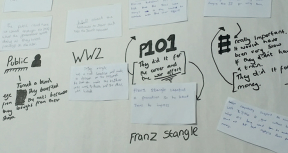
Building on research by the UCL Centre for Holocaust Education, Matthew Duncan was concerned that his students were drawn to simplistic explanations of Holocaust perpetrators’ actions. As well as the UCL Centre’s research, Duncan drew on history education research from Canada and history teachers’ theorisation in England for inspiration in...
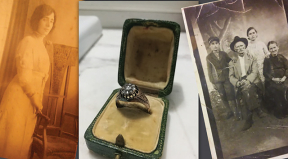
Teaching in Greece, a country with extensive recent experience of immigration, Maria Vlachaki and Georgia Kouseri were interested to examine how they might use family history as a means of exploring the historical dimensions of this potentially sensitive topic. They hoped that encouraging pupils to explore their relatives’ stories would...
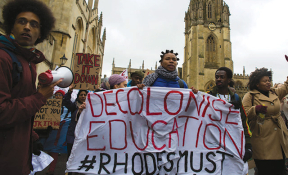
Decolonisation is a contested term. When first used in 1952, it referred to a political event: a colony gaining independence; it has since come to describe a process. When, where and why this process began, however, and whether it has ended, are all fiercely debated. Is it about new flags...
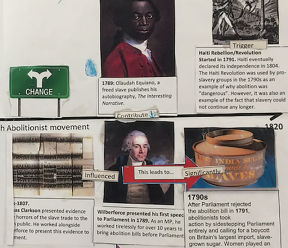
Elizabeth Marsay wanted to ensure that her students were not hindered in their causal explanations of the abolition of slavery by being exposed to overly categorical, simplistic, and monocausal narratives in the classroom. By drawing on both English and Canadian theorisation about causation, Marsay outlines how her introduction of competing...
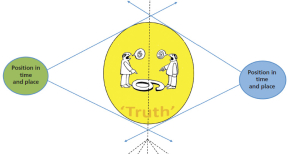
Sometimes, things don’t go to plan. Current events come into the classroom, especially the history classroom. How should students’ responses to current affairs be dealt with there? How should students’ desire to voice their opinions be handled if their opinion is unpopular. What if the student is simply wrong? How...
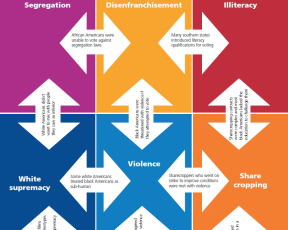
Identifying the challenges his students faced both with recall and analysis of the content they had learned for their GCSE course, Ed Durbin devised a solution which focused not on exam skills and revision lessons, but on using Key Stage 3 to build the ‘hinterland’ of contextual knowledge and causal...
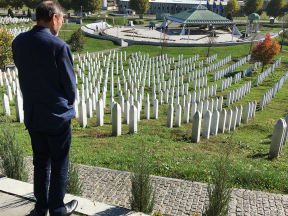
In these pages HA Education Manager Melanie Jones shares her own personal experiences and reflections from a recent educational visit to Bosnia, and looks at ways in which British schools might be able to explore aspects of the 1990s Balkans Conflict. In September 2017 I was approached by a small...

History teachers have frequently made recourse to character cards as a device to help young people, each assigned specific roles, to understand how different kinds of people responded in different ways to particular situations in the past. Edward FitzGerald builds on this tradition, demonstrating the value of using rich historical...
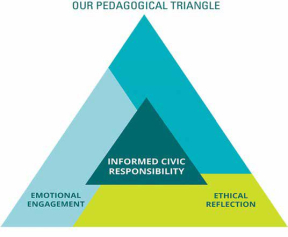
Michael McIntyre and Vanessa Hull explain the work of Facing History and Ourselves, an education organisation based in the United States and working internationally. Facing History aims to engage students in reflection on why violence occurred in the past, on what this teaches us about the world today and on...
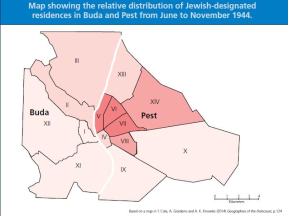
Verity Morgan took an unusual approach to the challenge of teaching the Holocaust, coming to it through the lens of environmental history. She shares here the practical means and resources she used to engage pupils with this current trend in historiography, and its associated concepts. Reflecting on her pupils’ responses,...
International Journal of Historical Learning, Teaching and Research [IJHLTR], Volume 15, Number 1 – Autumn/Winter 2017ISSN: 14472-9474 Abstract This work is part of the following research projects: ‘Indians, Quilombolas, and Napalm’ funded by the Ministry of Education (MEC/CAPES-Brazil), and ‘Teaching-learning methodology and evaluation in controversial social issues of humanities and...
International Journal of Historical Learning, Teaching and Research [IJHLTR], Volume 15, Number 1 – Autumn/Winter 2017 ISSN: 14472-9474 Abstract This paper is devoted to social uses of history teaching and history textbooks. It analyses, first, how the history of the lands of Belarus, at the crossroads between Europe and Eurasia,...

History thrives on questioning, debate and controversy. What makes something controversial varies, however, and we may fail to notice, unless we think very carefully about it, the particular ways in which our lessons can become controversial for our pupils. When we tackle historical issues that might be seen as controversial,...
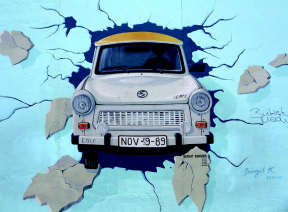
Bjorn Wansink and his co-authors have aligned their teaching of a recent and controversial historical issue – the Cold War – in the light of a contemporary incident. This article demonstrates a means of ensuring that students understand that different cultures’ views of their shared past are nuanced, rather than...
International Journal of Historical Learning, Teaching and Research [IJHLTR], Volume 14, Number 2 – Spring/Summer 2017 ISSN: 14472-9474 Abstract This study discusses the relevance of morality in the explanation of controversial history. It presents a discourse analysis of two representative adolescents’ narratives from Mexico and Spain about the 16th century...
International Journal of Historical Learning, Teaching and Research [IJHLTR], Volume 14, Number 2 – Spring/Summer 2017 ISSN: 14472-9474 Abstract In this article I seek to encourage those involved in Holocaust education in schools to engage not just with the Holocaust but also with its aftermath. I conceptualise the latter in...
International Journal of Historical Learning, Teaching and Research [IJHLTR], Volume 14, Number 2 – Spring/Summer 2017ISSN: 14472-9474 Abstract Through studying cases of genocide and mass atrocities, students can come to realize that: democratic institutions and values are not automatically sustained but need to be appreciated, nurtured, and protected; silence and...
International Journal of Historical Learning, Teaching and Research [IJHLTR], Volume 14, Number 2 – Spring/Summer 2017 ISSN: 14472-9474 Abstract Driven by the overarching objective of promoting reconciliation through education, this paper explores the impact of history teaching on youth identity and ethnic relations in Sri Lanka. Building on the arguments...
Harold Wilson’s aphorism that ‘a week is a long time in politics’ reflects the tumultuous changes that chance and circumstance can bring about in national affairs that affect us all. Wilson was Britain’s prime minster (1964–70, 1974–76) at a time that saw the dissolution of the British Empire and Britain’s...
International Journal of Historical Learning, Teaching and Research [IJHLTR], Volume 14, Number 2 – Spring/Summer 2017ISSN: 14472-9474 Introduction: Thinking historically – syntactic ‘know how’ and substantive ‘know that’ knowledge As an academic discipline History has two dimensions: the ‘know how’ syntactic or procedural knowledge of the skills and processes of...