
Evidence

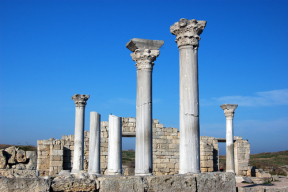
As historians, we are dependent on evidence, which comes in many varieties. Rosalind Stirzaker here introduces a project which she ran two years ago to encourage her students to think about artefacts in a different way. They have examined randomly preserved artefacts such as those of Pompeii, and sets of...

Jaya Carrier’s decision to focus on developing a more independent approach to learning in history at Key Stage 3 was prompted by concerns about her A-level students. In seeking to establish secure foundations for students’ own historical research, Carrier first examined the assumptions of her colleagues and her students. She...
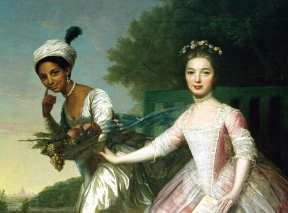
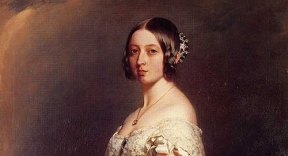
Drawing on her wealth of experience and expertise in using visual sources in the classroom, in this article Jane Card explores how a single painting, a portrait of Dido Elizabeth Belle Lindsay and her cousin Lady Elizabeth Murray, might form the basis for a sequence of lessons. Arguing that although...
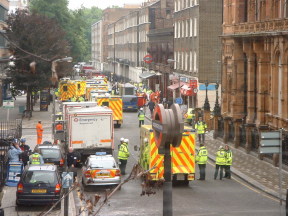
‘Miriam's Vision' is an educational project developed by the Miriam Hyman Memorial Trust, an organisation set up in memory of Miriam Hyman, one of the 52 victims of the London bombings of 2005. The project has developed a number of subject-based modules, including history, which are provided free to schools...
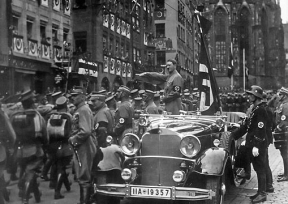
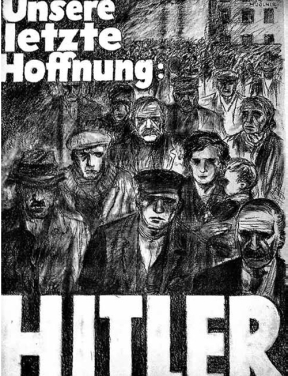
Laura Tilley recognised that her Year 9 students were finding it difficult to work out the intended message of visual propaganda. To help her students make better use of the substantive knowledge they already had, she devised an interactive activity using a presentation software, Prezi. This approach provided students with...
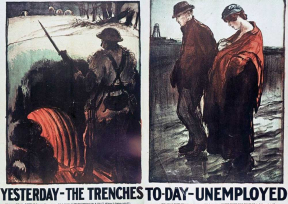
Is it a good thing to have a lot of evidence? Surely the historian would answer that yes, it is: the more evidence that can be used, the better. The problem with this approach, though, is that too much data can be overwhelming for the history student - and, in...

While preparing her Year 12 students for an International Baccalaureate paper on early Islam, Kirstie Murray became concerned that students' weaknesses in making claims would be particularly exposed by the challenging complexity of this topic's source record and its contested historiography. Drawing on the practice of other history teachers, especially...

You have a wealth of fascinating sources you would love to explore with students but despair at their seeming inability to connect ‘source work' with the construction of historical claims. Year 7 get stuck in the ‘it's biased so we can never know' trap again and again. Year 9 students...
'Why am I accused of being a heretic?' A pedagogical framework for stimulating historical contextualisation One of the challenges facing students who want to make sense of a source or an interpretation of the past is the need to place it in its context. Various research studies have shown that...
What do 14 Year 7 students, an art teacher, a history teacher and the Victoria and Albert Museum have in common? They are all part of the ‘Stronger Together' Museum Champion project run by The Langley Academy and the River & Rowing Museum and supported by Arts Council England, designed...
Getting Year 10 beyond trivial judgements of ‘bias': towards victory in that battle ... Let's play Supermarket ‘Evidential' Sweep: developing students' awareness of the need to select evidence Assessment of students' uses of evidence: shifting the focus from processes to historical reasoning How can students' use of historical evidence be...
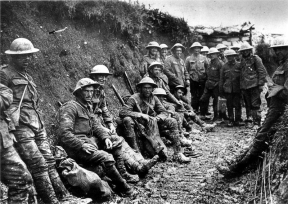
Year 9 think they know a lot about the First World War. After all, they read Michael Morpurgo's novel Private Peaceful in their English lessons all the way back in Year 7, they've seen Blackadder so many times they can recite it, and in the centenary year of the war's...
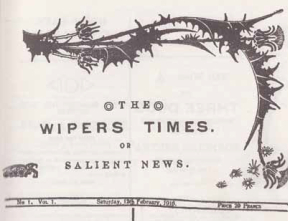
Teaching ‘the lesson of satire': using The Wipers Times to build an enquiry on the First World War ‘Blackadder for real' is how the British journalist and broadcaster, Ian Hislop, characterised The Wipers Time, the newspaper published on the front line by members of the 12th Battalion Sherwood, and recently...
Towards victory in that battle... 10A were nearly a term into their GCSE history course, working on an 1890-1918 British history ‘depth study'. They had already completed work on the Liberal welfare reforms and on the women's suffrage movement, and they had been practising a range of source evaluation approaches....
It is common practice to invite survivors of the Holocaust to speak about their experiences to pupils in schools and colleges. Systematic reflection on the value of working with survivors of the Holocaust and other genocides and on how to make the most of doing so is rarer, however. In...
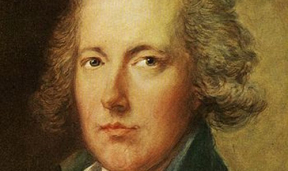
The past 30 years have seen a general revival in scholarly activity relating to ‘all aspects of 18th-century British history'. However, this increase in academic study, which has broadly coincided with the introduction and development of the National Curriculum in England, has not resulted in the period being studied in...
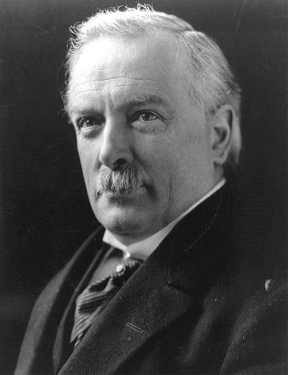
Let's play Supermarket ‘Evidential' Sweep: developing students' awareness of the need to select evidence Despite having built a sustained focus on historical thinking into their planning for progression across Years 7 to 13, Rachel Foster and Sarah Gadd remained frustrated with stubborn weaknesses in the evidential thinking of students in...
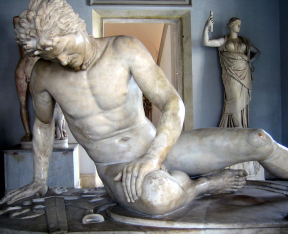
The principles outlined here were developed in response to three key concerns. The first was consideration of the needs of students learning English as an additional language who face particular challenges with reading and writing. Images could perhaps offer them more direct, less abstract, ways into an understanding of challenging...
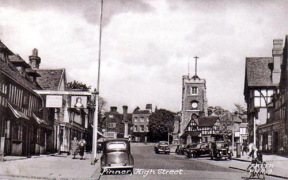
One street, twenty children and the experience of a changing town: Year 7 explore the story of a London street Michael Wood and others have recently drawn attention to the ways in which big stories can be told through local histories. Hughes and De Silva report a teaching unit through...