
Evidence
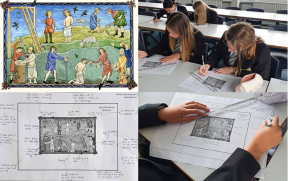
Neil Bates and Robert Bowry have chosen to tackle the issue of curriculum coherence by including local history, both as starting point for new students joining the school in Year 7 and as a golden thread running throughout their Key Stage 3 curriculum. In this article they explain the rationale...
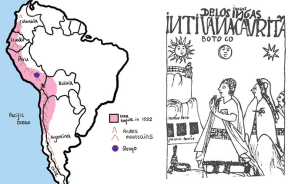
As part of her department’s effort to diversify the history curriculum, Paula Worth began a quest to research and then shape a lesson sequence around the Inkas. Her article shows how she allowed the new topic and its historiography to challenge and extend her own use of sources, particularly oral...
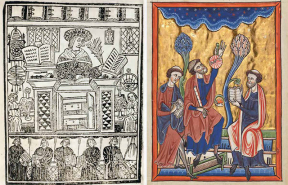
The phrase ‘medieval science’ may seem nonsensical. ‘How can... a synonym for “backward”,’ the editors of The Cambridge History of Science Volume 2 ask rhetorically, ‘modify a noun that signifies the best available knowledge from the natural world?’ To answer their question, we must rethink our assumptions, both about the...
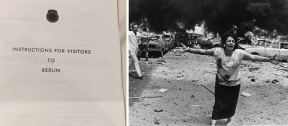
Eliza West and Emily Toettcher explain how a partnership between school and museum has evolved into a four-year enquiry into local history. The article focuses on the successful introduction of an oral history element in the GCSE syllabus and how the investigation into ‘remembered’ history helps students to appreciate the...
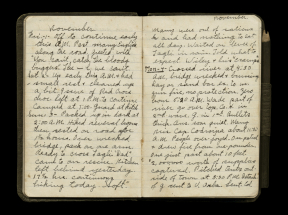
In this article, Robin Conway and Amy Scott show how they made use of online source archives to replicate the experience of an academic historian in the classroom. By changing the way that students approach sources, moving away from both ‘fun activities’ and formulaic exam preparation towards a more authentic...
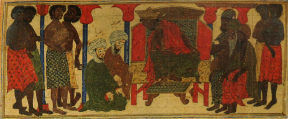
Many history departments choose to begin their Year 7 curriculum with an introduction to the nature of history and the processes in which historians engage as they develop, refine and substantiate claims about the past. In this article, Adbul Mohamud and Robin Whitburn report on an such an introductory unit,...
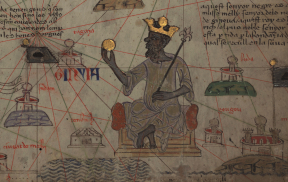
Influenced by her own experiences, preliminary research, and recent political events, Teni Oladehin sought to thoroughly review how Black history was introduced to her students at Key Stage 3. In particular, she aimed to introduce Black history with an ‘authentic’ narrative which brought Black agency into the foreground. In this...

While lockdown, in response to the Covid-19 pandemic in the spring of 2020, brought a period of turbulence to the education sector, it also brought a wealth of generosity, with a vast range of free online CPD offered by different providers. One in particular was the webinar series ‘West African...
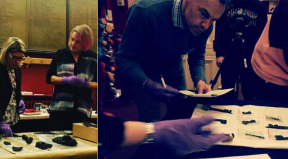
Lots has been written in recent years about how history teachers can bring academic scholarship into the classroom. This article takes this interest in academic practice a step further, examining how pupils can engage directly with the kinds of sources to which historians are increasingly turning their attention: the ‘everyday’...
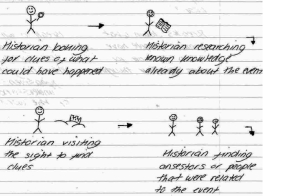
Intrigued by the wide range of pupils’ responses to a sourcebased essay question, Jonathan Sellin decided to investigate why pupils were using sources in such different ways. Probing his own philosophical assumptions about history, and how they have changed over time, prompted Sellin to explore pupils’ assumptions about how historians...
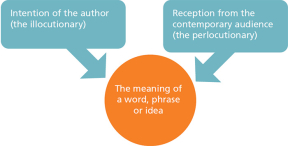
After reflecting on the difference between his study of source extracts at university and how he was using source extracts in the classroom, Jonathan Sellin went in search of a new way to help his pupils to situate sources in context. Finding inspiration in the work of intellectual historian Quentin...
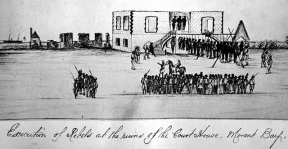
Nathanael Davies explains his radical rethink of how to teach transatlantic slavery. He explains how he came to question his earlier approach of focusing on the causation of ‘abolition’ and ‘emancipation’ and, instead, allowed scholarship, sources and his own students’ meaning-making to guide him to a different, and much more...
We’ve been talking to our secondary school members and we know how difficult life is for teachers in the current circumstances, so we wanted to lend a helping hand. 'What’s the wisdom on…' is a new and already popular feature in our secondary journal Teaching History and provides the perfect...
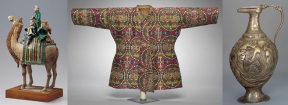
The stimulus for this article came from two developmental tasks that Barbara Trapani was set during the course of her initial teacher education programme: planning her first historical enquiry and bringing the work of an historian into the classroom. Trapani chose to tackle the two tasks together, using Susan Whitfield’s...
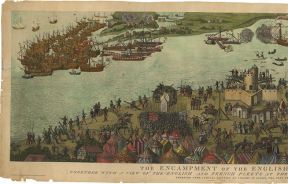
The raising of Henry VIII’s warship, the Mary Rose, from the sea bed set in train an extraordinary programme of interdisciplinary research, relentlessly pursuing the clues to Tudor life and death provided by the remains of the ship, its cargo and crew. In this article Clare Barnes offers fascinating insights...
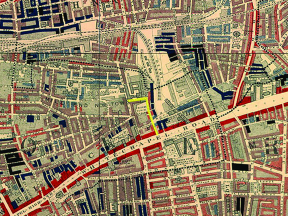
Struck by his GCSE students’ bewildered expressions when studying source extracts, Liam McDonnell decided to adopt a new approach to source analysis. Inspired by the work of other history teachers, McDonnell decided to use an anthology of substantial sources when studying nineteenth-century Whitechapel in London. By revisiting the sources at...
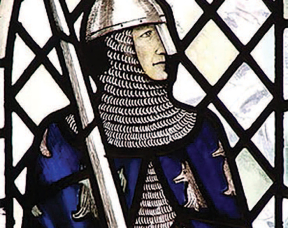
Michael Bird and Thomas Wilson focus their attention directly on the voices of pupils, in dialogue with their teacher and with each other, as they draw inferences from differing sources about the Norman legacy in Chester. By carefully examining dialogue stimulated by these sources, Bird and Wilson demonstrate not only...

This feature of Teaching History is designed to build critical, informed debate about the character of teacher training, teacher education and professional development. It is also designed to offer practical help to all involved in training new history teachers. Each issue presents a situation in initial teacher education/training with an...
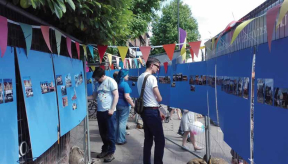
Inspired by the claim that local history can be taught effectively ‘Any time, any place, anywhere’, Katharine Burn and Jason Todd took up the challenge of planning Key Stage 3 enquiries related to an unusual and diverse, but frequently neglected and often despised, corner of Oxford. They sought not merely...
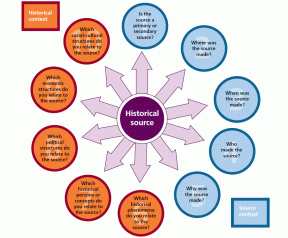
Anna Aiken and her history colleagues had been reflecting on the stubborn problem of students failing to tackle GCSE questions about sources with adequate thought or understanding of evidence. Teaching them the typical requirements of the GCSE examination even appeared to make things worse, encouraging superficiality and failing to bring...