
Politics
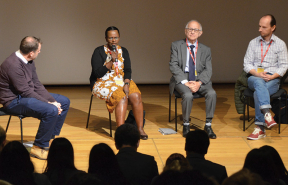
In this article, Andy Lawrence returns to arguments made in Teaching History 153 about the importance of teaching young people about other modern genocides in addition to the Holocaust. Building on those arguments with his own rationale, Lawrence also acknowledges the constraints on curriculum time that compel all departments to...
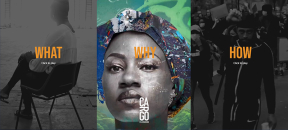
To address the urgent need for digital learning resources, and to address the imbalance of perspectives in the History curriculum, CARGO Classroom is now providing multimedia learning tools for Key Stage 3 History via a freely accessible, interactive website: cargomovement.org/classroom “CARGO is about doing. We talk a lot. We talk...
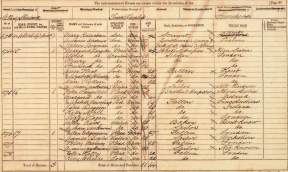
As we approach the next census in March 2021, we are reminded of what a rich historical source the census is. For historians, using the census can shine a light on particular people and places – a snapshot in time. Big stories can be told through a sharp local lens...
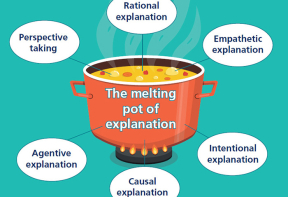
In this article Sophie Harley-McKeown identifies and addresses her Year 12 students’ blind spot over agentive explanation. Noticing that the examination board to which she teaches uses ‘motivations’ rather than ‘aims’ prompted her to consider whether her students really knew what that meant. Finding that her students’ causal explanations tended...
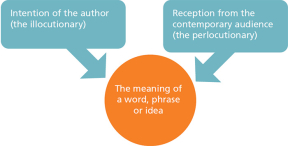
After reflecting on the difference between his study of source extracts at university and how he was using source extracts in the classroom, Jonathan Sellin went in search of a new way to help his pupils to situate sources in context. Finding inspiration in the work of intellectual historian Quentin...
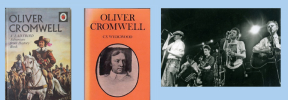
Determined to do justice to the complexity of the seventeenth century, as a messy but crucial period in British history, and to develop their pupils’ disciplinary understanding of how and why interpretations of the past are constructed, Dan Keates and his department set out to exploit the rich seam of...
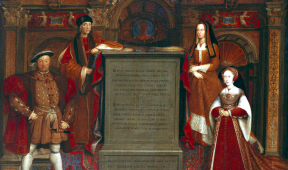
In this film, Professor Sue Doran, Jesus College, University of Oxford, discusses provides an overview of how Tudor Royal Authority developed and evolved from the first Tudor King, Henry VII, to the final Tudor Queen, Elizabeth I. This film is part of a series looking at interpretations of the development...
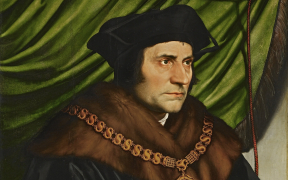
In this film Professor Sue Doran, Jesus College, University of Oxford and Professor Steven Gunn, Merton College, University of Oxford, discuss the impact that domestic politics and rebellion had on Tudor Royal Authority and the development of domestic policy.
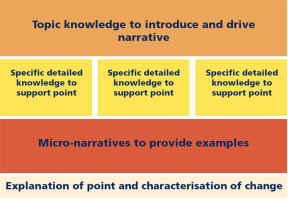
Is it structure or the selection of knowledge that makes writing historical narrative so difficult? Where does a conceptual focus on change, or causation, come in? James Ellis set out to explore the challenges his Year 9 pupils faced in writing historical narratives about change. Inspired by the work of...
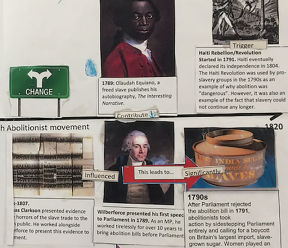
Elizabeth Marsay wanted to ensure that her students were not hindered in their causal explanations of the abolition of slavery by being exposed to overly categorical, simplistic, and monocausal narratives in the classroom. By drawing on both English and Canadian theorisation about causation, Marsay outlines how her introduction of competing...
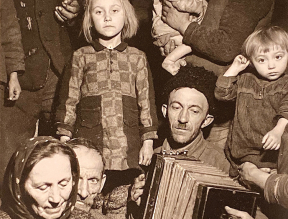
We hope you enjoyed reading Exploring and Teaching Twentieth-Century History. To help you explore the topic further we’ve put together a selection of just a few additional 20th-century history and teaching resources below. All these resources are available free to HA Secondary Members – find out more about Secondary Membership....
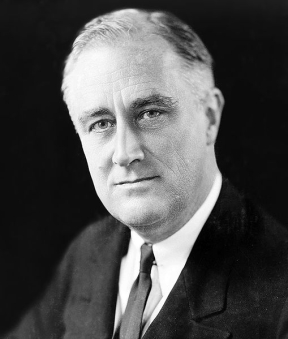
Over 50 years ago I read my first serious book on American history. I can still remember the excitement of reading William E. Leuchtenburg’s Franklin D. Roosevelt and the New Deal, 1932–1940. His description of FDR and American politics in the 1930s seemed so much more colourful and dramatic than...
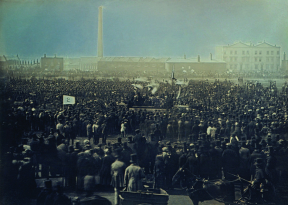
Jacob Olivey wanted Year 8 to know that ordinary people in the nineteenth century constructed their own identities. In this reflection on how his practice developed in his training year, Olivey illustrates the importance of using historical scholarship in choosing foundational knowledge to teach. He shows how he used that...
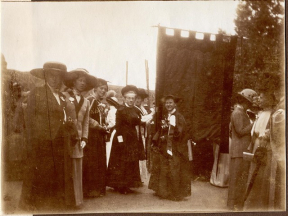
The beginnings of the nationally organised campaign for women’s suffrage began with suffragists’ orchestration of the petition to Parliament in favour of female suffrage in 1866. The petition contained almost 1,500 names from across the country and was presented to parliament by the Liberal MP John Stuart Mill; it was...
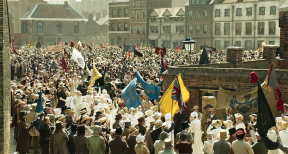
The film Peterloo dramatises the people and events that led to the infamous ‘Peterloo’ massacre in August 1819. Respected film-maker Mike Leigh created the film using historical records and sources from the period, as he and historical adviser Jacqueline Riding explained to the HA in a recent interview, which you...
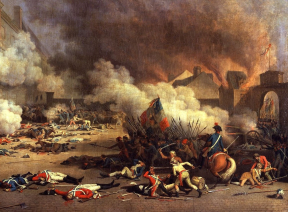
The Age of Revolutions is a period in history between c.1775-1848. Over the course of these years, society underwent a series of revolutions in almost all theatres of life: political, war, social and cultural, and economic and technological. Revolutionary ideas and revolutionary actions swept across the world, and historians still...
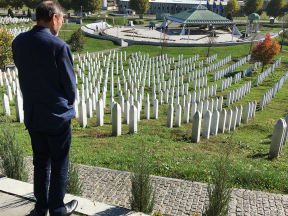
In these pages HA Education Manager Melanie Jones shares her own personal experiences and reflections from a recent educational visit to Bosnia, and looks at ways in which British schools might be able to explore aspects of the 1990s Balkans Conflict. In September 2017 I was approached by a small...
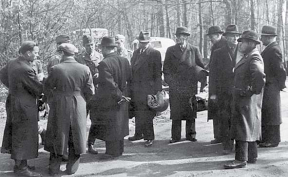
The nature of policing in Nazi Germany is a subject which continues to fascinate historians. The Gestapo (Geheime Staatspolizei) was an integral part of the Nazi terror system but historians have been and still are at odds as to how it actually functioned. Areas of debate have focused on the...
International Journal of Historical Learning, Teaching and Research [IJHLTR], Volume 15, Number 1 – Autumn/Winter 2017ISSN: 14472-9474 Abstract This work is part of the following research projects: ‘Indians, Quilombolas, and Napalm’ funded by the Ministry of Education (MEC/CAPES-Brazil), and ‘Teaching-learning methodology and evaluation in controversial social issues of humanities and...
International Journal of Historical Learning, Teaching and Research [IJHLTR], Volume 15, Number 1 – Autumn/Winter 2017 ISSN: 14472-9474 Abstract This paper is devoted to social uses of history teaching and history textbooks. It analyses, first, how the history of the lands of Belarus, at the crossroads between Europe and Eurasia,...