
Society
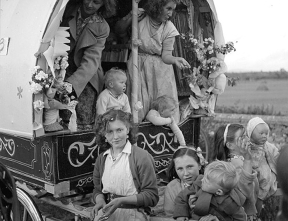
Gypsy, Roma and Traveller people are the largest minority ethnic group in some communities (and therefore in some schools) in the UK. Yet the past of Gypsy, Roma, Traveller people may rarely be part of history lessons. The result is that pupils of Gypsy, Roma and Traveller heritage may not...
To address the urgent need for digital learning resources, and to address the imbalance of perspectives in the History curriculum, CARGO Classroom is now providing multimedia learning tools for Key Stage 3 History via a freely accessible, interactive website: cargomovement.org/classroom “CARGO is about doing. We talk a lot. We talk...
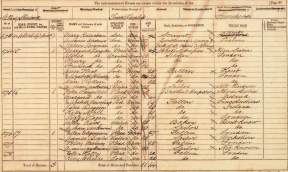
As we approach the next census in March 2021, we are reminded of what a rich historical source the census is. For historians, using the census can shine a light on particular people and places – a snapshot in time. Big stories can be told through a sharp local lens...
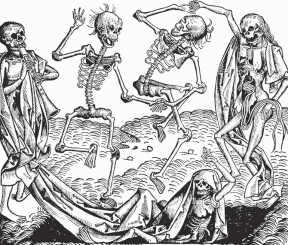
In the summer of 1348, the Chronicle of the Grey Friars at Lynn described how sailors had arrived in Melcombe (now Weymouth) bringing from Gascony ‘the seeds of the terrible pestilence’. The Black Death spread rapidly throughout England, killing approximately half the population. While the cause of the disease, the...
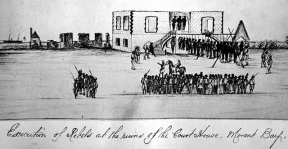
Nathanael Davies explains his radical rethink of how to teach transatlantic slavery. He explains how he came to question his earlier approach of focusing on the causation of ‘abolition’ and ‘emancipation’ and, instead, allowed scholarship, sources and his own students’ meaning-making to guide him to a different, and much more...
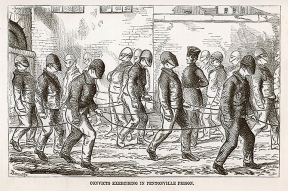
Past Time Toolkit: A Learning Resource about Victorian Prisons is aimed at teachers of GCSE History students and is also of interest to anyone exploring the Victorians, prison history, isolation, or food history. The resource is particularly useful to those working with the Edexel GCSE History course’s Crime and Punishment...
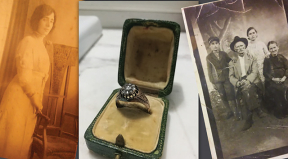
Teaching in Greece, a country with extensive recent experience of immigration, Maria Vlachaki and Georgia Kouseri were interested to examine how they might use family history as a means of exploring the historical dimensions of this potentially sensitive topic. They hoped that encouraging pupils to explore their relatives’ stories would...

Cunning Plan for using the metaphor of a tree to help students characterise the process of change and engage with a historian’s argument. In this Cunning Plan, Eve Hackett sets out how she used a recent work of history about the Norman Conquest as inspiration for her teaching of Year...
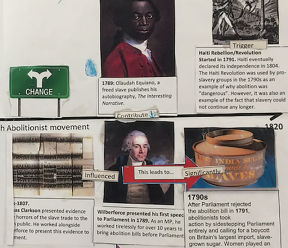
Elizabeth Marsay wanted to ensure that her students were not hindered in their causal explanations of the abolition of slavery by being exposed to overly categorical, simplistic, and monocausal narratives in the classroom. By drawing on both English and Canadian theorisation about causation, Marsay outlines how her introduction of competing...
‘We already did the Tudors in primary school’ was the most frequent comment made by students about our Year 7 scheme of learning in our annual review. Students reported covering the Tudors at least once, sometimes twice, before reaching secondary school and they had clearly not faced extensive further study...
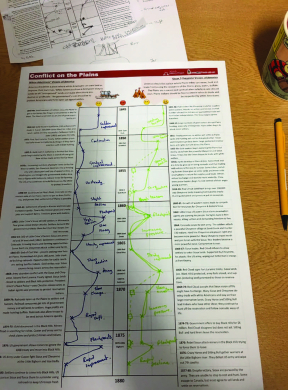
When planning a GCSE period study on the American West, Alex Ford wrestled with reconciling the content demands of the examination specifications with the need to provide his students with a memorable narrative. In this article, Ford shows how he drew on the latest academic scholarship to construct a rigorous,...
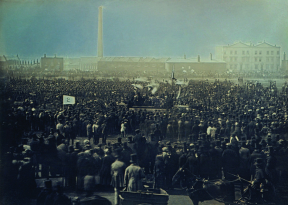
Jacob Olivey wanted Year 8 to know that ordinary people in the nineteenth century constructed their own identities. In this reflection on how his practice developed in his training year, Olivey illustrates the importance of using historical scholarship in choosing foundational knowledge to teach. He shows how he used that...
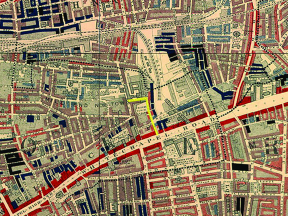
Struck by his GCSE students’ bewildered expressions when studying source extracts, Liam McDonnell decided to adopt a new approach to source analysis. Inspired by the work of other history teachers, McDonnell decided to use an anthology of substantial sources when studying nineteenth-century Whitechapel in London. By revisiting the sources at...
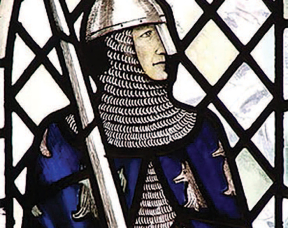
Michael Bird and Thomas Wilson focus their attention directly on the voices of pupils, in dialogue with their teacher and with each other, as they draw inferences from differing sources about the Norman legacy in Chester. By carefully examining dialogue stimulated by these sources, Bird and Wilson demonstrate not only...
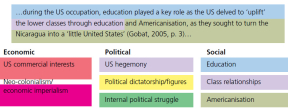
It is a charge commonly laid at history teachers that we, myopically, teach only the same-old same-old. Steven Driver has taken extreme steps to avoid this by focusing on a particular neglected event – the American occupation of Nicaragua in the early twentieth century – as part of his preparation...
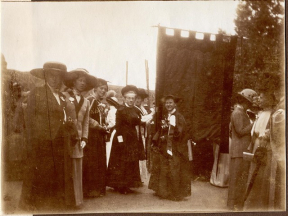
The beginnings of the nationally organised campaign for women’s suffrage began with suffragists’ orchestration of the petition to Parliament in favour of female suffrage in 1866. The petition contained almost 1,500 names from across the country and was presented to parliament by the Liberal MP John Stuart Mill; it was...
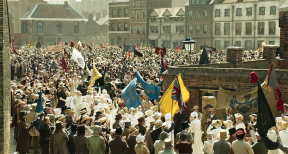
The film Peterloo dramatises the people and events that led to the infamous ‘Peterloo’ massacre in August 1819. Respected film-maker Mike Leigh created the film using historical records and sources from the period, as he and historical adviser Jacqueline Riding explained to the HA in a recent interview, which you...
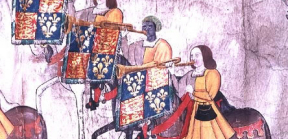
On 29 September 2018 I was fortunate enough to get involved with a collaborative project with Dr Miranda Kaufmann, the Historical Association, Schools History Project, and a brilliant group of people from different backgrounds all committed to teaching about black Tudors. In this short piece, I will share how I...
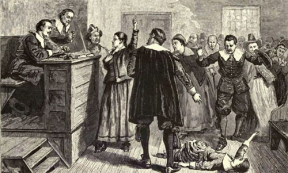
Puzzled by the shrugs and unimaginative responses of his students when asked certain counterfactual questions, James Edward Carroll set out to explore what types of counterfactual questions would elicit sophisticated causal explanations. During his pursuit of the ‘gold standard’ of counterfactual reasoning, Carroll drew upon theories of academic history in...
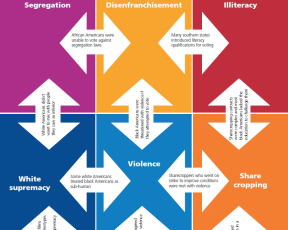
Identifying the challenges his students faced both with recall and analysis of the content they had learned for their GCSE course, Ed Durbin devised a solution which focused not on exam skills and revision lessons, but on using Key Stage 3 to build the ‘hinterland’ of contextual knowledge and causal...