
Society
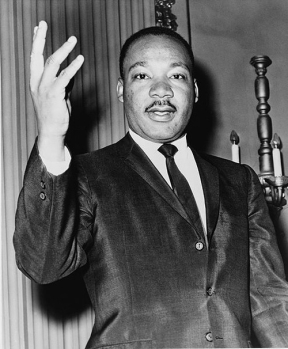
"He was The One, The Hero, The One Fearless Person for whom we had waited. I hadn't even realized before that we had been waiting for Martin Luther King, Jr, but we had." So spoke the novelist Alice Walker in 1972, looking back on her teenage years. And so wrote...

Please note: this article pre-dates the 2014 National Curriculum and some content may be outdated. The citizenship curriculum at both Key Stages 3 and 4 is currently being redefined and much has been said recently about the contribution that history could or should make to citizenship agendas and to the...
Please note: this article pre-dates the 2014 National Curriculum and some content may be outdated. Kimberley Anthony and her history colleagues were troubled by Year 9's assumption that World War II was the only interesting thing that they were going to do in Year 9. Nineteenth-century industrialisation, even their own...

Why did the British get pensions when they did? What part did the great social surveys (Booth and Rowntree) play? Was there something rotten at the heart of Empire? What part did fears of a Red Peril play? Was Britain slow, with Bismarck and even the Tsar providing some measures...
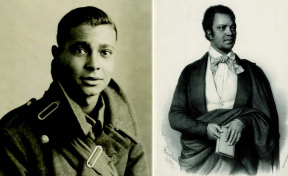
Produced by the Northamptonshire Black History Association and originally published in 2008, this is one of a set of resources for schools offering a more inclusive map of the past that includes an appreciation of Black History within the local, national and global context. The resources provide a range of...
Steve Illingworth argues that moral and intellectual development are not merely linked in the learning of history, but that moral development is a fitting goal for the study of history in its own right. He provides practical examples of ways of getting pupils to reflect on questions of right and...
Applicable to Britain 1066-1500, Britain 1500-1750, Britain 1750-1900, and many aspects of GCSE and AS/A2 courses. The version given in full here is for use in a study of Victorian Britain. This tackles the troublesome concept of relative status in a changing society. Exactly what is it that bestows status...
Leisure time - like time itself - is fluid, and keeps changing its social meanings. From a ‘serious' high political perspective there is no history of leisure and leisure is trivial. Such perspectives have long lost their grip on the historical imagination, of course, and we have had histories of...
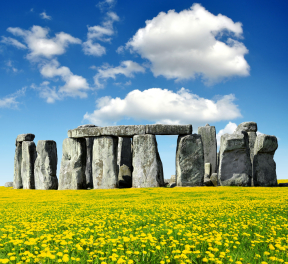
Secondary history ought to pay more attention to stones: 1. they are accessible, logistically and educationally, and highly instructive. The Neolithic is everywhere, and generally speaking, free2. venture outside the classroom, into real space or cyberspace, and you stumble into it eventually.3. Archaeological interpretation is an accessible way into aspects...
In this article, Helena Stride shows how the Imperial War Museum responded to criticism that insufficient attention had been paid to the contribution of black and Asian people to Britain’s wars. She focuses on one of two resource-packs produced by the Museum, which highlights the experience of Britain’s colonial peoples,...