
Society
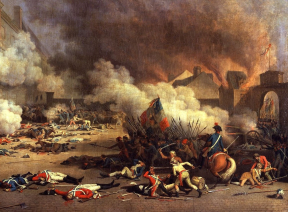
The Age of Revolutions is a period in history between c.1775-1848. Over the course of these years, society underwent a series of revolutions in almost all theatres of life: political, war, social and cultural, and economic and technological. Revolutionary ideas and revolutionary actions swept across the world, and historians still...
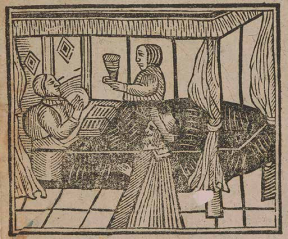
History teachers frequently show pupils visual images and often expect pupils to interrogate such images as evidence. But confusions arise and opportunities are missed when pupils do this without guidance on how to ‘read’ the image systematically and how to place it in context. Barbara Ormond gives a detailed account...
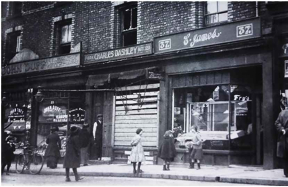
Matt Jones wanted to harness the power of local history to help his students understand the profound social changes experienced across Britain in the first half of the twentieth century. While he hoped that the personal stories of six families in Birkenhead would help to humanise abstract concepts such as...
International Journal of Historical Learning, Teaching and Research [IJHLTR], Volume 15, Number 1 – Autumn/Winter 2017ISSN: 14472-9474 Abstract This work is part of the following research projects: ‘Indians, Quilombolas, and Napalm’ funded by the Ministry of Education (MEC/CAPES-Brazil), and ‘Teaching-learning methodology and evaluation in controversial social issues of humanities and...
International Journal of Historical Learning, Teaching and Research [IJHLTR], Volume 15, Number 1 – Autumn/Winter 2017 ISSN: 14472-9474 Abstract This paper is devoted to social uses of history teaching and history textbooks. It analyses, first, how the history of the lands of Belarus, at the crossroads between Europe and Eurasia,...
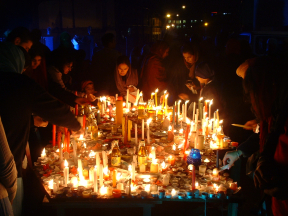
In Part 5 of our series on Social and Political Change in the UK 1800-present we look at religion in the U.K. This set of podcasts features Dr Janice Holmes of the Open University, Revd Dr Jeremy Morris, Dean, Fellow, and Director of Studies in Theology at King's College, Andrew...
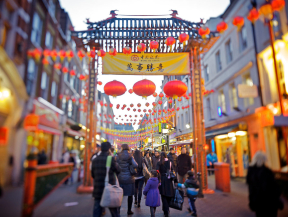
In Part 3 of our series on Social and Political Change in the UK we look at diversity in the UK and examine African and Caribbean UK History, South Asian UK History and British Chinese History. The first set of podcasts feature Dr Hakim Adi, Marika Sherwood, Dr Sumita Mukherjee...
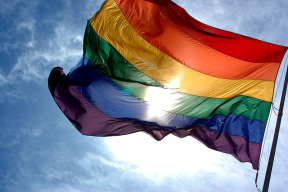
In Part 4 of our series on Social and Political Change in the UK since 1800 we focus on UK LGBTQ+ History. This series of podcasts features Dr Matt Cook and Dr Sean Brady of Birkbeck, University of London, Professor Sally R Munt of the University of Sussex and Dr...
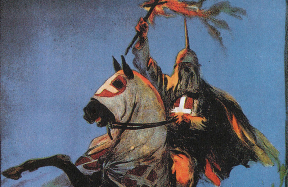
Controversial from the first year of its release in 1915, 'The Birth of a Nation' has been hailed as both the greatest film ever made and the most racist. On 8 February 1915, it premiered in Los Angeles as 'The Clansman', the name of the novel and play upon which...
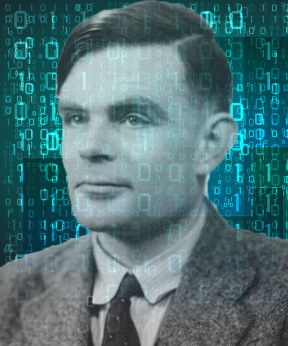
In this podcast Dr Tommy Dickinson of the University of Manchester discusses the life and significance of Alan Turing. Please note this is only the first section of the full podcast which is available to HA Members Alan Mathison Turing, (23 June 1912–7 June 1954) was a British pioneering computer...
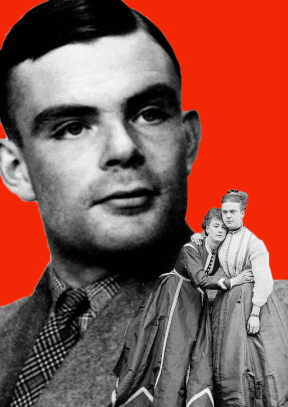
In this podcast, Dr Tommy Dickinson of the University of Manchester, looks at the historical medicalization of homosexuality and transvestism. 1. Introduction: the historical medicalization of homosexuality and transvestism HA Members can listen to the full podcast here Suggested Reading: Tommy Dickinson (2015) "Curing Queers": MentalNurses and their Patients 1935-1974....
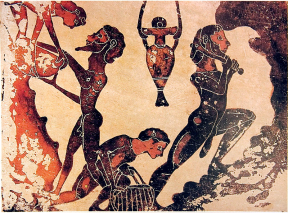
In this podcast Dr Ursula Rothe & Dr Colin Andrews of the Open University discuss how social, moral and religious life in Rome differed from that of ancient Greece.
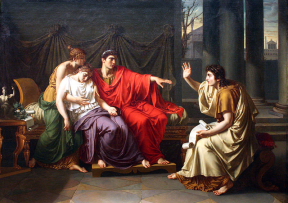
In this podcast Dr Joanna Paul & Dr Paula James of the Open University discuss the role and significance of the Latin Poets in Roman society.
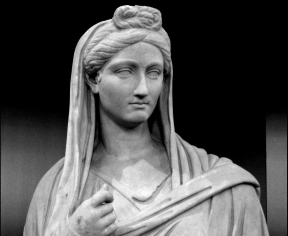
In this podcast Dr Emma-Jayne Graham and Dr Ursula Rothe of the Open University examine Roman Imperial Society.
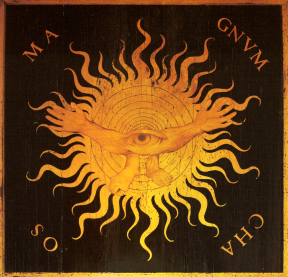
In this podcast Dr Fiona Hobden of the University of Liverpool looks at what Greek myths and legends can tell us about how the early ancient Greeks saw their world.
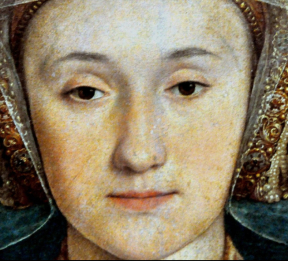
To booke and pen: Women, education and literacy in Tudor and Stuart England As a student in the early 1970s, I became acutely aware that formal provision for women's education was a relatively recent development. I was at Bedford College, which originated in 1849 as the first higher education institution...
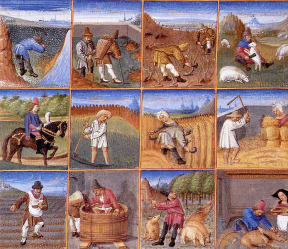
An HA Podcast with Professor Mark Ormrod of the University of York looking at the research project England's Immigrants 1330-1550. In this podcast Professor Ormrod explores the extensive archival evidence about the names, origins, occupations and households of a significant number of foreigners who chose to make their lives and...
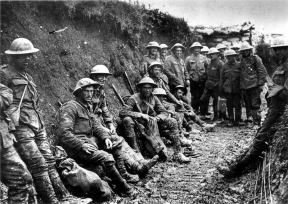
2012 Annual Conference Lecture Fighting a different war: contesting the place of the queer soldier in the mythology of the Second World War Emma Vickers: Lecturer in Modern British History University of Reading In the mid-1990s, the queer soldier finally became visible. On the streets, gay rights campaigners led by...
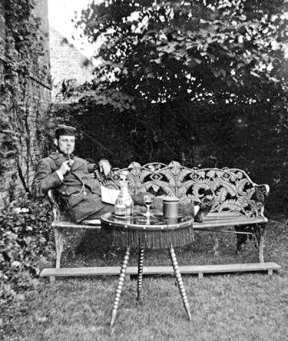
On the morning of Sunday 24 January 1932 convicts paraded in the exercise yards at Dartmoor Convict Prison in Devon. Suddenly, inmates began to break ranks, encouraging others to do likewise. Some prisoners were shepherded into cell blocks by officers but control mechanisms quickly collapsed and the remaining inmates had...
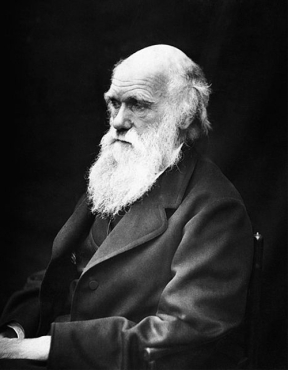
Jonathan White wanted to fill a gap in his students' knowledge of the history of ideas. Despite the appearance of Marx, Smith, Darwin and Malthus in the department's workscheme for Year 9, his Year 13 students appeared to lack any meaningful grasp of these nineteenth-century intellectual reference points. White therefore...