
Diversity in the past
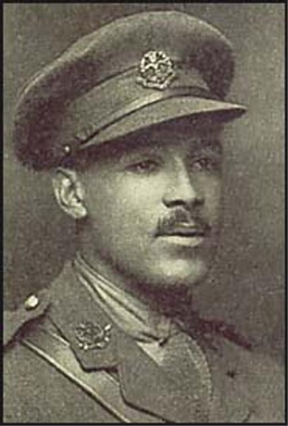
Schemes of work and resource packs Produced by the Northamptonshire Black History Association and originally published in 2008, these packs comprise a teachers' resource book and a schemes of work booklet of 10 activities for teachers to use in the classroom. The resource book contains a description of how to...

Move Me On is designed to build critical, informed debate about the character of teacher training, teacher education and professional development. It is also designed to offer practical help to all involved in training new history teachers. Each issue presents a situation in initial teacher education/training with an emphasis upon...
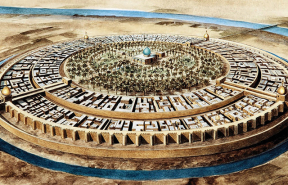
In 2005, in a Teaching History article entitled, ‘A need to know’, Nicolas Kinloch built an argument for teaching the history of Islamic civilisations to all pupils. Afia Chaudhry returns to this theme, reflecting deeply on the needs of her own students – Muslim and non-Muslim alike – within a...
In this article, Theo Woods shares the experience of one history department as they embarked on a substantial process of curriculum review and development. The department sought to address concerns that the range of history taught in their school, across the full seven years of students’ secondary experience, was too...
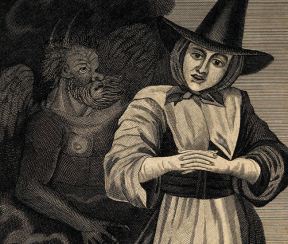
‘Gruesome!’ was how we decided to describe our teaching of seventeenth-century British history, although ‘inadequate’ was probably more accurate. Oh, how much was wrong! We had… Incoherence. The Civil War and Protectorate years plonked in between the Elizabethan Age and the origins of the industrial revolution. We had lost years!...
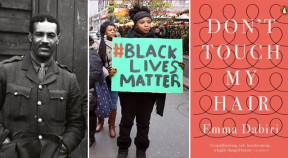
In this article, Dan Lyndon-Cohen makes the case that history departments should move from diversifying the curriculum to decolonising it. After reflecting on some examples of how he made the content of his lessons more representative, he explores how the influence of writers such as Michel-Rolph Trouillot and Emma Dabiri...
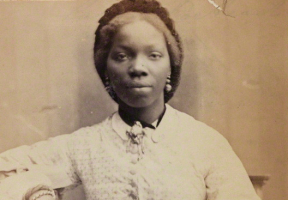
Making a passionate case for teaching Black British history in the secondary school curriculum, Hannah shares here the personal journey she has travelled in planning for Black British history in her curriculum. She cites her inspirations and offers striking examples to illustrate her rationale and approach to teaching this history....
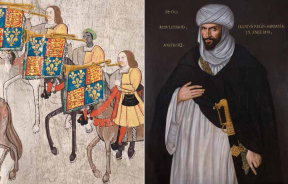
Having been given some additional curriculum time, Kerry Apps and her department made decisions about what had been missing in the previous curriculum diet. Building on an existing enquiry (in TH 176), Apps decided to focus on how and when the idea of race in its modern sense developed in...
To address the urgent need for digital learning resources, and to address the imbalance of perspectives in the History curriculum, CARGO Classroom is now providing multimedia learning tools for Key Stage 3 History via a freely accessible, interactive website: cargomovement.org/classroom “CARGO is about doing. We talk a lot. We talk...
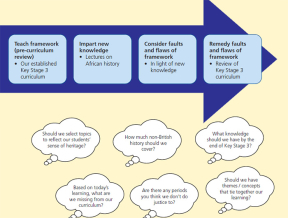
Catherine Priggs and her history department colleagues were increasingly concerned that their curriculum was too narrow. They feared that major areas of history were being left out and that many of their own pupils were not seeing themselves, in their various ethnic, cultural and world identities, in the past. Priggs...
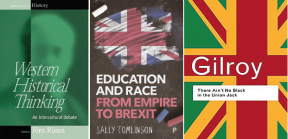
In October of last year, the Royal Historical Society (RHS) published an important report highlighting the racial and ethnic inequalities in the teaching and practice of history in the UK (RHS, 2018). Focused on history teaching at university, it nevertheless highlighted the need for thinking to occur at all levels...
Readers of this journal will be familiar with a number of ways of approaching the Tudors. Kerry Apps provides here an article detailing her concerns about the differences between what she had been delivering at Key Stage 3 and the broader, connected experience she had as an undergraduate historian. How...
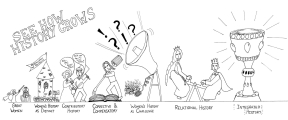
Susanna Boyd ‘discovered’ women’s history while studying for her own history degree, and laments women’s continued absence from the school history curriculum. She issues a call-to-arms to make the curriculum more inclusive both by re-evaluating the criteria for curricular selection and by challenging established disciplinary conventions. She also weighs up...
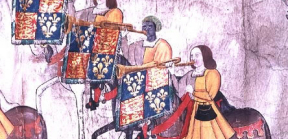
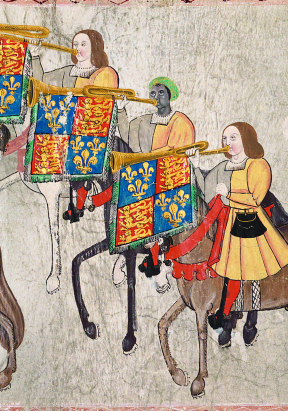
On 29 September 2018 I was fortunate enough to get involved with a collaborative project with Dr Miranda Kaufmann, the Historical Association, Schools History Project, and a brilliant group of people from different backgrounds all committed to teaching about black Tudors. In this short piece, I will share how I...
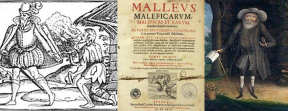
Recognising the duty placed on all teachers by the 2010 Equality Act to nurture the development of a society in which equality and human rights are deeply rooted, Helen Snelson and Ruth Lingard were prompted to ask whether their history curricula really reflected the diverse pasts of all people in...
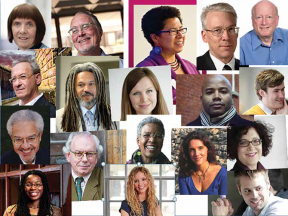
Sophia Nzeribe Nascimento, a mixed-race teacher working in a diverse London school, set out to explore her students’ assumptions about who historians are. While her own ethnicity and gender may have convinced at least some of her students that history is not exclusively the preserve of old white men, she...

This page is for those new to the published writings of history teachers. Each problem you wrestle with, other teachers have wrestled with too. Quick fixes don’t exist. But in others’ writing, you’ll find something better: conversations in which history teachers have debated or tackled your problems – conversations which...
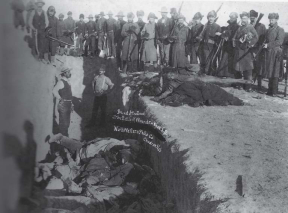
Few sub-fields of American history have undergone as many changes over time as the study of Native Americans/American Indians. While nineteenth- and early twentieth-century historians portrayed Native Americans as savage barbarians or ignored them entirely, late twentieth-century historians portrayed them as victims of circumstance and aggressive European conquest. Today, modern...
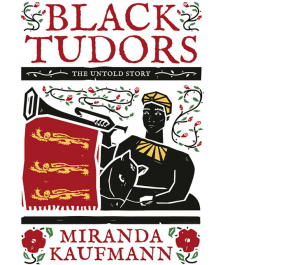
I am ashamed to admit that, until recently, my teaching of black history did not go beyond schemes of work on the transatlantic slave trade and the civil rights movement in the USA. This all changed in November 2017 when I heard Dr Miranda Kaufmann on the ‘BBC History Extra’...
Identifying the challenges his students faced both with recall and analysis of the content they had learned for their GCSE course, Ed Durbin devised a solution which focused not on exam skills and revision lessons, but on using Key Stage 3 to build the ‘hinterland’ of contextual knowledge and causal...