
Diversity in the past
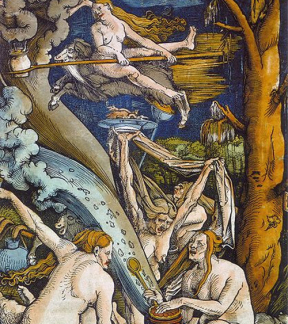
Which women were executed for witchcraft? And which pupils cared? Paula Worth was concerned that her low-attaining set were only going through the motions when tackling causal explanation. Identifying, prioritising and weighing causes seemed an empty routine rather than a fascinating puzzle engaging intellect and imagination. She was also concerned...
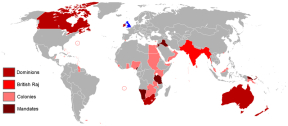
I wanted to give my Year 8 students ownership of their work on the British Empire by allowing them to suggest our ‘enquiry question'. In order to introduce the Empire, I brought in sugar, spices, bananas, chilli peppers and cotton. I then showed maps demonstrating the Empire at its height....
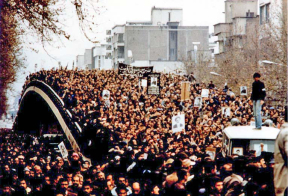
Although the curriculum changes of 2008 brought with them new GCSE specifications, Jonathan White was disappointed by the dated feel of some ‘Modern World' options, particularly the depth studies on offer. Drawing on his experience of teaching comparative history within the International Baccalaureate, and building on previous arguments in Teaching...
02 Editorial 03 HA Secondary News 04 Drilling down: how one history department is working towards progression in pupils’ thinking about diversity across Years 7, 8 and 9 – Matthew Bradshaw (Read article) 13 Cunning Plan: The generalisation game - challenging generalisations (Read article) 16 Were industrial towns ‘death-traps’? Year...

Matthew Bradshaw shares the early, tentative efforts of his history department to shape a new Key Stage 3 workscheme in the light of the 2008 National Curriculum for England. While his department's scheme is designed to secure progression in all conceptual areas, he chooses to focus here on the concept...
Hello Nutshell. What's all this stuff in the NC Attainment Target about ‘nature', ‘extent' and ‘interplay' of diversity? The trick is to look behind the word ‘diversity'. Then it all makes sense...
Please note: this article pre-dates the 2014 National Curriculum and some content may be outdated. History is always a relationship between the present and the past and the meaning of the past shifts as values and events change in the present. In this article Anne Llewellyn and Helen Snelson use...
Please note: this article pre-dates the 2014 National Curriculum and some content may be outdated. Circle Time is a commonly used technique in primary classrooms and is sometimes used in secondary personal and social education lessons. This open form of classroom organisation allows pupils to share opinions in a democratic...
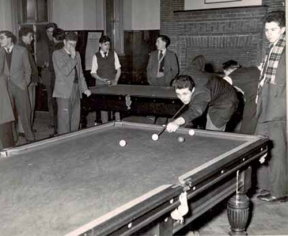
Please note: this article pre-dates the 2014 National Curriculum and some content may be outdated. How can oral history enquiries engage students with the study of history and help them connect their learning about the past to their present lives? How can oral history engage and develop students' understanding of...
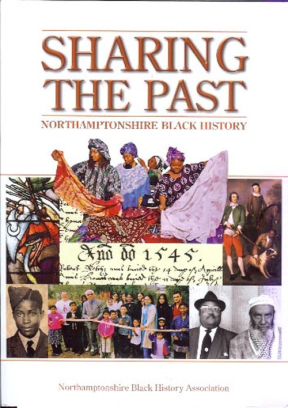
Northamptonshire Black History Association Pub 2008; ISBN:978 0 9557139 1 0; £12.95 [+£2.30 p and p] from: NBHA, Doddridge Centre, 109 St James Road, Northampton, NN5 5LD. How fortunate Northamptonshire history teachers are! With the current emphasis on community cohesion and diversity in the New Secondary Curriculum, they are presented...
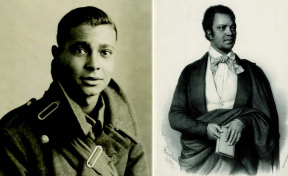
Produced by the Northamptonshire Black History Association and originally published in 2008, this is one of a set of resources for schools offering a more inclusive map of the past that includes an appreciation of Black History within the local, national and global context. The resources provide a range of...
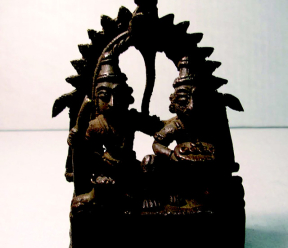
Produced by the Northamptonshire Black History Association and originally published in 2008, this is one of a set of resources for schools offering a more inclusive map of the past that includes an appreciation of Black History within the local, national and global context. The resources provide a range of...
Please note: this article pre-dates the 2014 National Curriculum and some content may be outdated. Rosie Sheldrake and Dale Banham here share the results of their desire to use the curriculum changes which are upon us to do something which they had intended for some time. Their modern world study...
Please note: this resource pre-dates the 2014 National Curriculum. For more recent resources, see How diverse is your history curriculum? and Diversity links and resources for Secondary history. This material enables history teachers to explore the concept of diversity. Section 1 discusses the concept of diversity and its importance in...
A new PowerPoint presentation by Dan Lydon on developing ways to mainstream Black and Asian British history in the secondary classroom...Click the link below to open the presentation>>>
The TEACH report outlines the sort of good practice in teaching sensitive topics which is available for teachers to share, not least through the Historical Association's programme of subject-specific training.
Lomas and Wrenn, co-authors and compilers of the Historical Association’s DfES-funded T.E.A.C.H 3-19 Report (Teaching Emotive and Controversial History), explore further ideas and examples of good practice from issues arising out of the report’s conclusions. Lomas and Wrenn propose five distinct categories of emotive and controversial history that further develop...
This is the fourth in a series of Teaching History articles about teaching history in N orthern Ireland co-authored by Alan McCully. The first two articles (in editions 106 and 114) outlined teaching strategies to help pupils in N orthern Ireland understand and relate to complex and often controversial issues...
History teachers are increasingly used to the idea that helping pupils reflect on and understand identities is one of the central purposes of history education. In this article Jamie B yrom and Michael Riley reflect on what thinking about identity historically might mean; by considering the history of encounters between...
As history teachers we are used to encouraging pupils to think; enabling them to express thoughts with clarity both verbally and in written form. Yet, if history as a school subject becomes purely cognitive, then something is missing. History deals with human behaviour and therefore the affective and the emotional...