World 1901-present

Some of the most profound and influential changes in world history take place from 1901 to today and covered here are many of the important and well known ones as well as some of the smaller stories. In terms of reach this section covers huge themes on diplomacy, post imperialism and economics. The articles cover the time period right up into recent events such as the State of the Union address by the US President Barrack Obama.

Sort by: Date (Newest first) | Title A-Z
Show: All | Articles | Podcasts | Multipage Articles
  • Film: Brezhnev and Détente

    Article

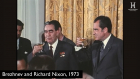
    In this film Dr Edwin Bacon blanks about the modernisation of the soviet union in the 1960s and 70s under Brezhnev, with some scholars predicting that as the East and West evolved, they would eventually converge as modern developed industrialised societies. The problem with convergence theory is that it didn’t...

    Click to view
  • Film: Brezhnev's legacy

    Article

    In this film Dr Edwin Bacon looks back at Brezhnev’s 18 years and how is has been described as an era of stagnation, producing an appetite for change from younger leaders such as Mikail Gorbachev. Dr Bacon reflects that this was a period of relative peace, stability and predictability which...

    Click to view
  • Film: From Khrushchev to Brezhnev

    Article

    In this film Dr Edwin Bacon reflects upon the instability of the Khrushchev era and how Brezhnev positioned himself as the perfect replacement for a Soviet Communist party desperate for stability in the wake of the Cuban missile crisis. Brezhnev would be the first amongst equals looking to move forward...

    Click to view
  • Film: Brezhnev's early life and career

    Article

    In this film Dr Edwin Bacon takes us through Brezhnev’s early life and career: his birth in Ukraine in 1906, the opportunities brought by the revolution, his role in the battle of Ukraine and his eventual arrival to the Politburo at the end of the 1950s. Dr Bacon looks at...

    Click to view
  • Establishing a dialogue with Year 9 about why environmental history matters

    Article

    The enquiry sequence on which Alex Benger reports in this article was inspired by two specific concerns: a sense that history education must have more to contribute to young people’s understanding of and ability to confront the climate crisis; and a desire to help pupils to engage more broadly with...

    Click to view
  • Film: Lenin's legacy

    Article

    With his body was embalmed and building high statues were erected to him Lenin’s memory seemed secured for ever. Yet how did his memory and his actual legacy differ? Did he really set the course for a future better Russia, or were his ideas of revolution better on paper than...

    Click to view
  • Films: Lenin – Interpretations

    31st January 2025

    (Student and corporate secondary members can view these films in our Student Zone) Two men – Trotsky and Lenin – symbolise the Russian Revolution for most people. While Trotsky came to an icy end in Mexico, Lenin remains an enduring figure in the history of Russia and the history of Communism...

    Click to view
  • Film: Lenin and the Russian Civil War

    Article

    Revolution is never simple. Lenin and the Bolsheviks quickly found that not everyone in Russia or outside of it approved of their new radical agenda. Russia was plunged into a civil war of devastating circumstances. How would its new leader manage and how much were the needs of the people...

    Click to view
  • Film: Lenin and the birth of Soviet Russia

    Article

    Having changed the course of Russian society Lenin now needed to secure his Bolshevik survival. Unlike his predecessor he saw no need to continue with the Imperialist policies of a war in Europe. Territory could be sacrificed for control, but would promises and rhetoric be enough to govern among people...

    Click to view
  • Film: Lenin's early thought

    Article

    As Lenin’s own political outlook and beliefs developed so did the European movements of Socialism and Communism. Groups emerged that wanted to radically change society and social structures. Lenin positioned himself as one of the leaders and crucially one of the thinkers behind these new ideas and movements.  Dr Lara...

    Click to view
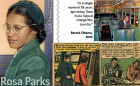
  • Tracing the popular memory of Rosa Parks with Year 9

    Article

    Inspired by Jeanne Theoharis’s biography of Rosa Parks, Ed Durbin initially planned to challenge the ‘fable’ that had been constructed around her life. He soon realised, however, that he wanted to take the opportunity to get ‘behind’ the fable and help his students understand how and why it had been constructed. Drawing...

    Click to view
  • Shaping what matters: Year 9 decide why we should care about the Windrush scandal

    Article

    Mark Fowle began work on an enquiry to contextualise the Windrush scandal for his pupils in south London, in response to the first national Stephen Lawrence Day, in 2018. He went on to work with his colleagues in a new school to broaden pupils’ historical perspective through stories of migration...

    Click to view
  • Films: Khrushchev – Interpretations

    9th October 2024

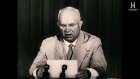
    (Student and corporate secondary members can view these films in our Student Zone) Khrushchev came to power in the Soviet Union at a time when the whole region was used to living on a knife's edge. He appeared to usher in a more relaxed calm era as though that had...

    Click to view
  • Climate, environment and history

    News Item

    The climate emergency has come to the fore particularly in recent years. Teaching about the environment and climate is a feature of subjects like science and geography, but it is, and should be, the responsibility of every curriculum subject. History has a particular role to play in helping us understand...

    Click to view
  • Film series: Power and authority in Russia and the Soviet Union

    13th August 2024

    We are delighted to present a new film series examining leadership in Russia and the USSR over the course of the twentieth century. Russia and its history often fascinates the rest of us in Europe as well as horrifying us. She has been our friend and ally, and our physical and ideological...

    Click to view
  • The Olympics - politics, impact and legacy - its not just about the sport

    Article

    2024 is an Olympic Games year. Held every four years (with the exception of during the World Wars and Covid-19 restrictions), the modern Olympics is the largest international sporting event in the world. However, historically it has not always been just the sports that are played and the athletes’ performances...

    Click to view
  • Lengthening Year 9’s narrative of the American civil rights movement

    Article

    Inspired by reading the work of Stephen Tuck, Ellie Osborne set out to design a new sequence of lessons that would help her students adopt a longer lens on the American civil rights movement. At the same time, Osborne wanted to put more emphasis on the agency and campaigns of activists,...

    Click to view
  • Come together: putting popular music at the heart of historical enquiry

    Article

    Drawing on a wide range of history teachers’ existing published work and presenting diverse examples of his own practice, David Ingledew builds a thorough curricular and pedagogic rationale for using popular music in history teaching. He shows how lyrics and music can be used as stimulus for various kinds of analysis and...

    Click to view
  • Films: Boris Yeltsin – Interpretations

    19th June 2024

    Borisn Yelstin was the Russian leader from the collapse of the Soviet Union through to the leadership of Vladimir Putin. A key pivotal figure of the twentieth century, he had as an important an impact on Russia and global politics as any of the Soviet leaders of the 1970s and 80s and...

    Click to view
  • Film: Stalin - Early Life

    Article

    Joseph Stalin was born Joseph Besarionis dze Jughashvili in 1878 into a poor family in Gori, Georgia, part of the then Russian Empire. Stalin attended the Tbilisi Spiritual Seminary while his own radicalism grew, before joining the Marxist Russian Social Democratic Labour Party. He edited the party's newspaper, Pravda, and raised funds for Vladimir Lenin's Bolshevik faction through...

    Click to view