
World 1901-present
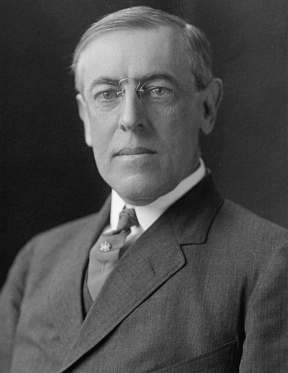
It is common to see the failure of the League of Nations in its inability to stand up to the crises of the inter-war years.Peter Raffo shows that the League was flawed from the start. Never more than a voluntary association of sovereign states hoping to create ‘an atmosphere capable...
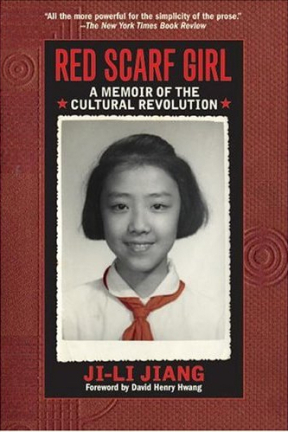
Facing History and Ourselves is excited to announce a new study guide. Teaching Red Scarf Girl has been developed to help classrooms explore essential Facing History themes, including conformity, obedience, prejudice and justice. Red Scarf Girl, Ji-li Jiang's engaging memoir, provides an insightful window into the first tumultuous years of...
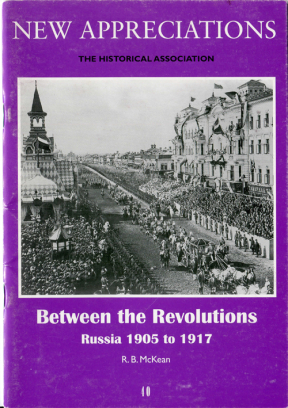
"The key question is this - is the peaceful renovation of the country possible? Or is it possible only by internal revolution?"This quotation succintly expresses the problem that faced both contemporaries and subsequant generations of historians confronting the development of Russia between the revolutions of 1905 and 1917. The upheavals...

Students can find it hard to understand and remember the differing schools of interpretation that they encounter at A2. The process of studying differing historiographic claims can also seem rather dry and tedious. It is crucial that they grasp differences in interpretation if they are to succeed in their examinations,...
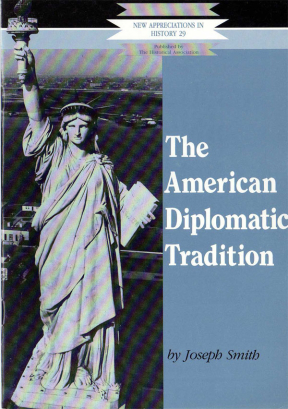
Indisputably, the United States of America has been and continues to be the leading power of the twentieth century. No country or people, however large or small, has been immune from American influence. A succession of American presidents have become international celebrities whose personal strengths and weaknesses are discussed and...
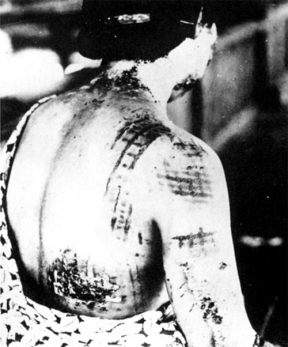
High school history teacher Brent Dyck is one of our Canadian readers. He has offered this item to The Historian as a contribution to our commitment to explore the historical approaches and values that we are seeking to convey to young people and the wider public. We hope that you...
Please note: this article pre-dates the 2014 National Curriculum and some content may be outdated. When is a work of art a work of history? How can we get our students to appreciate the difference without ignoring the overlap? How should we ask our students to approach the historical film...
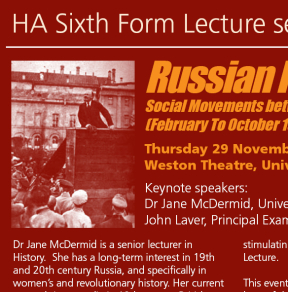
On the 29th November Dr Jane McDermid gave the second of her lectures on the Russian Revolution, at the Weston Theatre, Manchester. John Laver, Principal Examiner in History at AQA also gave some invaluable advice on how to answer A Level History Exam questions. Click the links below to access...
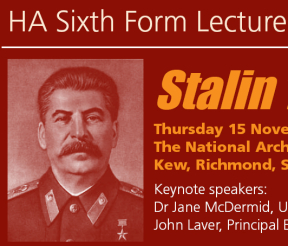
On 15th November Dr Jane McDermid gave the first lecture in the HA's Sixth Form Lecture Series on the making of the Stalinist State at the National Archives, Kew. Click on the following links below to listen to her lecture and read the lecture notes!
How often do our students long for black and white rather than the shades of grey that history generally presents us with? Understanding the Arab-Israeli conflict is all about understanding diversity and complexity in all their shades of grey. Alison Stephen, teaching in an immensely diverse school herself, is determined...
History is the study of the past; some of the past is more recent than a glance over many schemes of work might lead us to think. Chris Culpin makes the case for ignoring the 20 year rule and tackling head on – and, crucially, historically – the big issues...
Polychronicon was a fourteenth-century chronicle that brought together much of the knowledge of its own age. Our Polychronicon in Teaching History is a regular feature helping school history teachers to update their subject knowledge, with special emphasis on recent historiography and changing interpretation. This edition of 'Polychronicon' investigates World War...
Brazil and the outbreak of the First World War At the beginning of the twentieth century Brazil was on the periphery of a world order that revolved around decisions made by the great European powers. Although it was the largest and most populated nation in South America, Brazil possessed an...
This edition of 'Nutshell' examines the philosophical concept of the End of History.
Dale Banham and Russell Hall present a multi-faceted rationale for an in-depth study of the 1991 film, JFK. They treat it as an ‘interpretation’ in the National Curriculum sense, constructing a varied and meticulous learning journey towards its analysis. By the end of that journey pupils had examined the central...
This edition of 'Cunning Plan' is a Year 8 lesson on C.V. Wedgwood's writing. There is also a supplementary download commenting on the C.V. Wedgwood text used.
On 29 January 1949 there was a debate in the British House of Commons. When Winston Churchill, the leader of the opposition, interrupted Ernest Bevin’s history of the Palestine problem he was told by the Foreign Secretary: ‘over half a million Arabs have been turned by the Jewish immigrants into...
Here is a wonderful reminder of the richness of materials available to history teachers. With ever greater emphasis being placed on different learning styles, it is a good moment to remind ourselves that we can cater for virtually all of them in our classrooms. This includes a preference for learning...
Mike Murray offers further new perspectives on the relationship between overview and depth in pupils’ historical learning. In an account of his teaching with Raymond Briggs’ Ethel and Ernest to a ‘below-average ability’ class in Year 9, he constructs a rationale for using this moving strip cartoon to motivate, intrigue...
Caroline Godsell describes the reactions and concerns of two Year 9 classes after the 9/11 attack.