
World 1901-present
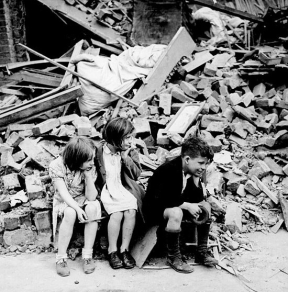
I. The Legacy of Versailles The Outbreak of a second world war on 1 September 1939 might have been expected to produce in due course a great controversy on ‘war guilt'. But there has been nothing comparable with the debate which took place during the 1920s on the 1914 issues....
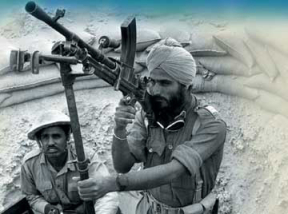
India was vital as a source of men and material for the British in the Second World War, despite the constitutional, social and economic issues which posed threats to its contribution. Leo Amery, Secretary of State for India 1940-5, wrote to Churchill, 8 April 1941: ‘My prime care had naturally...
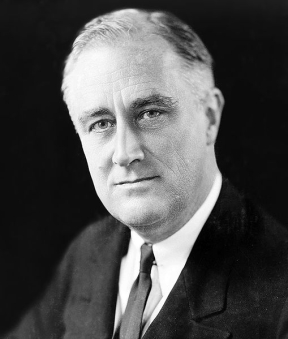
New Deal is the name given to the policies of the American president Franklin D. Roosevelt during the 1930s. Elected in 1932, at a time of great economic depression, he sought to alleviate distress by using the inherent powers of government, and the New Deal era come to be seen...
On 5 September 1939 the German Führer, Adolf Hitler, paid a surprise visit to the corps which was in the forefront of his army's ferocious assault upon Poland. As they passed the remains of a smashed Polish artillery regiment, the corps commander, General Guderian, astonished Hitler by telling him that...
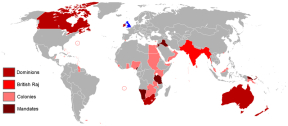
I wanted to give my Year 8 students ownership of their work on the British Empire by allowing them to suggest our ‘enquiry question'. In order to introduce the Empire, I brought in sugar, spices, bananas, chilli peppers and cotton. I then showed maps demonstrating the Empire at its height....
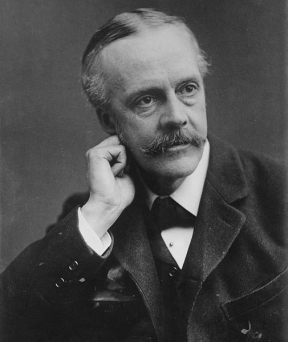
In a letter from the British Foreign Secretary, A.J. Balfour, to Lord Rothschild, the Anglo-Jewish leader, on 2 November 1917, the British Government declared its intention to ‘facilitate' the ‘establishment in Palestine of a national home for the Jewish people'. The Balfour Declaration, as it became known, was endorsed by...
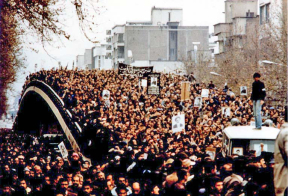
Although the curriculum changes of 2008 brought with them new GCSE specifications, Jonathan White was disappointed by the dated feel of some ‘Modern World' options, particularly the depth studies on offer. Drawing on his experience of teaching comparative history within the International Baccalaureate, and building on previous arguments in Teaching...
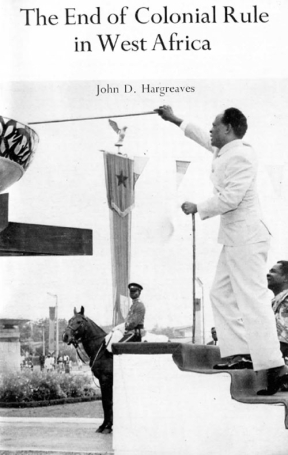
The dissolution of colonial empires since the Second World War is a major theme of contemporary history, and one which will challenge historians for many years to come. There are still sharp disagreements as to how this change should be described. European scholars tend to use the term ‘decolonization' (at...
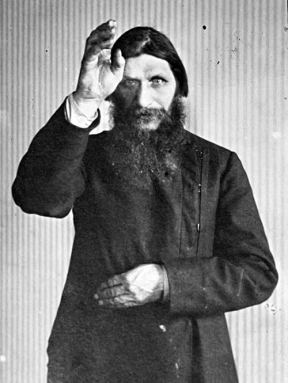
Has the role of Alexandra and Rasputin in the downfall of the Romanovs been exaggerated out of all proportion? If a country is defeated in war, the rulers run the risk of being overthrown. In 1918 the Kaiser left Germany for Holland, Germany became a Republic; the Austro-Hungarian Empire came...
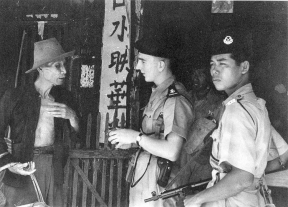
‘To think that the people of Indochina would be content to settle for less [from the French] than Indonesia has gained from the Dutch or India from the British is to underestimate the power of the forces that are sweeping Asia today'. An American adviser in 1949 cited: Robin Jeffrey...
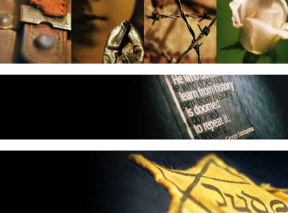
After a Fellowship in Holocaust Education at the Imperial War Museum, Andy Lawrence decided that something was missing in normal approaches to teaching emotive and controversial issues such as genocide, a deficit demonstrated by recent research by the Holocaust Education Development Programme. As part of his fellowship, Lawrence created an...
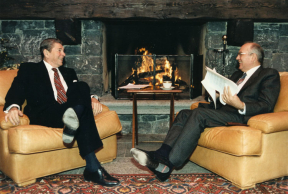
The end of the Cold War is a controversial subject. Contemporary analysts did not see it coming. Any explanation of its ending which seeks to build up a network of causation will therefore be forced to make arguments based on events whose significance was not necessarily seen at the time....
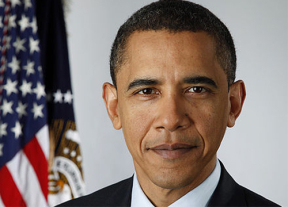
Introduction Shortly after noon on 20 January 2009 Barack Obama began his historic Inaugural Address as 44th President of the United States of America. On the west porch of the Capitol, home to the US Congress, and under propitiously blue skies, the first African American president spoke before more than...
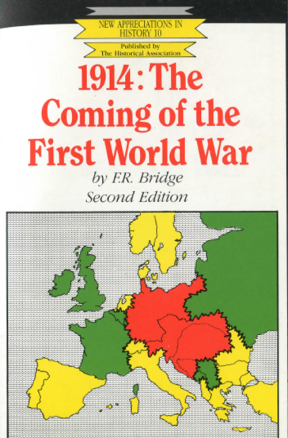
This pamphlet argues that the outbreak of the First World War represented not so much the culmination of a long process started by Bismarck and his successors, as the relatively sudden breakdown of a system that had in fact preserved the peace and contained the dangerous Eastern Question for over...
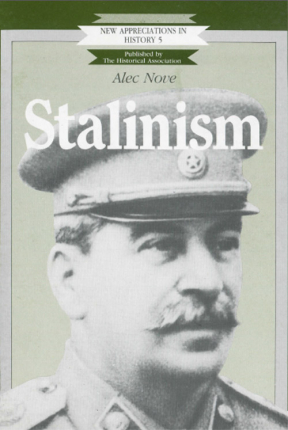
Stalin's remarkable career raises quite fundamental questions for anyone interested in history. Marxists, whose philosophy should cause them to downgrade the role of ‘great men' as an explanation of great events, have problems in fitting Stalin into the materialist interpretation of history: did not this man ride rough-shod over the...
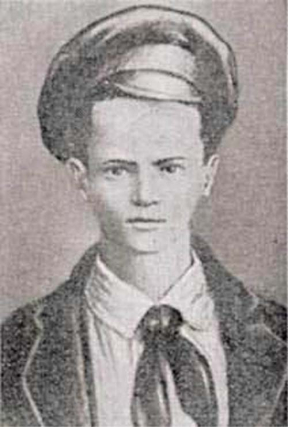
Germaine Greer (in the context of the Pirelli Calendar) once commented that the defining feature of a legend was that almost nothing said and believed about it was true. Pavlik Morozov, notorious both inside Russia and internationally for having denounced his father, almost certainly never did so. In September 1932,...
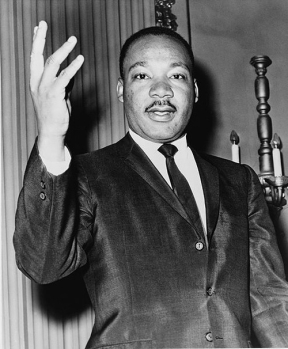
"He was The One, The Hero, The One Fearless Person for whom we had waited. I hadn't even realized before that we had been waiting for Martin Luther King, Jr, but we had." So spoke the novelist Alice Walker in 1972, looking back on her teenage years. And so wrote...
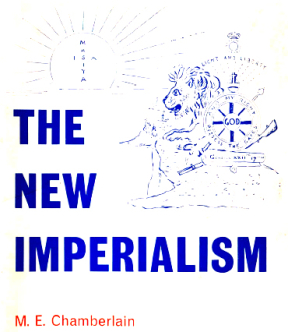
This Classic Pamphlet first published in 1970 comes with a new introduction written by the author M. E. Chamberlain.The New Imperialism - Introduction by M. E. Chamberlain Professor Emeritus at Swansea University. May 2010.When this pamphlet was first published imperialism was a hot political topic and battle raged between Marxist...
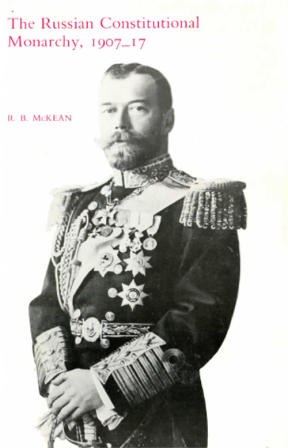
The defeat of the revolution of 1905 afforded the absolutist Tsarist monarchy an opportunity to reform the administration and to seek a new basis of support in place of the declining gentry class. Historians have been divided ever since over the constitutional system's chances of success. Had Tsardom advanced far...
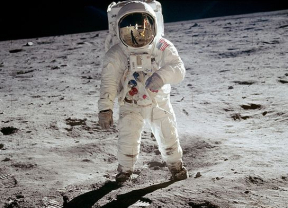
It nearly began like this: ‘On Christmas Eve 1968, two episcopalians and a Roman Catholic were in orbit around the Moon.' I was writing a book called Earthrise, about the first views of Earth from space. Most other books about the Apollo programme of the 1960s and 1970s took an...