
Sense of period
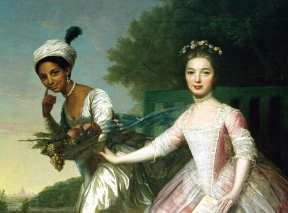
Drawing on her wealth of experience and expertise in using visual sources in the classroom, in this article Jane Card explores how a single painting, a portrait of Dido Elizabeth Belle Lindsay and her cousin Lady Elizabeth Murray, might form the basis for a sequence of lessons. Arguing that although...
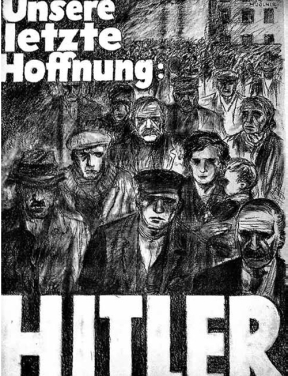
'Why am I accused of being a heretic?' A pedagogical framework for stimulating historical contextualisation One of the challenges facing students who want to make sense of a source or an interpretation of the past is the need to place it in its context. Various research studies have shown that...
The knowledge that ‘flavours' a claim: towards building and assessing historical knowledge on three scales While marking some Year 11 essays, Kate Hammond found her interest caught by significant differences between one kind of strong analysis and another. Some scored high marks but were less convincing. The achievement in these...
When Michael Fordham was introduced to Dr Seuss's Butter Battle Book he immediately recognised its potential value in the classroom as a popular interpretation of the Cold War. Wanting his Year 9 pupils to explain how and why the past has been interpreted in different ways he shows the potential...
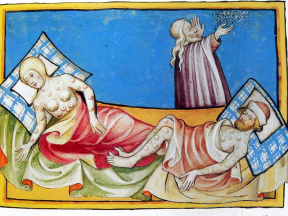
Period, place and mental space: using historical scholarship to develop Year 7 pupils' sense of period What is a sense of period? And how can pupils' sense of period be developed? Questions such as these have troubled history teachers for many years, often revolving around debates over the role played...
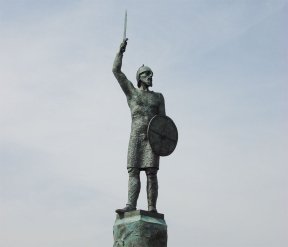
How many people does it take to make an Essex man? Year 9 face up to historical difference Teaching her Key Stage 3 students in Essex, Catherine McCrory was struck by the stark contrast between their enthusiasm for studying diverse histories of Africa and the Americas and their reluctance to...
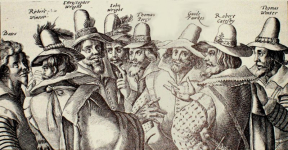
Moving forwards while looking back: historical consciousness in sixth-form students A key concern driving debates about curriculum reform in England is anxiety that young people's knowledge of the past is too episodic - that they lack a coherent ‘narrative' or ‘map' of the past. While recent debate focused on what...
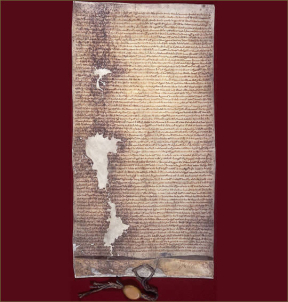
Possible futures: using frameworks of knowledge to help Year 9 connect past, present and future How can we help pupils integrate history into coherent ‘Big Pictures' or mental frameworks? Building on traditions of classroom research and theorising reported in earlier editions of Teaching History, Dan Nuttall reports how his department...
Silk purse from a sow's ear? Why knowledge matters and why the draft History NC will not improve it Katie Hall and Christine Counsell attempt to construct a Key Stage 3 scheme of work out of the draft National Curriculum for history that was released for consultation in England in...
Wrestling with Stephen and Matilda: planning challenging enquiries to engage Year 7 in medieval anarchy McDougall found learning about Stephen and Matilda fascinating, was sure that her pupils would also and designed an enquiry to engage them in ‘the anarchy' of 1139-1153 AD. Pupils enjoyed exploring ‘the anarchy' and learning...
An article on scripted drama might seem an unlikely choice for an edition devoted to getting students talking. Surely the point about a script is that the words used are chosen and prescribed by others. However, the examples presented here by Helen Snelson, Ruth Lingard and Kate Brennan demonstrate how...
Developing Year 8 students' conceptual thinking about diversity in Victorian society Elizabeth Carr writes here about a new scheme of work she developed to teach students about diversity in Victorian society. When dealing with a concept such as diversity, it can be easy for students to slip into stereotypes based...
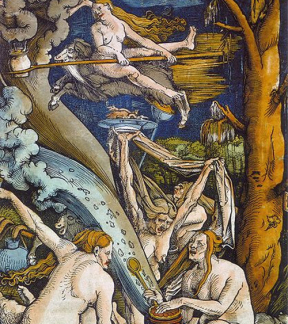
Which women were executed for witchcraft? And which pupils cared? Paula Worth was concerned that her low-attaining set were only going through the motions when tackling causal explanation. Identifying, prioritising and weighing causes seemed an empty routine rather than a fascinating puzzle engaging intellect and imagination. She was also concerned...
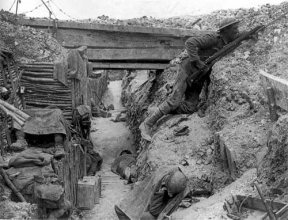
Having already reflected on ways of improving their students' understanding of historical diversity at Key Stage 3, Joanne Philpott and Daniel Guiney set themselves the challenge of extending this to post-14 students by means of fieldwork activities at First World War battlefields sites. In addition, they wanted to link the...

Rachel Foster reports here on research that she conducted into how students engage with academic texts. Unhappy with the usual range of texts that students encounter, often truncated and ‘simplified' in the name of accessibility, she designed a scheme of work which sought to find out how her students responded...
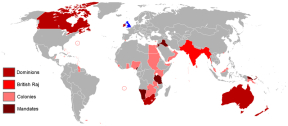
I wanted to give my Year 8 students ownership of their work on the British Empire by allowing them to suggest our ‘enquiry question'. In order to introduce the Empire, I brought in sugar, spices, bananas, chilli peppers and cotton. I then showed maps demonstrating the Empire at its height....
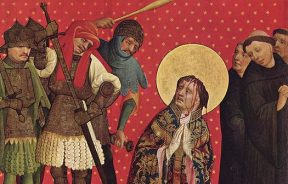
Mary Partridge wanted her pupils not only to become more aware of competing and contrasting voices in the past, but to understand how historians orchestrate those voices. Using Edward Grim's eye-witness account of Thomas Becket's murder, her Year 7 pupils explored nuances in the word ‘shocking' as a way of...
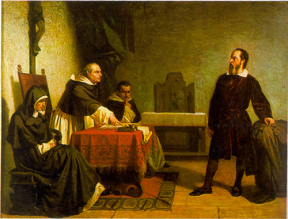
What is historical empathy and why is it important? What has gone wrong and what had gone right in past attempts to develop students' empathetic understanding? What does progression look like in this area of historical thinking and what are the preconceptions that can act as barriers to progression? Lee...

In this article, Lindsay Cassedy, Catherine Flaherty and Michael Fordham draw upon their empirical research to assess what understandings their students had of historical interpretations at the end of their compulsory education in history. They found that most students operated with an underlying epistemological model that did not reflect the...
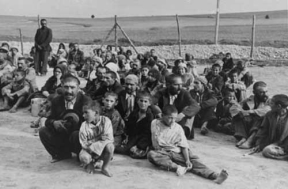
Students make sense of new learning on the basis of their prior understandings: we cannot move our students' thinking on unless we understand what they already know. In this article, Edwards and O'Dowd report how they set out to scope a group of Y ear 8 students' prior learning and...