
Interpretations

The idea that history is constructed can be a difficult concept for pupils to grasp, yet it is foundational to disciplinary understanding and crucial if pupils are to understand both the relevance of history and the responsibility of the historian. When asked about the nature of history, many of my...
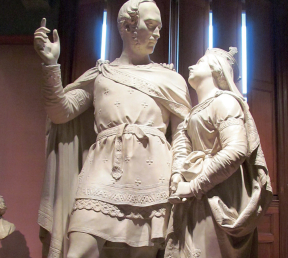
In this article Jane Card outlines the changing popular interpretations of one of the most familiar events in British history, the Norman Conquest. She makes the case for using visual and literary interpretations of the Conquest to engage pupils with thinking about the eleventh century, the subsequent centuries in which...
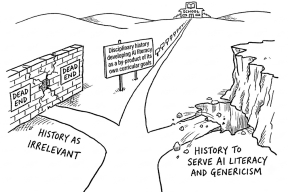
Many young people, aware of the rapid development and widespread use of generative forms of artificial intelligence, assume that the knowledge and skills they will need to navigate their future bear little relationship to those offered by the study of history. In response to these assumptions, Kieran Lavis and Katharine...
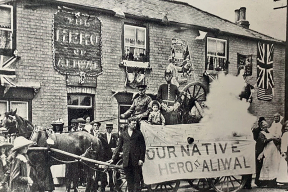
Jack Harris found that his pupils had little knowledge of Sir Harry Smith, the historical figure after whom their school was named, and who was commemorated in various ways in their local community. Researching Smith’s career and reputation, including his role in British colonialism, he uncovered varied interpretations. Harris worked...
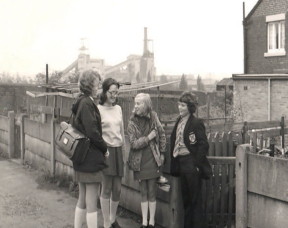
Students’ rapt response to a filmed interview with a former miner now working as part of the school’s premises team convinced Fred Oxby of the power of local stories. This was not simply because they captured students’ attention, nor even because such stories enabled them to see that history was...
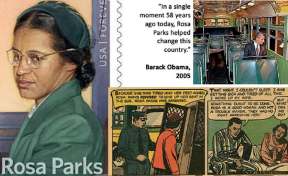
Inspired by Jeanne Theoharis’s biography of Rosa Parks, Ed Durbin initially planned to challenge the ‘fable’ that had been constructed around her life. He soon realised, however, that he wanted to take the opportunity to get ‘behind’ the fable and help his students understand how and why it had been...
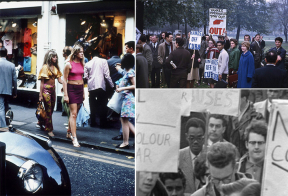
For such a boldly iconoclastic work, the Key Stage 3 textbook A New Focus on ... British Social History, c.1920–2000 (2023) provides a disarmingly conventional account of youth in the 1960s as ‘mostly better educated and informed than their parents had been at their age [and able] … to find...
Active learning strategies are engaging but, far more importantly, they make history learning memorable, they encourage resilience and independence, and they are an excellent way to make complex history accessible for all. When used with clear purpose and with knowledge of specific students' needs, they are a tried and tested...
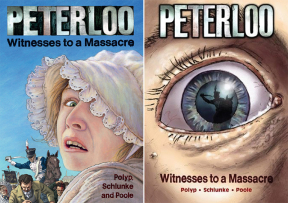
While previous work on historical interpretations has focused students’ attention on the particular questions that historians have been asking or the context in which they have been posing those questions, less attention has been paid to the process of historical narration itself – the decisions that are made in telling...
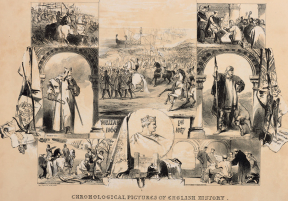
Jane Card’s previous work on the power of images in conveying particular interpretations and her advice about how to use visual material effectively in classrooms will be familiar to readers of Teaching History. In this article she focuses specifically on the capacity of visual representations to convey a compelling message...
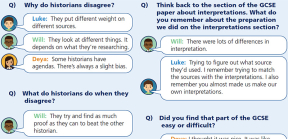
Shortly before their final A-level examination, Peter Turner was alarmed to discover some fundamental weaknesses in his Year 13 students’ understanding of the nature of historical interpretations. Determined to address this concern at a much earlier point with his next cohort of students he developed a new six-lesson enquiry. His...
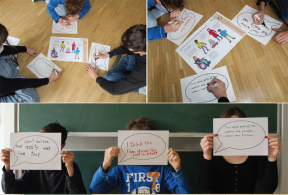
Although perhaps unfamiliar to the majority of our readers, concept cartoons are not a new educational tool. Christoph Kühberger here lays out his rationale for using this technique, borrowed from science education, in history teaching. Concept cartoons provide a means for pupils to express such difficult historical concepts as the...
It is not emphasised enough that the progress of historiography often proceeds, not by historians arguing and then coming to some resolution, but simply by moving on. Historiography follows fashion, and subjects often exhaust themselves (for the time being)... A related issue is that of siloes. Historiography – academic writing...

As part of her department’s effort to diversify the history curriculum, Paula Worth began a quest to research and then shape a lesson sequence around the Inkas. Her article shows how she allowed the new topic and its historiography to challenge and extend her own use of sources, particularly oral...
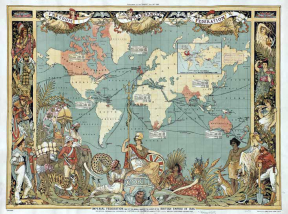
The murder of George Floyd during the summer of 2020 and the ongoing ‘culture war’ in Britain over the legacy of the British Empire have reignited interest in imperial history. This focuses, in particular, on the question of the empire’s impact on Britain itself: on how the act of conquering...
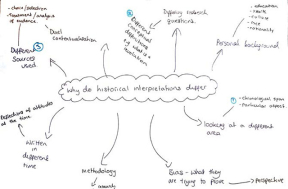
Holly Hiscox was concerned that many of her A-level students – asked to evaluate three different historical interpretations for their non-examined assessment task – still tended to hold unhelpful misconceptions about the nature of interpretations. In this article she explains how she created an introductory scheme of work to help...
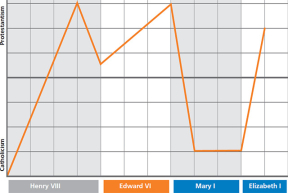
While looking to revamp his department’s Year 7 enquiry on the Tudors, Jack Mills turned to historiographical debates regarding the ‘mid-Tudor crisis’ to inform his curricular decision making. In doing so, Mills noted that the debate hinged on interpretations of substantive concepts such as ‘crisis’. He therefore also drew on...
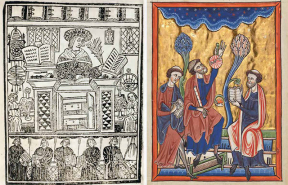
The phrase ‘medieval science’ may seem nonsensical. ‘How can... a synonym for “backward”,’ the editors of The Cambridge History of Science Volume 2 ask rhetorically, ‘modify a noun that signifies the best available knowledge from the natural world?’ To answer their question, we must rethink our assumptions, both about the...
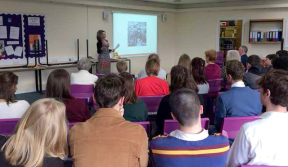
The history we present to students, however rigorous and challenging, and however full of integrity in eflecting history as a discipline, is a shiny show of our best resources. Peeling back this curtain and allowing students to see the real world of academic history was a major motivation in inviting...

Students of A-level history are required to analyse and evaluate historical interpretations. Samuel Head found limitations in his Year 13 students’ understanding of how and why historians arrive at differing interpretations, which impeded their ability to analyse them. He set about tackling this with carefully sequenced planning and a processual...