
Interpretations

Rachel Foster reports here on research that she conducted into how students engage with academic texts. Unhappy with the usual range of texts that students encounter, often truncated and ‘simplified' in the name of accessibility, she designed a scheme of work which sought to find out how her students responded...
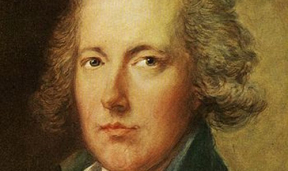
How can we help pupils learn to read historically? Gary Howells explores this question by explaining how he builds reading challenges into the course of his pupils' post-16 studies and by describing some of the tasks that pupils are set and the principles that underpin them. Howells argues that over...
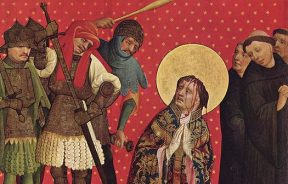
Mary Partridge wanted her pupils not only to become more aware of competing and contrasting voices in the past, but to understand how historians orchestrate those voices. Using Edward Grim's eye-witness account of Thomas Becket's murder, her Year 7 pupils explored nuances in the word ‘shocking' as a way of...

In this article, Lindsay Cassedy, Catherine Flaherty and Michael Fordham draw upon their empirical research to assess what understandings their students had of historical interpretations at the end of their compulsory education in history. They found that most students operated with an underlying epistemological model that did not reflect the...
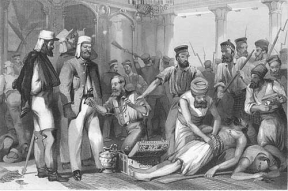
The dramatic, chaotic and violent events that took place in Northern India in 1857/8 have been interpreted in many ways, as, for example, the ‘Indian Mutiny', the ‘Sepoy War' and the ‘First Indian War of Independence'. The tales that have been told about these events have been profoundly shaped, however,...

Understanding historical interpretation involves understanding how historical knowledge is constructed. How do sixth formers model historical epistemology? In this article Arthur Chapman examines a small sample of data relating to sixth form students' ideas about why historians construct differing interpretations of the past. He argues that understanding interpretation requires students...

History teachers have been talking about the need to teach broad narratives, overview and chronology for a long time. They have also recognised how essential it is for students to have an opportunity to study the ways in which the past has been interpreted, and the reasons why these interpretations...
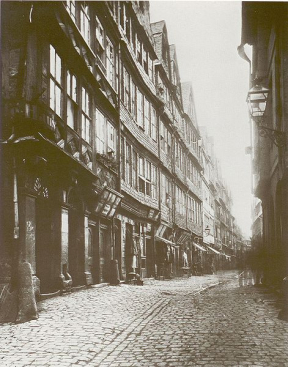
Holocaust imagery is very familiar, clichéd even. How can we get pupils thinking about it in novel ways and seeing differently? Phillips reports work completed with his PGCE students, proposes a scaffold of questions with which to deconstruct images and applies it to archive images and to Hollywood representations. Images...
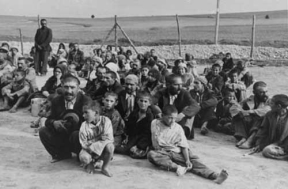
Students make sense of new learning on the basis of their prior understandings: we cannot move our students' thinking on unless we understand what they already know. In this article, Edwards and O'Dowd report how they set out to scope a group of Y ear 8 students' prior learning and...
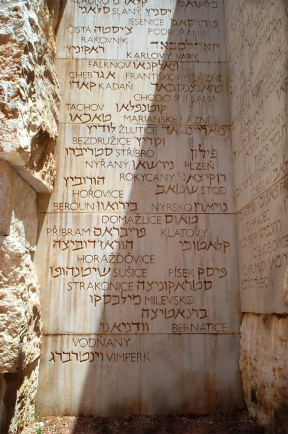
Peter Morgan represents what is best about the reflective practitioner - an experienced teacher of some 15 years' standing, he continues to challenge himself and to seek ways to improve and develop his classroom practice. Deeply influenced by the pedagogy and resources that he encountered on the CPD of the...
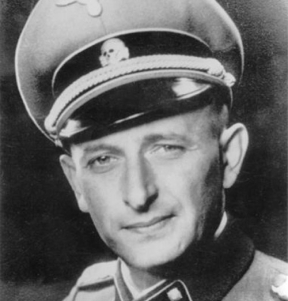
Almost 60 years ago Adolf Eichmann went on trial for crimes committed against the Jews while he was in the service of the Nazi regime. His capture by the Israeli secret service and his abduction from Argentina triggered a number of journalistic books that portrayed him as a pathological monster...

An individual's knowledge of history is dependent not only on the events of the past but also on the way such events are presented. These presentations of the past come in a variety of forms and an educated person should be able to reflect purposefully on their worth...
Please note: this article pre-dates the 2014 National Curriculum and some content may be outdated. In this article, Andrew Wrenn explores some issues that teachers might consider when supporting 14 and 15 year olds in their study of war memorials as historical interpretations. Tony McAleavy has argued that ‘popular' and...
Kate Hammond sets out a rationale for linking the National Curriculum requirement to study interpretations of history with her pupils’ own evidence handling skills. She makes connections with history-teacher-led debates and innovations in both areas, but particularly the work of Howells (2005). She describes and evaluates a learning sequence that...
Michael Riley, member of the HA Secondary Committee and History PGCE Tutor at Bath Spa University. In recent years, teaching about different interpretations of history has been one of the most exciting and challenging aspects of Key Stage 3 history. Interpretations-focused enquiries allow pupils to see that argument and debate...
Modern research on the crusades has concentrated on three basic questions. What were they? How were they justified? What motivated the crusaders? The first of these questions became controversial twenty-five years ago, when historians with a traditional approach to the subject, who took into consideration only those expeditions launched to...
Top Tip: Approaches to planning interpretations-focused enquiries.
However imaginative and enquiring classroom history may be, the history itself is usually constructed by a historian, a textbook author or a teacher. It is rare that pupils gain the opportunity to construct original histories of their own. Oral history can offer this opportunity. Yet as a methodology, oral history...
Let’s stop saying sorry for the Empire! Thus Mastin and Wallace introduce one of their lessons on interpretations of the British Empire. They develop Gary Howells’s ideas from the previous edition of Teaching History to demonstrate exactly what we might get our students to do with interpretations of the past....
Our Polychronicon in Teaching History is a regular feature helping school history teachers to update their subject knowledge, with special emphasis on recent historiography and changing interpretation. This edition of 'Polychronicon' focuses on interpretations of the Gunpowder Plot.