
Interpretations

Gary Howells offers us a challenge: are we sure that we are teaching the study of interpretations correctly? It is much criticised at GCSE, but do we really engage our students in the process of writing history, and in understanding how history works, from 11-14? Or do we use reductive...
Polychronicon was a fourteenth-century chronicle that brought together much of the knowledge of its own age. Our Polychronicon in Teaching History is a regular feature helping school history teachers to update their subject knowledge, with special emphasis on recent historiography and changing interpretation. This edition of 'Polychronicon' explores the historical...
When pupils study interpretations or representations of the past which are neither from their own period nor from the period being interpreted/represented, they are having to employ sophisticated knowledge and skill. Jane Card describes this as ‘double vision’: the pupils must think about the period depicted (in this case the...
In this article Paul Sutton examines the concerns associated with place in films. He points out the problems that this poses for our students - problems mainly, but not only, associated with a common lack of geographical authenticity. But this, he suggests, can be turned to our advantage. For what...
Helping students to understand how and why people in the present interpret the past differently is a challenge. It is also vital if we are to develop an understanding of why the meanings we ascribe to the past are not fixed, but rather are subject to our own prejudices or...
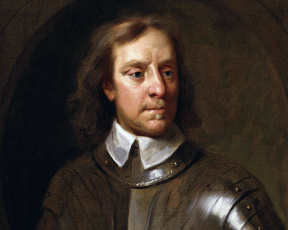
Polychronicon was a fourteenth-century chronicle that brought together much of the knowledge of its own age. Our Polychronicon in Teaching History is a regular feature helping school history teachers to update their subject knowledge, with special emphasis on recent historiography and changing interpretation. This edition of 'Polychronicon' investigates the differing...
How can the Holocaust be represented? In this article, Andrew Wrenn takes as his example the United States Holocaust Memorial Museum. He helps teachers encourage pupils to get beneath the surface, and look analytically at the Museum itself as an interpretation of the Holocaust. Such an investigation provides pupils and...
Ian Grosvenor's article points both to dangers and to positive potential in the National Curriculum for history. Critical of the published proposals for history in the current curriculum review, he points not only at the continuing narrowness of the perspectives enshrined by the proposed curriculum but at the reasons why...
Andrew Wrenn builds upon current, popular and practical work on ‘interpretations of history' analysed in recent editions. Using the public's responses to the temporary exhibition on the slave trade housed at Bristol City Museum, he offers a range of fascinating practical activities for Year 9 pupils. Many of these could...
Please note: this article pre-dates the 2014 National Curriculum and some content may be outdated. This article is based on collaborative work between staff at a University department of educational studies and a comprehensive school. Ian Davies and Rob Williams reviews the status and meaning of interpretations in history education...
In this article, Andrew Wrenn explores some issues that teachers might consider when supporting 14 and 15 year olds in their study of war memorials as historical interpretations. Tony McAleavy has argued that ‘popular' and ‘personal' interpretations and representations are just as worthy of study at Key Stage 3 as...
There is a nice story about how Calvin Coolidge went to hear a clergyman preach on sin. "What did he say?" he was asked. 'He said he was against it', Coolidge replied. The history teacher or student, well used by now to the normal form of questions at GCSE, might...